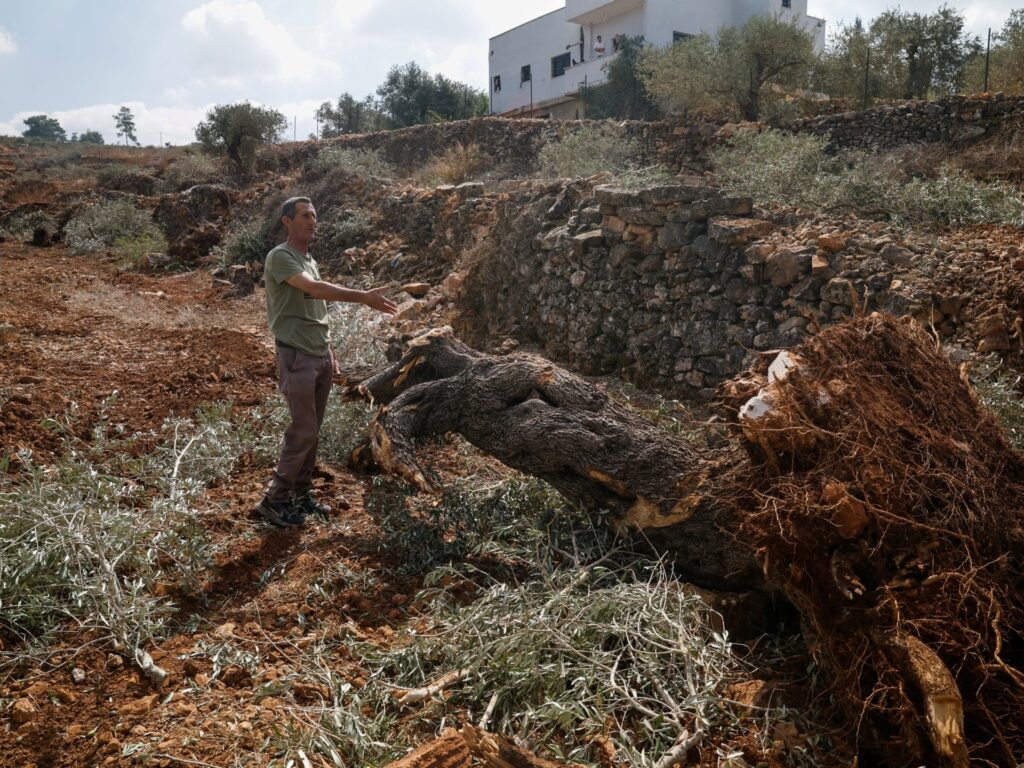
In a troubling development weeks before the annual olive harvest, Israeli bulldozers have uprooted Palestinian-owned olive groves near Ramallah, located in the occupied West Bank. This action has sparked significant concern among Palestinians and international observers who view the olive trees not only as a source of livelihood but also as a symbol of Palestinian heritage and identity.
The olive harvest season, which typically takes place in the fall, is a critical period for Palestinian farmers. The groves provide both economic sustenance and cultural significance, having been cultivated by families for generations. The destruction of these groves disrupts the farmers’ ability to earn income and threatens their traditional way of life.
Eyewitnesses reported seeing Israeli bulldozers systematically uprooting the olive trees, an act described by Palestinians as an intentional effort to undermine their agricultural and economic resilience. The incident has raised alarms about the broader impact of settlement expansion and land confiscation policies employed by Israeli authorities in the West Bank.
Organizations advocating for Palestinian rights have condemned the bulldozing as a violation of international law, highlighting that the occupied territories are protected under various international agreements that forbid the seizure and destruction of private property without due process.
The Israeli government has provided varying justifications for such demolitions, often citing security concerns or lack of permits. However, Palestinian residents argue that obtaining permits is a near-impossible process, effectively denying them legal rights to maintain or expand their land.
Local farmers expressed heartbreak and frustration at the loss, recounting how the olive trees were deeply intertwined with their family histories and cultural practices. One farmer noted, “They uprooted it all, every tree we depended on for years. It’s not just about the fruit; it’s about our existence here.”
This incident is part of a larger pattern of land disputes and tensions in the West Bank that have persisted for decades. Each year, reports surface of olive groves being damaged or destroyed during the harvest season, often coinciding with settler violence or military operations.
The international community continues to call for restraint and respect for the rights of Palestinian farmers. Humanitarian organizations emphasize the need to protect agricultural assets that are vital to sustaining the Palestinian economy and ensuring food security.
As the olive harvest season approaches, the recent bulldozing near Ramallah serves as a stark reminder of the ongoing challenges faced by Palestinians living under occupation. The destruction threatens not only immediate economic loss but also the erosion of cultural heritage tied to the land.
Efforts to mediate and find lasting solutions to these land conflicts remain complex and fraught with political tensions. Advocates urge for renewed dialogue and adherence to international law to prevent further damage and uphold the dignity and rights of those affected.
The uprooting of olive groves is more than an agricultural setback; it symbolizes the broader struggle for land, identity, and justice in the region, underscoring the urgent need for peaceful resolution to this enduring conflict.