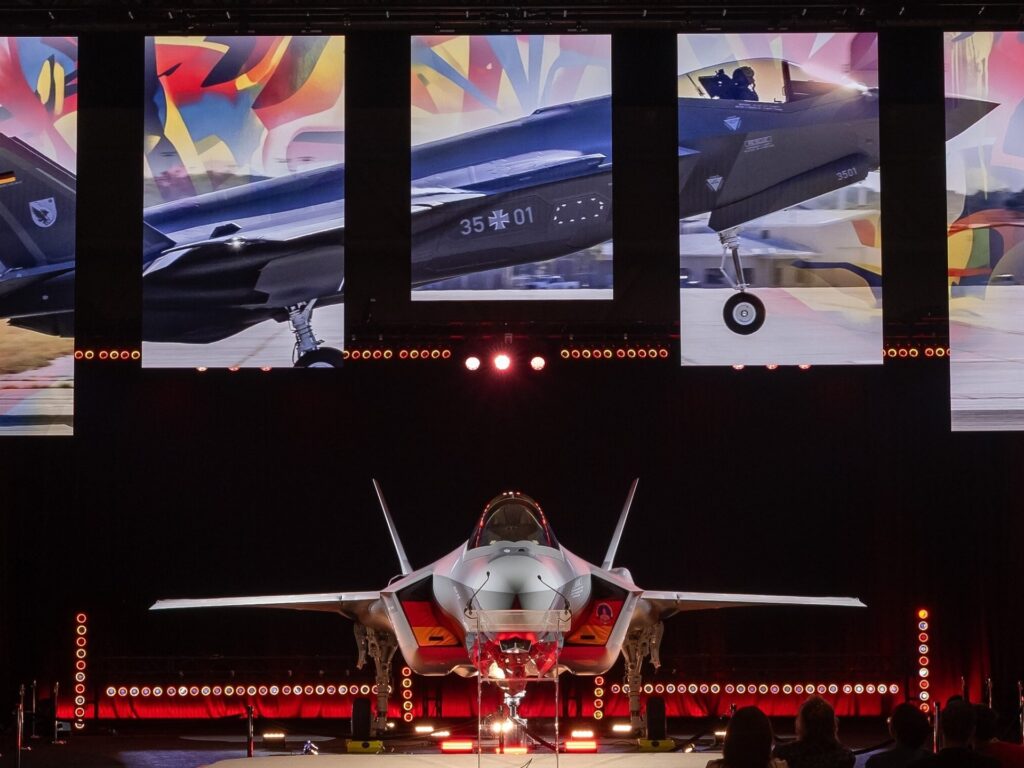
In a significant development for European defense, Germany has received its first F-35 stealth fighter jet from the United States as part of a broader effort to enhance NATO’s military capabilities. The aircraft, manufactured by Lockheed Martin, is the first in a series of nearly three dozen jets ordered by Germany four years ago, marking a pivotal milestone in the country’s military modernization.
The delivery of the F-35 comes amid a period of increased defense spending by NATO member countries, driven by heightened security concerns in the region. Germany’s acquisition of these advanced jets reflects its commitment to strengthening its air forces and contributing more robustly to the collective defense strategy of the alliance.
The F-35 Lightning II is known for its stealth technology, advanced sensors, and supersonic speed, making it one of the most sophisticated multi-role fighters in the world. Its deployment in Germany is expected to significantly enhance the country’s air defense capabilities and interoperability with other NATO forces.
This move is also seen as a response to evolving global security challenges and the need for NATO to maintain technological superiority. The increased military spending by NATO countries underscores a collective acknowledgment of these threats and a shared commitment to address them through enhanced defense capabilities.
Germany’s decision to procure the F-35 jets aligns with its broader strategic objectives of modernizing its armed forces and ensuring preparedness for future conflicts. The jets will replace older fighter models and provide a technological edge in air combat scenarios.
The acquisition process, which began four years ago, involved extensive planning and negotiations, reflecting the complexity and significance of integrating such advanced technology into the German military framework. Training programs for pilots and maintenance crews are also underway to ensure operational readiness.
This delivery marks a new chapter in transatlantic military cooperation, with the US continuing to play a key role in equipping NATO allies with state-of-the-art defense technology. It also highlights the ongoing evolution of NATO’s military posture in response to dynamic geopolitical threats.
As Germany takes this important step, it sets a precedent for other NATO members to follow suit in modernizing their own forces. The F-35’s presence in Europe is anticipated to strengthen the alliance’s deterrence and defense posture significantly.
In conclusion, Germany’s receipt of the first F-35 jet from the US symbolizes a crucial enhancement in NATO’s collective defense capabilities amid increased military spending and strategic realignment. This development not only reflects Germany’s commitment to regional security but also reinforces the importance of advanced technology in maintaining global peace and stability.