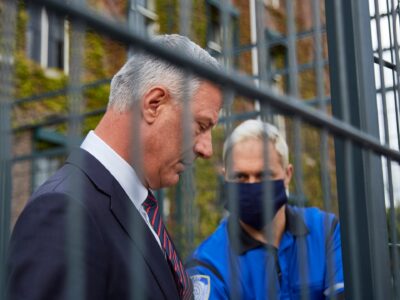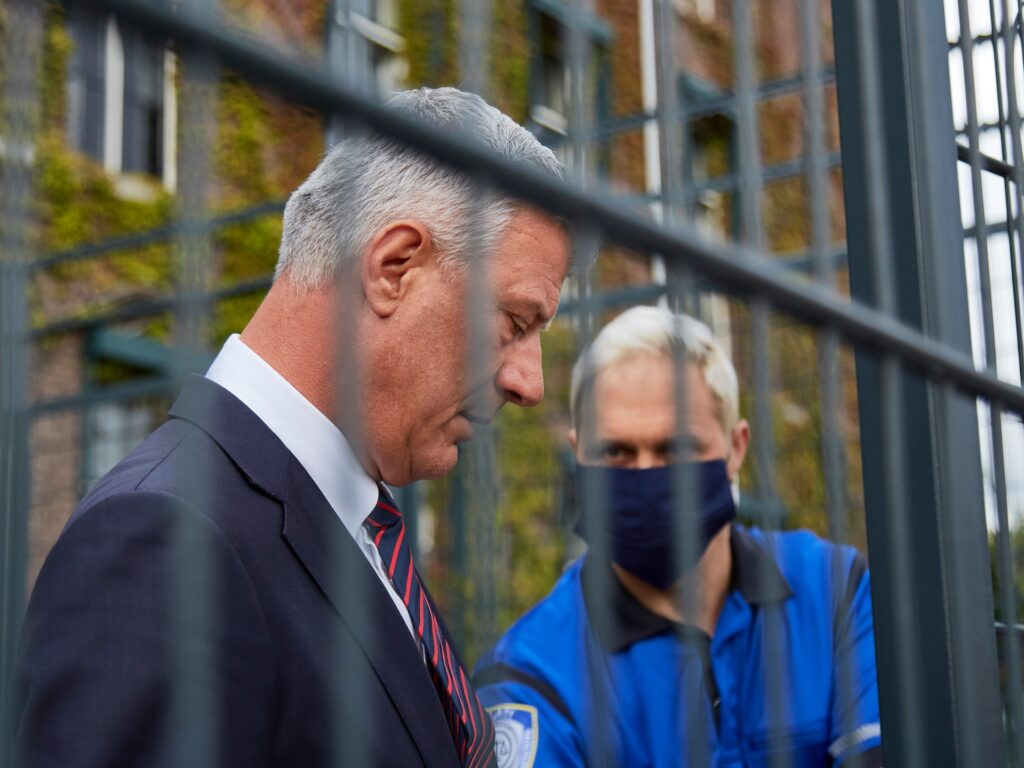
Former Kosovo President Hashim Thaci is currently facing a crucial verdict related to allegations of war crimes committed during the Kosovo conflict. Thaci, along with three other wartime commanders, stands accused of serious violations, drawing significant international attention. Prosecutors have requested a severe 45-year jail sentence for Thaci and his co-defendants, highlighting the gravity of the charges against them.
The accusations stem from events that took place in the late 1990s during the Kosovo war, a turbulent and violent period marked by ethnic conflict and widespread human rights abuses. The charges against Thaci include war crimes and crimes against humanity, encompassing acts such as murder, persecution, and torture. These allegations have been central to a long-standing investigation led by international prosecutors seeking justice for victims of the conflict.
Hashim Thaci served as Kosovo’s president and was a prominent political figure and former leader of the Kosovo Liberation Army (KLA), which fought against Serbian forces during the war. His trial has been conducted by the Kosovo Specialist Chambers and Specialist Prosecutor’s Office, an independent judicial body established to address war crimes and crimes against humanity.
The outcome of this trial carries profound implications for Kosovo’s political landscape and the broader quest for accountability in post-conflict justice. If convicted, Thaci’s 45-year sentence would underscore the international community’s commitment to prosecuting those responsible for wartime atrocities irrespective of their former position or political power.
Thaci and the three other commanders have categorically denied the allegations, asserting their innocence and arguing that their actions were defensive measures during a brutal conflict. Their defense cites the complex nature of wartime decisions and challenges the credibility of some evidence presented by prosecutors.
Observers note that this case represents a pivotal moment in the ongoing efforts to reconcile the scars of the Kosovo war, promote rule of law, and strengthen the region’s stability. It also serves as a stern warning that leaders, regardless of rank, may be held accountable for war crimes.
International human rights organizations have closely monitored the trial, emphasizing the importance of a fair and transparent legal process. The verdict will likely set a precedent for how future cases of wartime misconduct are handled in the Balkans and beyond.
As the judiciary prepares to announce the verdict, the region watches closely, aware that the decision will not only affect the legacy of Hashim Thaci but also the collective memory and healing of Kosovo’s society after decades of conflict.