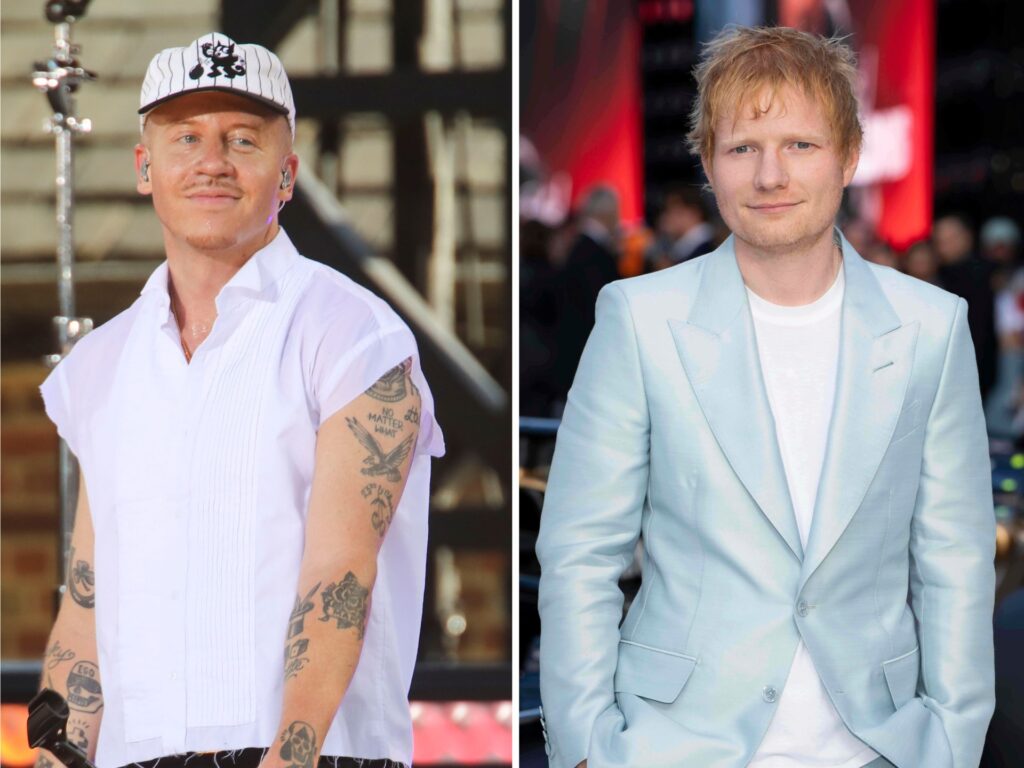
In a recent development that has captured significant media attention, British singer-songwriter Ed Sheeran has commented on the controversy surrounding US rapper Macklemore’s removal from a US tour lineup. The dispute arose after Macklemore publicly voiced his support for Palestine, which sparked reactions among fans and industry insiders alike.
Ed Sheeran took to social media to set the record straight, emphasizing the need to clarify misconceptions regarding the circumstances of Macklemore’s tour status. According to Sheeran, it was not a collective decision by the artists involved but primarily the US tour promoter’s choice to drop Macklemore.
The British musician expressed that the situation was more complex than it appeared, and he felt compelled to provide transparency amidst the swirling rumors. Sheeran stated that the promoter’s decision was influenced by logistical and managerial considerations rather than solely political reasons.
Macklemore’s vocal support for Palestine included various public statements and social media posts, which aligned with his commitment to social justice and human rights. This advocacy resonated with many fans but also generated controversy among different audience segments and industry stakeholders.
The US tour fans expressed mixed reactions, with some supporting Macklemore’s stance and others concerned about the implications for the tour’s dynamics and partnerships. Meanwhile, Sheeran continued to underscore the importance of understanding the factual background, avoiding assumptions, and respecting the complexities involved in organizing large-scale music tours.
This incident highlights the challenges artists face when navigating political expression within the entertainment industry. The balance between personal beliefs and commercial interests remains a delicate issue, especially in culturally sensitive contexts.
Ed Sheeran’s clarification offers insight into the behind-the-scenes decisions that impact artists and their tours. It also reiterates the significance of promoters’ roles in managing tour lineups, contractual obligations, and audience expectations.
As the discussion unfolds, fans and the music community are closely observing how these events will influence future collaborations and the broader discourse around political activism in music. Macklemore’s support for Palestine, alongside Sheeran’s response, underscores a growing trend of musicians engaging in social and political issues, often facing both support and backlash.
The situation serves as a reminder that the entertainment world is intertwined with global political conversations and that artists’ voices contribute substantially to these dialogues. Both Sheeran and Macklemore remain influential figures in music, and their actions continue to shape public conversations beyond just their artistic contributions.
In conclusion, Ed Sheeran’s statement seeking to clarify the facts around Macklemore’s removal from the US tour reflects the complexities of the music business amid political activism. The episode encourages greater understanding and dialogue about the intersection of art, politics, and industry operations.