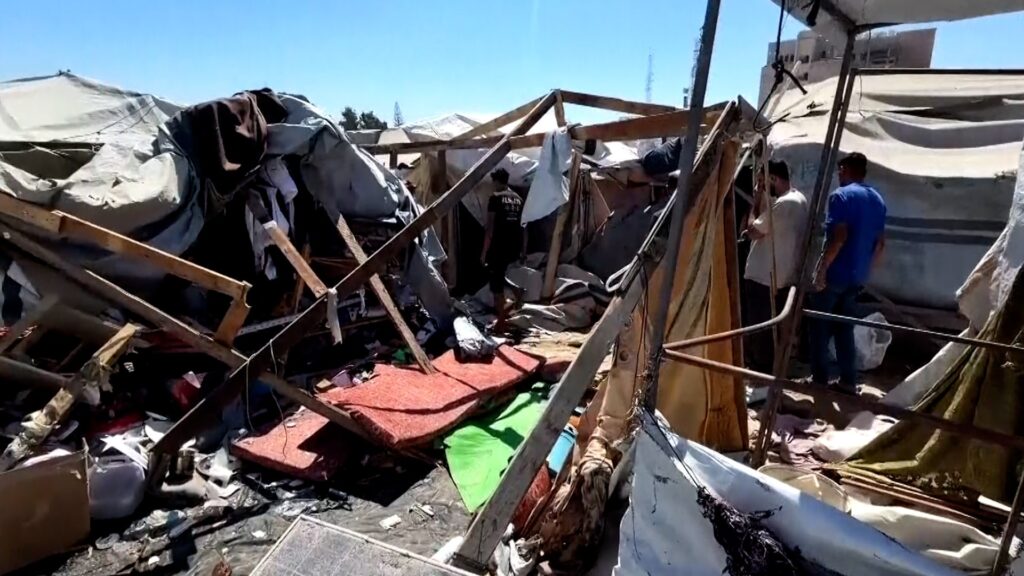
In a recent and devastating military strike, an Israeli attack targeted a displacement camp in Gaza, exacerbating the already dire humanitarian situation in the region. The attack has resulted in significant casualties and widespread destruction, intensifying the suffering of civilians who had sought refuge in the camp.
The displacement camp, which serves as a shelter for many Palestinians fleeing conflict zones, was not previously considered a military target. The strike has therefore raised serious concerns among international observers and humanitarian organizations regarding the protection of civilians during military operations.
This event adds to a growing list of confrontations and escalations between Israeli forces and Palestinian groups in Gaza. The densely populated area, plagued by years of blockade and repeated conflicts, remains one of the most volatile regions in the Middle East.
Eyewitnesses report that the blast destroyed multiple tents and temporary structures, leaving dozens injured and increasing the number of displaced families. Emergency services and local health facilities, already strained under continuous conflict, are struggling to provide adequate care to the wounded.
The attack has drawn immediate condemnation from various global entities, including the United Nations and human rights organizations, who have called for an urgent investigation and adherence to international humanitarian laws. They emphasize the need to protect non-combatants and safeguard humanitarian spaces from becoming conflict zones.
In response to the attack, humanitarian agencies have called for increased international support to assist the displaced and to enhance protection mechanisms for civilians caught in the crossfire. Aid delivery has also become more challenging as ongoing hostilities disrupt access routes and logistics.
The Israeli government, meanwhile, has stated that the attack was part of a broader military campaign aimed at countering threats from militant groups operating within Gaza. It asserts that every effort is made to minimize civilian casualties, although critics argue that the tactics employed often result in disproportionate harm.
The international community now faces mounting pressure to engage in diplomatic efforts to de-escalate tensions and promote a ceasefire to prevent further loss of life and destruction in the already battered Gaza Strip.
As the crisis unfolds, the humanitarian impact continues to deepen, with thousands displaced and basic services disrupted. The situation remains fluid, with potential for further escalation if immediate measures are not taken to secure peace and provide relief to affected populations.
This incident underscores the urgent need for sustained dialogue, humanitarian access, and the restoration of security to achieve lasting peace in the region, potentially paving the way for future reconciliation and stability.
In summary, the Israeli attack on the Gaza displacement camp marks a tragic escalation in the conflict, highlighting ongoing challenges in protecting civilians during conflict and the critical importance of international intervention to mitigate humanitarian crises and foster long-term peace efforts.