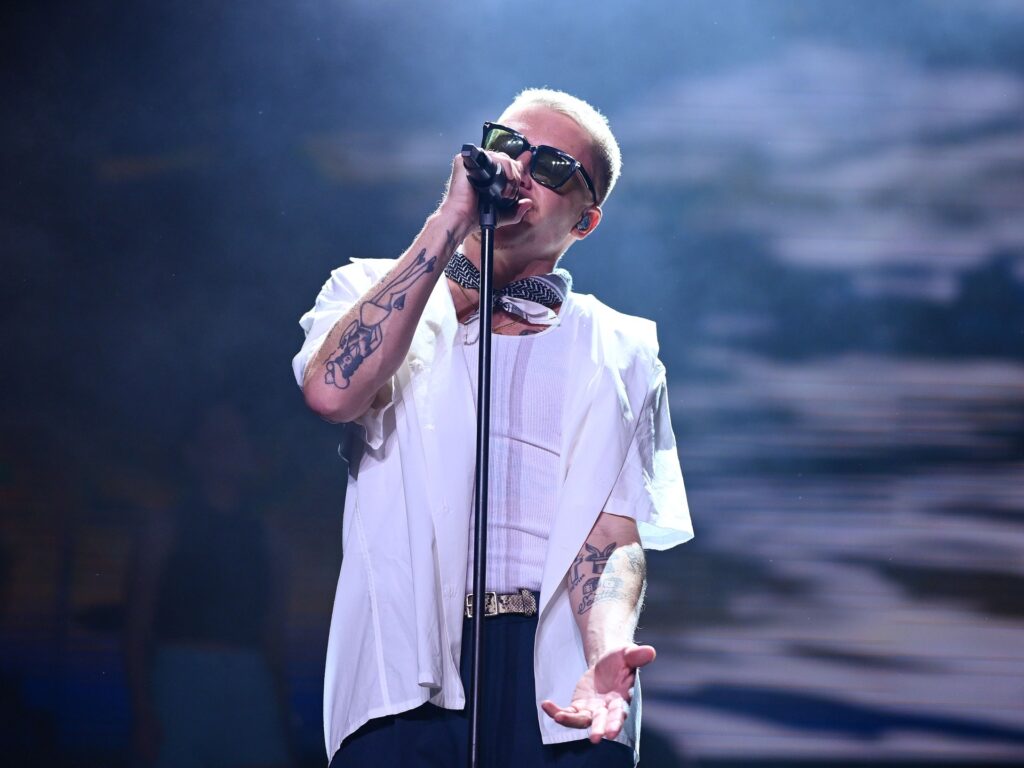
In a recent controversy that has stirred conversations about activism and artistic freedom, rapper Macklemore has been removed from Ed Sheeran’s tour line-up. The decision comes after Gillette Stadium, the owner responsible for hosting the events, cited concerns over Macklemore’s rhetoric related to his advocacy for Palestine.
Macklemore, known for his socially conscious lyrics and activism, has been vocal about the plight of Palestinians. His advocacy has garnered both support and criticism, reflecting the complex nature of the Israeli-Palestinian conflict.
The Gillette Stadium’s management justified their decision by expressing worries that Macklemore’s statements on Palestine might incite tensions or controversy during the concerts. They emphasized the importance of maintaining a neutral environment for attendees and ensuring that the events proceed without political disturbances.
Ed Sheeran’s tour, which has attracted millions of fans, was seen as a platform combining music and unity. However, the removal of Macklemore has raised questions about the limits of artistic expression, especially when it intersects with political views.
Supporters of Macklemore argue that artists have a right to use their platforms to raise awareness about important global issues, including human rights and conflict resolution. They see the barring as a suppression of free speech and a missed opportunity for constructive dialogue.
Conversely, some stakeholders and fans believe that concerts should remain apolitical spaces focused on entertainment and enjoyment, free from divisive topics that might alienate parts of the audience.
This incident ignites a broader debate on how entertainment venues and organizers handle artists who engage in activism, particularly when their messages challenge prevailing norms or address contentious subjects.
Macklemore has yet to issue a detailed public statement regarding his removal, but his team has indicated plans to address the situation and advocate for his position.
The decision by Gillette Stadium underscores the delicate balance between supporting artists’ rights to express their views and managing the expectations and sensitivities of diverse audiences in large-scale public events.
As this story develops, it highlights the ongoing struggle faced by public figures who navigate the intersection of art, politics, and public reception in an increasingly polarized world.