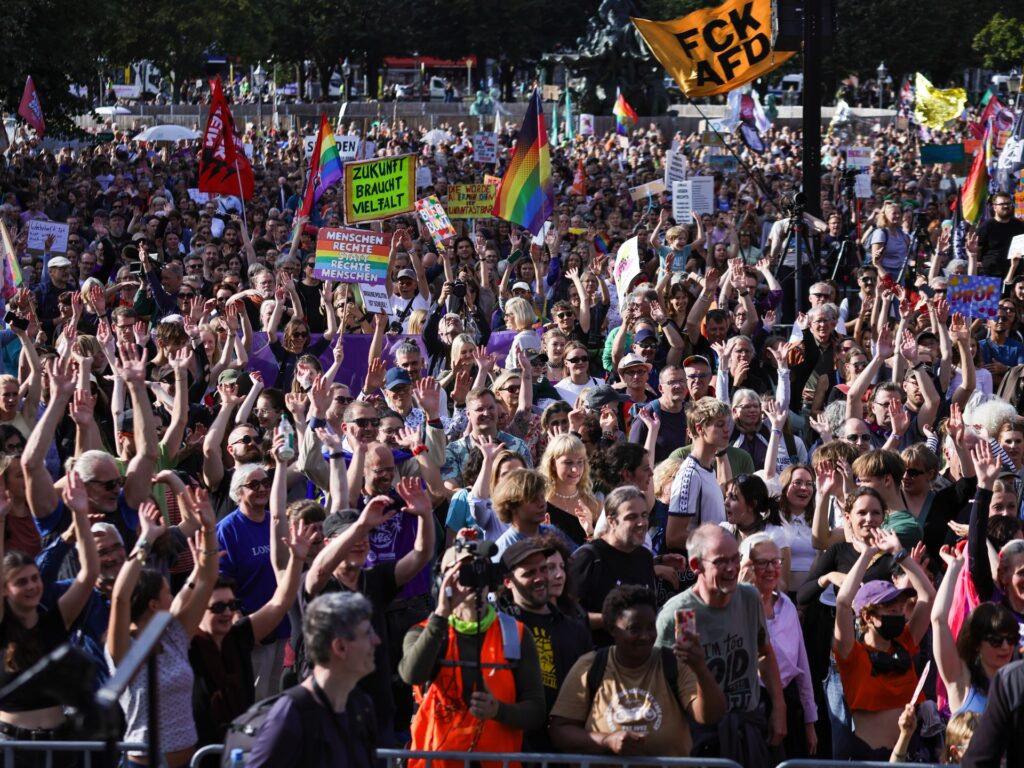
Tens of thousands of protesters took to the streets in about 20 cities across Germany, including major cities such as Berlin, Hamburg, and Munich, to voice their opposition to the far-right political party Alternative for Germany (AfD). Demonstrators demanded a ban on the AfD, citing concerns over the party’s nationalist and controversial policies.
The protests marked a significant show of public dissent against the rising influence of the AfD, which has gained traction in recent years with its hardline stances on immigration and European integration. Citizens from diverse backgrounds participated in the marches, waving banners and chanting slogans calling for democracy and tolerance.
Organizers of the demonstrations emphasized the importance of standing united against far-right extremism, warning that the AfD’s rhetoric fosters division and hate within German society. The rallies were largely peaceful, drawing attention to the urgent need for political discourse that promotes inclusivity rather than exclusion.
In Berlin, the protest featured speeches by community leaders and activists who highlighted the party’s history of controversial statements and policies. Similar scenes unfolded in Hamburg and Munich, where large crowds gathered to express their disapproval of the AfD’s platform.
The protests come amid growing debates within Germany about the role of far-right parties and their impact on the country’s democratic values. Many citizens argue that the AfD’s policies threaten social cohesion and the principles of equality enshrined in the German constitution.
Authorities monitored the marches closely to maintain order, and no major incidents were reported during the events. The demonstrations reflected a broader European trend of increased activism against far-right movements.
Critics of the AfD point to instances of extremist behavior among some party members and affiliations with nationalist groups as reasons for the calls to ban the party outright. Supporters of the AfD, however, defend their right to political participation within the democratic system.
The protests underscore the challenges Germany faces in balancing freedom of expression with the need to curb extremist influences that could undermine democratic institutions.
As Germany continues to grapple with these political tensions, the recent marches highlight the resilience of civic activism and the commitment of many Germans to safeguarding democratic ideals against the rise of far-right extremism.