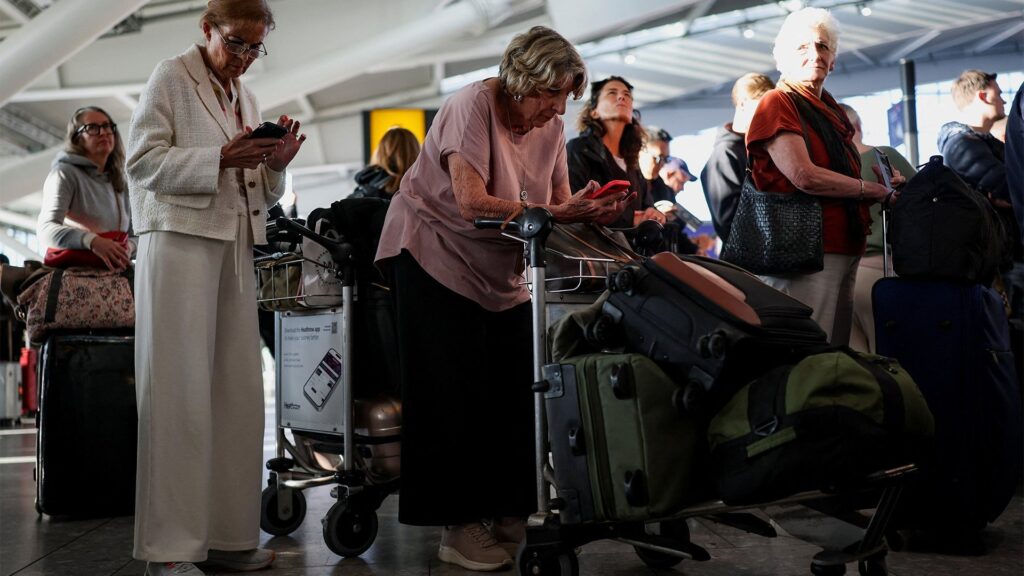
The UK has been thrown into turmoil following a significant outage of the air traffic control (ATC) system on Tuesday, causing widespread chaos at airports across the country. The disruption has led to thousands of flight delays and cancellations, provoking outrage among holidaymakers whose vacations have been severely impacted.
Passengers at major UK airports expressed frustration and disappointment as their travel plans unraveled. Reports of long queues, overcrowded terminals, and confusion overwhelmed airport staff, many of whom struggled to manage the unprecedented surge of passengers seeking assistance and rebooking.
An anonymous traveler lamented, “Everyone’s had their holidays ruined. What was supposed to be a time of relaxation and fun has turned into a logistical nightmare.” Social media platforms were flooded with complaints from stranded travelers, amplifying public dissatisfaction.
In response to the crisis, the UK government has mandated the country’s independent aerospace regulator to conduct a thorough review of the air traffic control system outage. This review aims to identify the root causes of the failure and evaluate the robustness and contingency preparedness of the ATC infrastructure.
The disruption raises critical questions about the resilience of the UK’s aviation sector, particularly given the increasing demand for air travel post-pandemic. Experts worry that if such outages continue, they could severely harm passenger confidence and the overall efficiency of air travel in the country.
Industry leaders are calling for urgent improvements in technology and communication systems to prevent future incidents. There are also demands for better coordination between airlines, airports, and air traffic control authorities to ensure smoother handling of unexpected disruptions.
The review will also assess whether existing protocols for emergency response were adequate and how communication with passengers can be improved in crisis situations.
Government officials have pledged to work closely with aviation bodies to implement necessary reforms and restore normalcy swiftly. However, the widespread passenger anger highlights the importance of resilience in critical infrastructure and prompt transparency.
As the UK works to resolve these issues, travelers are advised to check with their airlines for real-time updates and consider potential delays when planning future trips.
This incident serves as a stark reminder of the vulnerabilities in essential systems and the far-reaching impacts on everyday lives. Moving forward, the focus will be on safeguarding air traffic control operations against failures that could cause similar or worse disruptions.