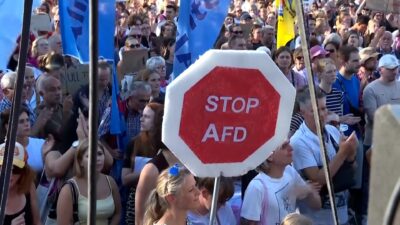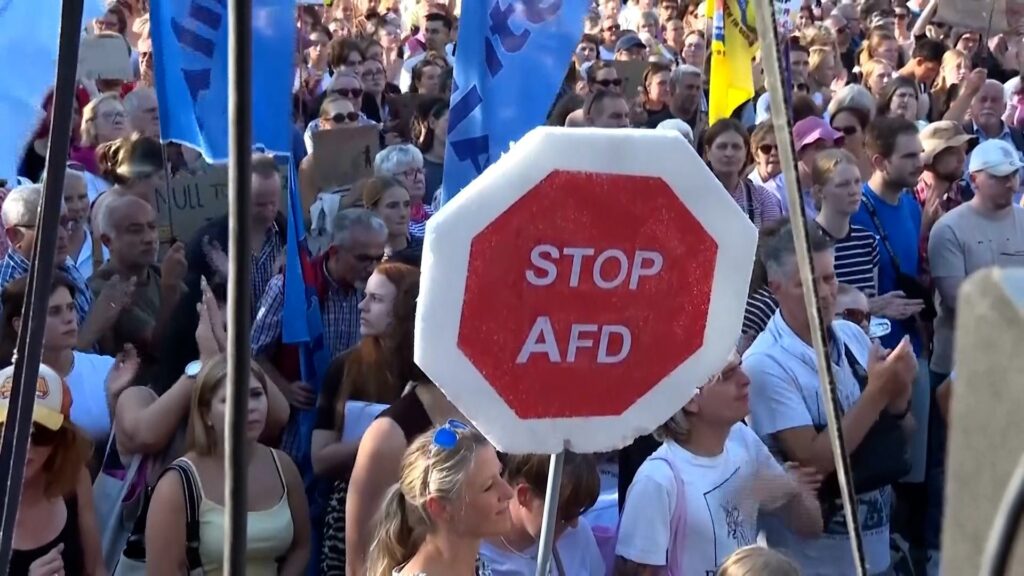
Following the recent election success of the far-right Alternative for Germany (AfD) party, thousands of demonstrators gathered in Cologne to voice their strong opposition. The protest, which drew a diverse crowd from across the city, underscored widespread concern over the AfD’s political ascent and its implications for Germany’s democratic values.
The rally featured a mix of chants, speeches, and banners condemning the AfD’s policies, which many view as xenophobic and divisive. Organizers emphasized the importance of unity and resistance against what they described as an alarming shift toward extremism in German politics.
Cologne’s streets were filled with people of all ages, including families, students, and local activists, all united by a common cause to challenge the growing influence of the far-right party. The demonstration was peaceful, though heavily policed, reflecting the city’s commitment to maintaining order amid heightened political tensions.
Critics of the AfD highlight the party’s controversial rhetoric on immigration, nationalism, and European integration, which has sparked intense debate throughout Germany and beyond. The election victory marked a significant milestone for the AfD, signaling increased support but also prompting fears of social polarization.
Protest leaders called for increased civic engagement and vigilance, urging citizens to protect democratic institutions and promote inclusivity. They stressed that the AfD’s rise should serve as a wake-up call to address underlying social and economic grievances fueling extremist sentiments.
The rally in Cologne was one of several nationwide demonstrations organized in response to the electoral success of far-right parties across Germany. Analysts suggest that the protests reflect a broader struggle between progressive and nationalist forces within the country.
As Germany grapples with these complex political dynamics, the events in Cologne highlight the vibrant and active nature of civil society in confronting challenges to democratic principles. The large turnout demonstrated widespread rejection of exclusionary ideologies and a commitment to fostering a more inclusive future.
Moving forward, the spotlight will remain on how government leaders, communities, and civil organizations respond to the continuing rise of far-right politics. The Cologne protests serve as a powerful reminder of the ongoing democratic debate shaping Germany’s political landscape and the public’s determination to influence its direction.