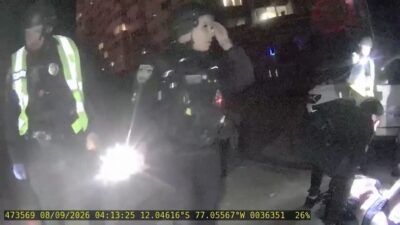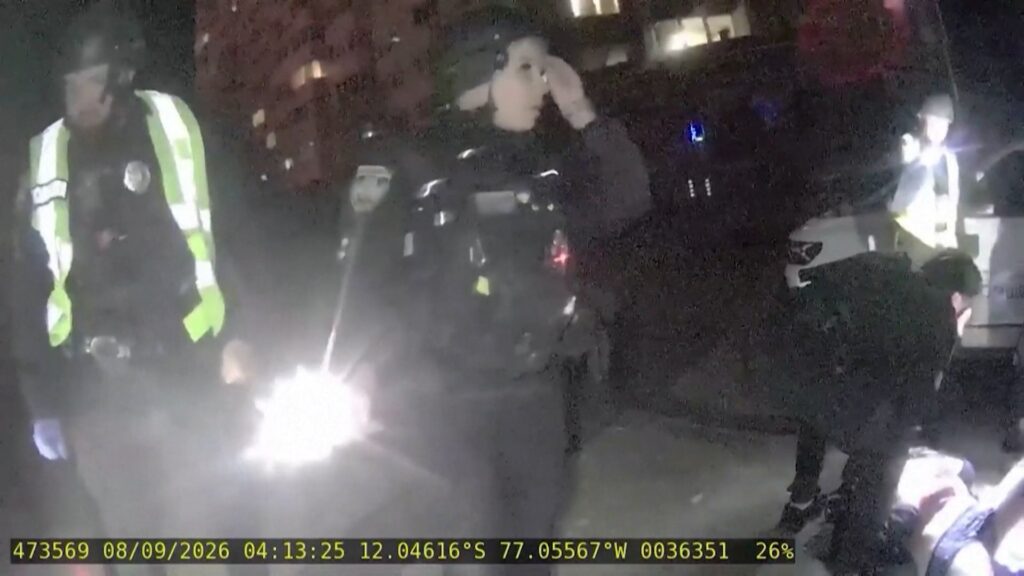
In a stark and harrowing visual record, a police officer’s bodycam has captured the precise moment a Russian missile struck near police forces in Ukraine’s capital, Kyiv. This footage offers a rare and vivid glimpse into the dangers faced by those on the ground amidst escalating conflict.
The video footage, taken from the perspective of a police officer equipped with a body camera, shows the tense atmosphere just moments before the missile impact. It captures the sudden explosion, the force of the blast, and the ensuing chaos as nearby officers react to the strike.
This incident underscores the perilous conditions in Kyiv as it continues to be a focal point in the ongoing conflict. The missile strike is part of a broader series of attacks targeting various locations within the city, aimed at both military and civilian infrastructures.
Authorities and emergency services responded swiftly to the site, attending to the injured and assessing the damage caused by the missile. The quick reaction from first responders highlights their crucial role amidst such dangerous situations.
The use of police bodycams in such conflict zones offers critical documentation that can be used for evidential purposes and to increase public awareness about the realities on the ground. It also serves to provide transparency regarding the actions and conditions experienced by police and emergency personnel during conflict.
This event has been widely reported and circulated on various news platforms and social media, drawing international attention to the ongoing conflict in Ukraine. The visual proof provided by the bodycam footage brings a human element to the headlines and statistics, showing the raw impact of the violence on individuals and communities.
Reactions from the international community have included calls for de-escalation and renewed efforts for peace talks, stressing the importance of protecting civilians and maintaining humanitarian corridors.
Meanwhile, in Kyiv, authorities continue to urge residents to remain vigilant and adhere to safety protocols while emergency services maintain readiness to respond to further incidents.
The bodycam footage has now become a crucial piece of evidence framing the narrative of the conflict, emphasizing the urgent need for resolution and the high human cost involved. It reminds the world of the stark realities faced by those caught in the crossfire and the bravery of those who serve on the front lines.
As the situation develops, updates will be closely monitored both locally and internationally, with the hope that such harrowing episodes will pave the way for meaningful peace initiatives and support for the affected communities.
This incident is a grim reminder of the ongoing conflict’s toll and reinforces the importance of continued vigilance, humanitarian assistance, and diplomatic engagement to foster stability in the region.