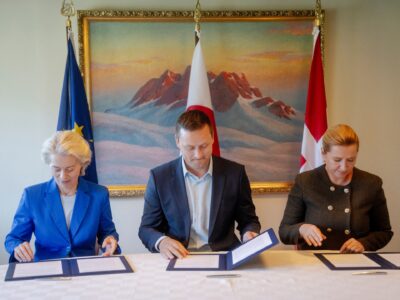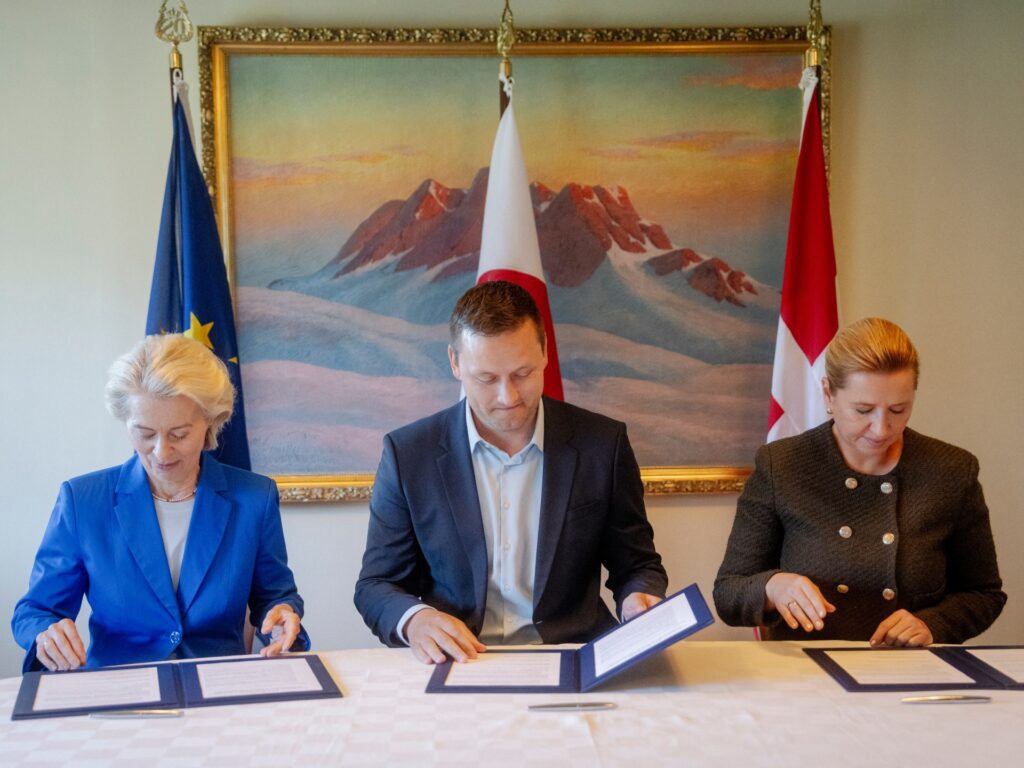
The European Union has announced plans to significantly increase its financial support to Greenland, pledging more than $200 million in direct aid under the bloc’s next budget cycle. This move comes amid growing concerns following threats from former U.S. President Donald Trump, who had expressed interest in annexing the strategically important Arctic territory.
Brussels aims to double its previous aid package to strengthen ties with Greenland, an autonomous territory within the Kingdom of Denmark, which plays a critical role in Arctic geopolitics due to its vast natural resources and strategic location.
The increased financial assistance is intended to bolster Greenland’s economy and infrastructure, helping to reduce its dependency and increase stability in the region. It coincides with the commencement of military exercises that underscore the strategic importance of the Arctic amidst intensifying global interest.
Trump’s annexation threats in recent years brought international attention to Greenland, which has rich deposits of minerals and rare earth elements essential for modern technology, as well as significant untapped hydrocarbon resources. These statements sparked debates over national sovereignty and the strategic interests of global powers in the Arctic.
The EU’s renewed commitment seeks not only to provide economic support but also to reinforce geopolitical stability and assert its presence in the Arctic region. It highlights the bloc’s interest in fostering sustainable development and security partnerships with Greenland.
Greenland’s government has welcomed the EU’s pledge, viewing it as a vital step towards greater economic independence and international cooperation. The funding is expected to support various sectors including environmental protection, infrastructure development, and social programs.
Additionally, the timing of the EU’s announcement is seen as a response to increasing military activities by NATO allies in the Arctic, aimed at deterring aggressive moves by other powers and ensuring freedom of navigation and security in the area.
The EU’s financial commitment to Greenland reflects a broader strategy to engage more deeply with Arctic nations amid changing climatic conditions and evolving geopolitical dynamics. As Arctic ice melts, new shipping routes and resource opportunities are emerging, attracting global attention.
Analysts suggest that the EU’s gesture is part of a wider effort to counterbalance the influence of other major players in the region, including Russia and China, which have ramped up their Arctic activities.
Overall, the EU’s pledge marks a significant moment in Arctic geopolitics, signaling enhanced cooperation, development, and security collaboration with Greenland. It underscores the importance of multilateral approaches in managing the challenges and opportunities arising in the rapidly changing Arctic environment.