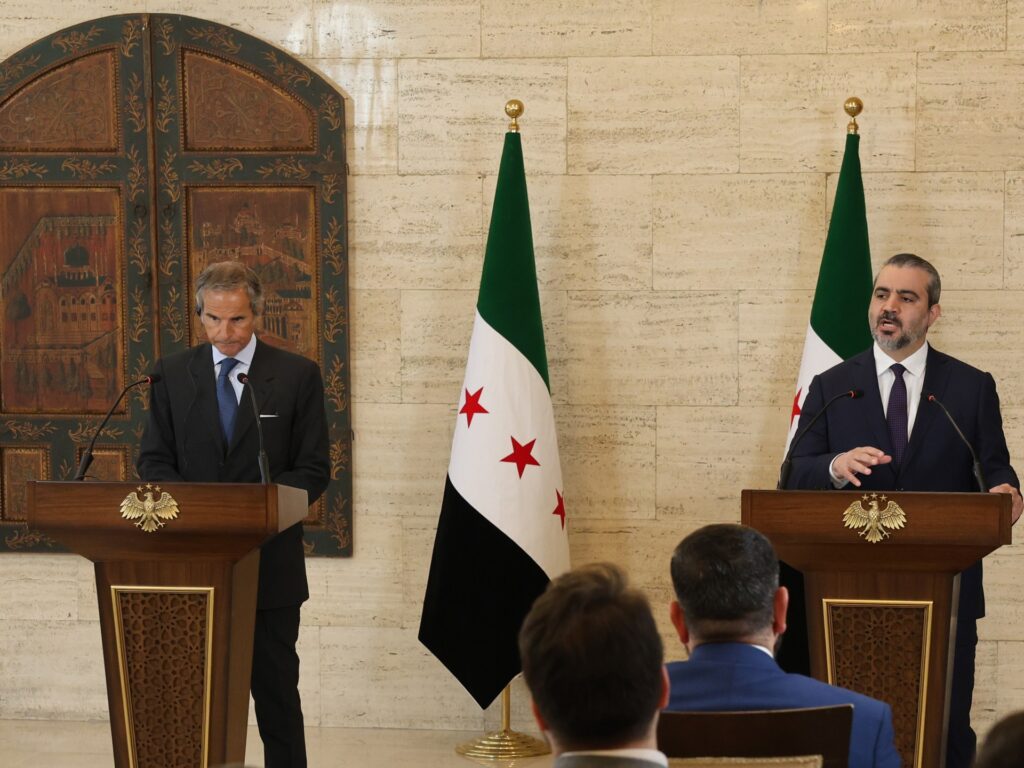
The International Atomic Energy Agency (IAEA) has revealed that the nuclear reactor built during the Assad regime in Syria was configured for the production of nuclear weapons. This alarming finding sheds light on Syria’s secret nuclear ambitions under President Bashar al-Assad’s government.
The facility, which was bombed by Israel in 2007, was suspected for years of being part of a clandestine nuclear weapons program. Now, the IAEA confirms that the reactor was not designed for peaceful purposes such as energy production but was tailored for producing weapons-grade nuclear material.
The IAEA statement explains that the material from the facility is now under the agency’s safeguards, ensuring that no nuclear material is diverted to weaponization. Though the bombing effort in 2007 by Israel was intended to halt Syria’s nuclear development, the discovery confirms that such efforts have left a complex legacy.
Experts point out that the Assad regime had long maintained a veil of secrecy around its nuclear activities, leveraging the facility’s remote location and denying transparency. The 2007 airstrike significantly delayed, but did not permanently stop Syria’s ambitions in this domain.
The IAEA’s involvement marks an important step in monitoring and controlling nuclear proliferation in volatile regions. The agency’s safeguards are designed to supervise nuclear materials and ensure they are used only for peaceful objectives.
This revelation raises further concerns about nuclear security in the Middle East, a region already fraught with geopolitical tensions. It highlights the need for robust international cooperation and oversight to prevent the spread of nuclear weapons capabilities.
Many analysts warn that the uncovered reactor scheme was part of a wider strategy by the Assad administration to develop deterrence and enhance its military stature. This key piece of intelligence also encourages renewed scrutiny of other states suspected of clandestine nuclear programs.
Following the IAEA report, calls for increased diplomatic efforts vis-à-vis Syria have intensified. Stakeholders emphasize the importance of dialogue aimed at denuclearization and transparency to promote regional stability.
In conclusion, the IAEA’s disclosure regarding the Syrian reactor underscores the persistent challenges in preventing nuclear weapons proliferation. Amid ongoing tensions, it remains crucial that the international community remains vigilant and proactive in enforcing non-proliferation regimes.