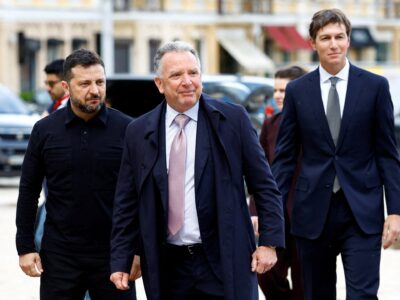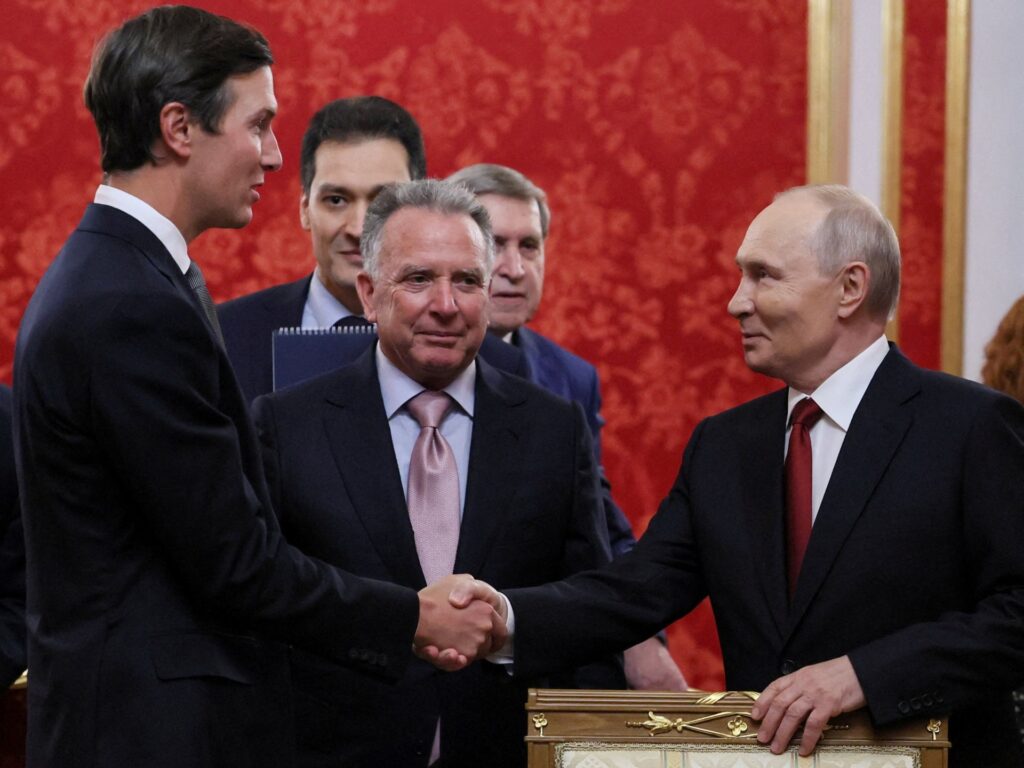
In a significant development in the ongoing Russia-Ukraine war, US envoys Steve Witkoff and Jared Kushner have recently met with Russian President Vladimir Putin in Moscow. This high-profile diplomatic engagement marks a new effort led by former President Donald Trump to broker a potential agreement between the two warring nations.
The meetings come amid rising tensions and continued conflict in the region, signaling a fresh attempt by American diplomatic figures outside of the current administration to influence peace talks. Witkoff and Kushner’s involvement suggests an unconventional but strategic approach from Trump’s circle, aiming to leverage personal and business connections to open dialogue with Russian leadership.
Following their discussions with Putin, the envoys proceeded to Kyiv, where they engaged with Ukrainian officials. This two-pronged diplomatic mission intends to understand both perspectives thoroughly and encourage steps toward a ceasefire and resolution.
The Russia-Ukraine conflict, which erupted in early 2014 and escalated dramatically in 2022, has resulted in enormous humanitarian and geopolitical consequences. Various international bodies and governments have attempted numerous diplomatic interventions, yet a lasting peace remains elusive.
Trump’s foray into the diplomacy arena with Kushner and Witkoff represents an effort to revitalize negotiations outside traditional government channels. This move taps into Trump’s history of unconventional diplomacy, often involving business leaders and personal envoys to achieve foreign policy objectives.
Critics question the legitimacy and impact of these unofficial talks, highlighting concerns about bypassing established diplomatic frameworks. Supporters argue that fresh perspectives and backdoor channels might break longstanding deadlocks.
In Moscow, Kushner and Witkoff reportedly engaged Putin on critical issues such as security guarantees, territorial sovereignty, and economic sanctions relief. They aimed to gauge Russia’s willingness to make concessions and explore possibilities for de-escalation.
Meanwhile, in Kyiv, discussions focused on Ukraine’s demands for territorial integrity and security assurances from the international community. Ukrainian leaders expressed cautious optimism about gaining additional support through this diplomatic effort.
The envoys’ visit also underscored the complexities facing global diplomacy efforts in the Russia-Ukraine war, including balancing sanctions, military aid, and humanitarian assistance.
Observers note that this diplomatic attempt aligns with broader US political dynamics, where former administration figures seek to influence foreign policy debates and outcomes.
Moreover, this engagement raises questions about the role of private citizens and political allies in shaping international relations amid an active conflict zone.
The Kremlin acknowledged the talks positively but emphasized that any progress would depend on direct negotiations between Russia and Ukraine.
As the war continues, international actors remain vigilant about developments in these backchannel diplomacy efforts, considering their potential to complement or complicate official peace initiatives.
In conclusion, the meetings between US envoys Steve Witkoff, Jared Kushner, and Vladimir Putin highlight a novel and controversial chapter in the diplomacy surrounding the Russia-Ukraine conflict. Whether this initiative will bear fruit remains to be seen, but it undeniably reflects the multifaceted and complex nature of efforts to resolve one of the most challenging geopolitical crises of the 21st century.