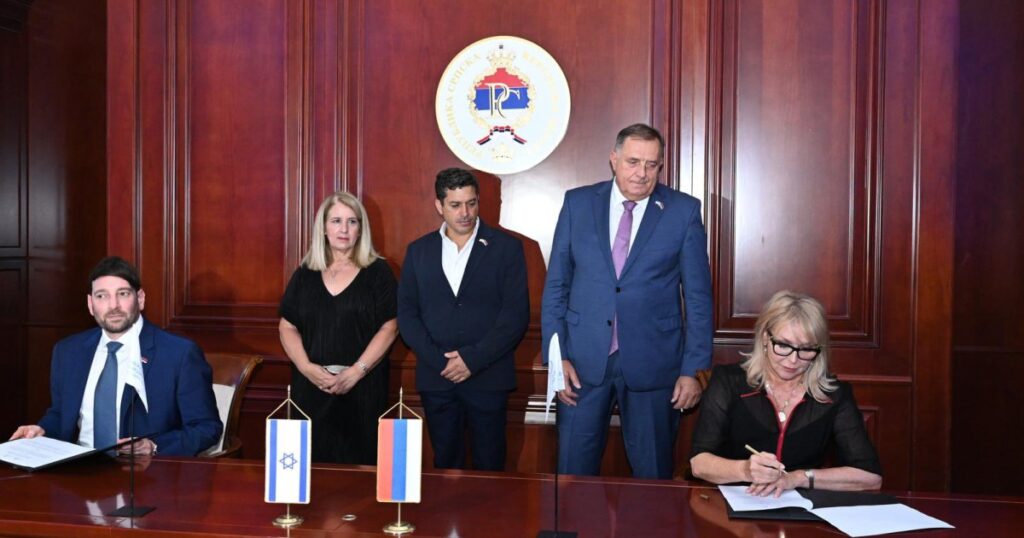
In a move that highlights shifting geopolitical dynamics in the Balkans, Bosnian Serbs have strengthened their relations with Israel by inaugurating an Israeli commerce office in Republika Srpska, the Serb-majority entity within Bosnia and Herzegovina. This development comes amid ongoing regional tensions and underscores a deepening partnership based on mutual interests.
The opening of the Israeli commerce office marks a significant milestone in the bilateral relations between Republika Srpska and Israel. It not only facilitates trade and investment but also symbolizes a political statement by Bosnian Serb authorities seeking to diversify their international alliances.
Republika Srpska, which enjoys a degree of autonomy within Bosnia and Herzegovina, has often pursued independent paths in foreign relations, sometimes leading to strains with the central government and neighboring countries. The new office is expected to serve as a hub for increasing commercial exchanges, technological cooperation, and cultural ties between the Serb entity and Israel.
Experts view this move as part of a broader strategy by Bosnian Serb leaders to engage with global partners beyond the immediate Balkan region. Israel, with its advanced technology sector and robust economy, presents attractive opportunities for economic development and collaboration.
The timing of this development is notable. The Balkans region has recently witnessed heightened political and ethnic tensions, and bolstering relationships with influential international partners is seen as a way to enhance security and economic stability.
Officials from Republika Srpska have expressed optimism about the potential benefits of closer Israeli ties, highlighting areas such as agriculture, energy, and security cooperation. The commerce office will likely facilitate the exchange of expertise and open pathways for joint ventures.
Israel, on its part, is keen to extend its diplomatic reach and economic footprint in Southeast Europe. Strengthening ties with Republika Srpska aligns with its broader foreign policy goals of fostering partnerships in strategically important regions.
The move has attracted varied reactions. Some analysts warn that bolstering Republika Srpska’s external ties could complicate Bosnia and Herzegovina’s internal cohesion and pose challenges for the central government. Others see it as a pragmatic approach to economic diplomacy that benefits local populations.
The new Israeli commerce office stands as a concrete symbol of growing cooperation and the evolving landscape of international relations in the Balkans. As these ties develop, they may influence regional politics, economic patterns, and the broader balance of alliances in Southeast Europe.
In conclusion, the strengthening of relations between Bosnian Serbs and Israel through the opening of a commerce office reflects a nuanced approach to diplomacy and economic development amid regional tensions. This partnership could serve as a model for other municipalities and entities seeking to expand their international engagement in uncertain times.