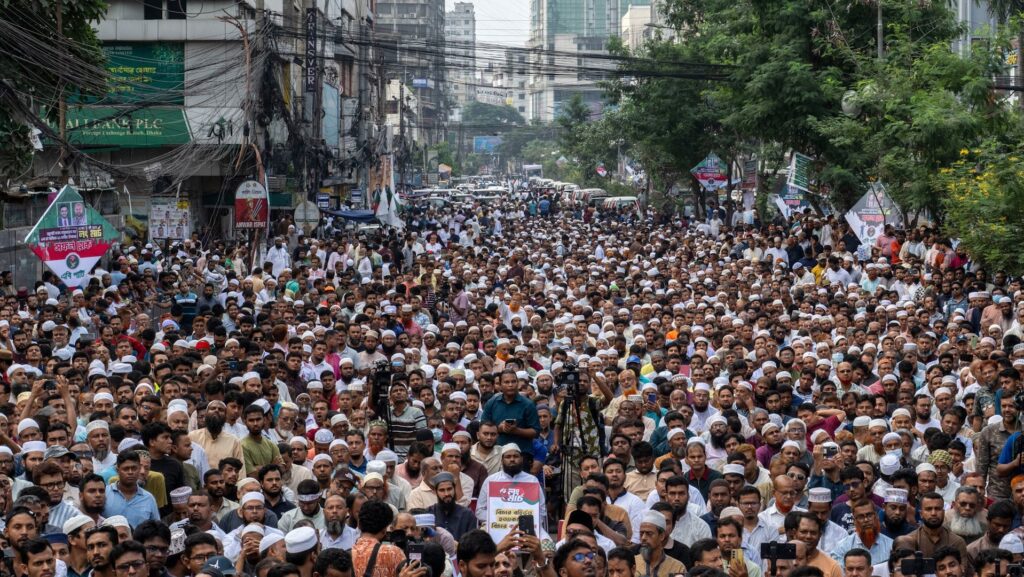
Bangladesh is witnessing its first major wave of protests under the leadership of Prime Minister Tarique Rahman as thousands of citizens take to the streets to voice their frustration over the soaring cost of living. These demonstrations mark a significant moment in the country’s political landscape, reflecting widespread economic discontent among the population.
In recent months, Bangladesh has experienced a steep rise in prices for essential goods, including food, fuel, and utilities. The inflation surge has put immense pressure on the everyday lives of ordinary Bangladeshis, especially those with low and fixed incomes.
The protests have seen a diverse mix of participants ranging from urban workers and students to rural communities, all united by the common call for urgent government intervention to curb the skyrocketing expenses that are making survival increasingly difficult.
Organizers of the marches accuse the government of failing to implement effective policies to manage inflation and provide relief to vulnerable groups. There is a growing demand for comprehensive economic reforms to stabilize prices and improve access to basic necessities.
Prime Minister Tarique Rahman, who assumed office recently, is facing intense scrutiny as these protests represent the first significant challenge to his administration. Analysts note that the unrest could influence the political environment and potentially affect Rahman’s ability to govern effectively if economic conditions do not improve promptly.
The government has responded by promising to review price controls and increase subsidies for critical commodities. However, protesters and opposition leaders argue that more transparent and actionable measures are required to address the root causes of the economic crisis.
Many citizens express concerns that ongoing price hikes could exacerbate poverty levels and deepen social inequalities that Bangladesh has been striving to overcome. The cost of living surge threatens to undo progress made in recent years toward economic development and social welfare.
International observers are closely monitoring the situation, emphasizing the importance of dialogue between the government and protesters to prevent escalation and ensure stability.
The protests have so far been largely peaceful, but there are fears that tensions could rise if demands are not met or if the government takes a heavy-handed approach.
As the nation confronts these pressing economic challenges, the need for coordinated policy responses and inclusive governance has never been more critical. The outcome of these protests could shape the future economic and political trajectory of Bangladesh.
In conclusion, the wave of demonstrations across Bangladesh signifies deep-rooted economic frustrations under PM Tarique Rahman’s administration. With living costs rising sharply, citizens are calling for immediate and effective action to protect their livelihoods and secure the country’s stability and prosperity moving forward.