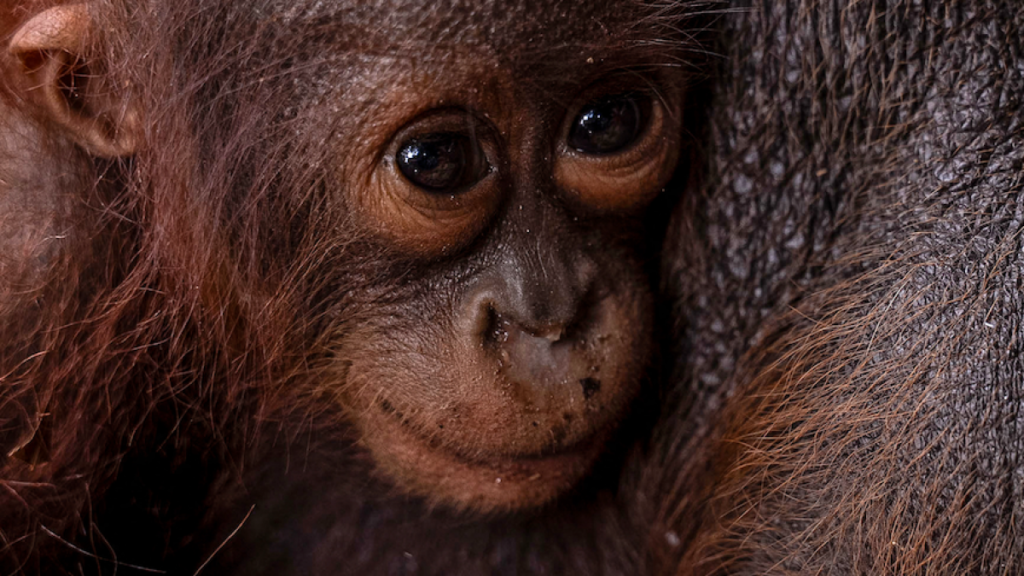
In a dramatic rescue operation in Indonesia, a mother orangutan and her infant have been saved from a rapidly shrinking patch of forest ravaged by wildfires. The forest, home to many endangered species, has been severely affected by the spread of flames that have consumed vast areas of habitat in the region.
Wildfires in Indonesia, often worsened by dry conditions and deforestation, have become a recurring environmental crisis, causing devastating impacts on wildlife and local communities. The rescued orangutans were found trapped in a small area as the fires closed in, highlighting the immediate dangers these animals face during such natural disasters.
Environmental groups and local authorities collaborated to carry out the rescue, responding swiftly to reports of orangutans in distress. Using careful and humane methods, rescue teams approached the frightened animals and safely relocated them to a protected sanctuary away from the fire zones.
The welfare of the infant orangutan, who is especially vulnerable at this young age, was a key concern during the rescue. The mother and infant are now receiving medical care and rehabilitation support, including nourishment and psychological care, to recover from the trauma of the wildfire and displacement.
This incident underscores the urgent need for stronger conservation efforts and wildfire management in Indonesia’s forests. The destruction of these habitats not only threatens iconic species like the orangutan but also contributes to broader ecological imbalances, including increased carbon emissions and soil degradation.
Local authorities are calling for increased resources to combat wildfires and protect endangered wildlife through legislation, rapid response teams, and community education programs. Environmentalists also emphasize the importance of addressing the root causes of the fires, such as illegal logging and land clearing for agriculture, to prevent future disasters.
The rescued mother and infant orangutan’s survival is a symbol of hope and resilience amid growing environmental challenges. Their story is inspiring local and international communities to support conservation initiatives aimed at preserving Indonesia’s unique biodiversity.
Experts stress that protecting orangutans requires coordinated global efforts, including habitat preservation, anti-poaching measures, and sustainable land use policies. The plight of these great apes reflects the interconnectedness of wildlife health and human activity.
continued investment in wildlife rescue capacities and community engagement is essential to ensure that similar rescues can happen more frequently and effectively in the future. Meanwhile, ongoing monitoring of the rehabilitated orangutans will provide vital data on their recovery and adaptation post-rescue.
In conclusion, the successful rescue of an orangutan mother and her infant from a wildfire-threatened forest in Indonesia highlights critical environmental and conservation issues. It serves as a poignant reminder of the immediate threats faced by wildlife due to human-induced factors and natural disasters, and the urgent need for comprehensive conservation strategies to safeguard these precious animals and their habitats for generations to come.