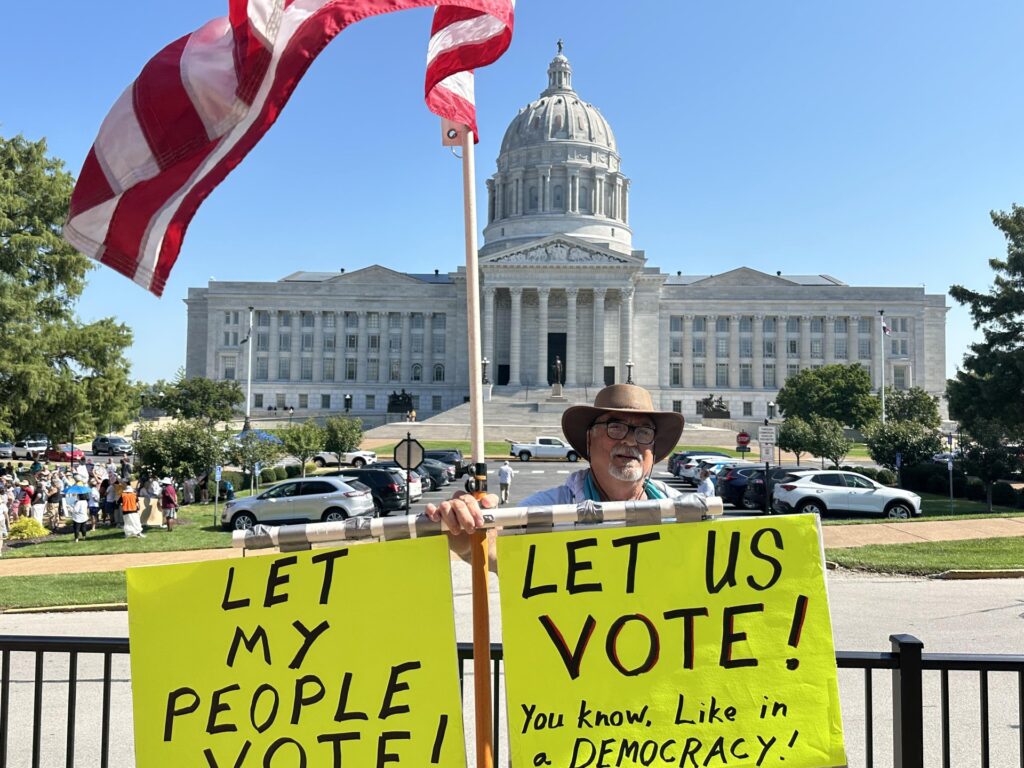
In a significant development just months before the midterm elections, the Missouri Supreme Court has blocked the controversial congressional map backed by former President Donald Trump. This ruling comes amid ongoing disputes over redistricting across the country, reflecting the high stakes involved in the drawing of electoral boundaries.
The Trump-backed map, which had been proposed by state Republicans, was intended to reshape the congressional districts in Missouri in a manner favorable to Republican candidates. Supporters argued that the map was a lawful exercise in redistricting, designed to reflect population changes and political realities.
However, opponents of the map contended that it was a partisan gerrymander aimed at unfairly diluting the voting power of Democrats and certain minority communities. They argued that the map violated principles of fair representation and the Missouri Constitution, prompting legal challenges that ultimately led to the Supreme Court’s intervention.
The Missouri Supreme Court’s decision to block the map underscores the judiciary’s role in moderating political disputes related to electoral fairness. The Court found issues with how the map was drawn, pointing out concerns about disproportionate advantage and potential violations of voters’ rights.
Republican officials in Missouri, however, have expressed strong opposition to the ruling. They argue that the map was a fair reflection of demographic data and that the court’s decision hampers efforts to prepare for the upcoming elections effectively. They have announced plans to appeal the ruling to the United States Supreme Court, seeking to have the map reinstated before the November midterm elections.
The appeal to the US Supreme Court will likely add another layer of complexity and national attention to the Missouri redistricting saga. This case could set important precedents regarding the limits of partisan influence in electoral map drawing and the balance of powers between state courts and the federal judiciary.
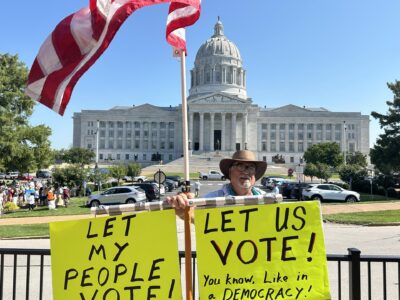
For voters and political observers in Missouri, the delay and uncertainty caused by the court battles complicate preparations for the midterms. The configuration of districts can significantly affect campaign strategies, voter outreach, and ultimately, election outcomes.
This ruling also reflects a broader national trend where courts are increasingly called upon to adjudicate disputes over redistricting, a process long known for its political sensitivity and impact on democratic representation. As redistricting continues across many states after the 2020 Census, Missouri’s legal battle may influence other states facing similar challenges.
In the coming weeks, all eyes will be on the US Supreme Court’s decision regarding the appeal. The outcome could either uphold the Missouri Supreme Court’s ruling, maintaining the block on the Trump-backed map, or overturn it, allowing Republicans to proceed with their proposed district boundaries.
As the midterm elections approach, these legal battles emphasize the critical importance of how electoral maps are drawn and the enduring fight over political control in American democracy. Missouri’s case serves as a vivid example of the intersection of law, politics, and the democratic process.