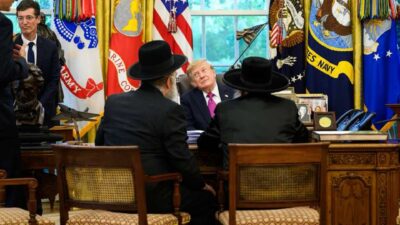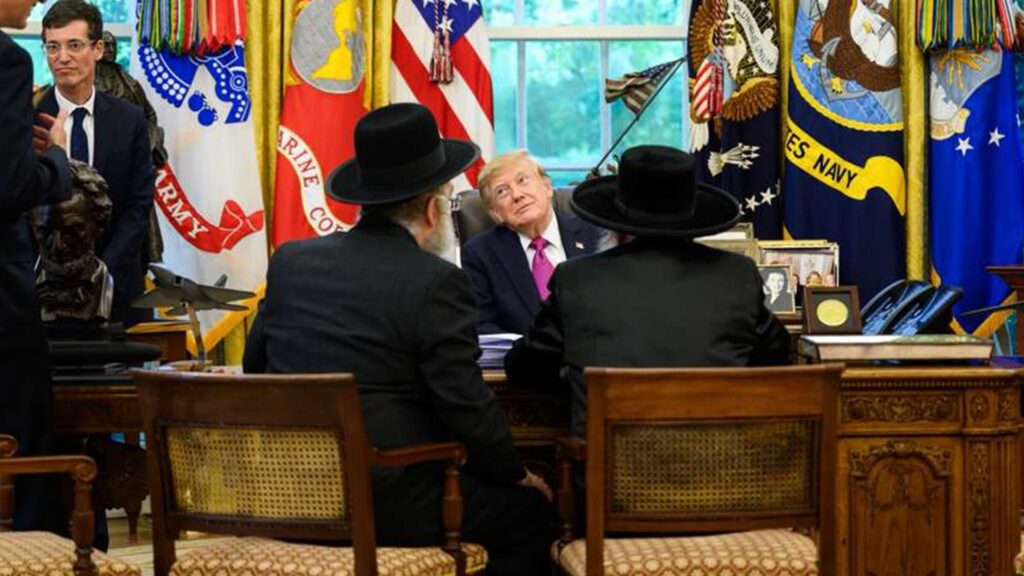
In a surprising turn of events, US President Donald Trump held a private meeting with six anti-Zionist rabbis. This meeting comes amid ongoing protests in Israel concerning military conscription policies.
The anti-Zionist Jewish leaders are known for their opposition to the ideology and political movement that supports the establishment of a Jewish state in the territory defined as the historic Land of Israel. These rabbis represent Jewish communities that reject Zionism on religious or political grounds.
President Trump’s choice to engage privately with these leaders signals a willingness to listen to diverse perspectives within the Jewish community, especially in the context of rising tensions in Israel. The Israeli government’s military conscription policies have been met with considerable resistance, especially from certain religious groups who object to their inclusion in the armed forces.
The protests have drawn international attention, highlighting the complexities and divisions within Israeli society regarding mandatory military service. By meeting with the anti-Zionist rabbis, Trump appears to be addressing the concerns of these dissenting groups, who fear that compulsory conscription threatens their religious principles and way of life.
This meeting may also be viewed as a strategic diplomatic move by the Trump administration to understand all facets of Israeli sociopolitical challenges. It extends beyond the usual discourse dominated by mainstream Zionist perspectives and acknowledges minority voices.
Critics of the meeting argue that engaging with anti-Zionist figures could complicate US-Israel relationships, as the Israeli government views Zionism as integral to its national identity. However, supporters contend that such dialogues are necessary for peace-building and fostering greater understanding.
Overall, President Trump’s private discussion with anti-Zionist rabbis underscores the multifaceted nature of Jewish identity and politics. It reflects the ongoing debates about military conscription in Israel and the broader implications for international diplomacy and intra-community relations.