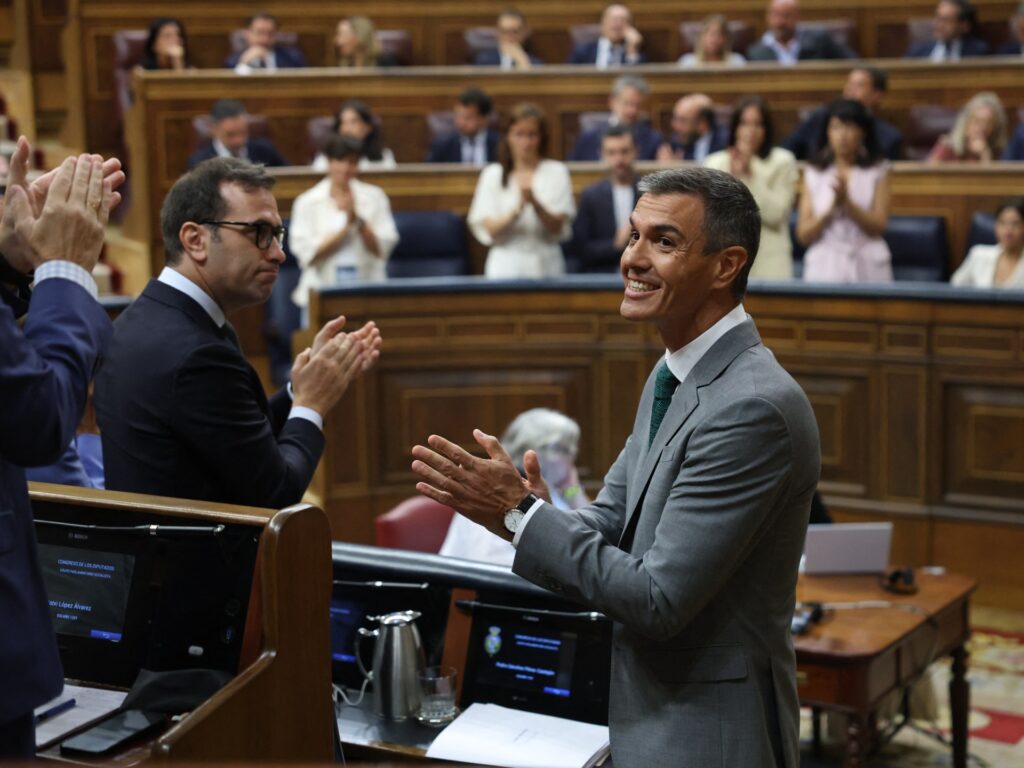
Spanish Prime Minister Pedro Sanchez has publicly addressed reports concerning a recent surge at the Ceuta border, dispelling claims that Morocco orchestrated a planned rush to overwhelm Spanish border controls. The incident, which occurred in July, involved a significant influx of migrants attempting to cross into the Spanish enclave of Ceuta, a Spanish autonomous city located on the northern coast of Africa bordering Morocco.
The surge prompted alarm both within Spain and across Europe, as Ceuta is one of the European Union’s external borders, and such unauthorized crossings have become a focal point in discussions about migration policy and border security.
According to a police report previously suggesting that the border rush was a coordinated attempt by Moroccan authorities to strain Spanish border control resources, Prime Minister Sanchez has denied any evidence supporting these claims. In his official statements, Sanchez emphasized the absence of proof that the Moroccan government planned the sudden increase of migrants in July.
“There is no verified evidence that Morocco intended this border pressure,” Sanchez said, highlighting the importance of maintaining collaborative relations between Spain and Morocco, who share longstanding economic, cultural, and political ties.
This diplomatic clarification comes amid rising tensions between the two nations, particularly regarding migration and border security issues, which have occasionally strained bilateral relations.
The Ceuta incident has drawn wide attention from human rights groups, European Union officials, and the international community, given the humanitarian implications for the migrants involved, many of whom are fleeing conflict, poverty, and instability in their home countries.
Spain’s government is reportedly working closely with Moroccan authorities to manage border security while respecting the rights and dignity of migrants. Coordination efforts include joint patrols, intelligence sharing, and initiatives aimed at addressing the root causes of migration.
Experts note that migrant surges at borders often result from complex social, political, and economic factors rather than orchestrated political maneuvers. They urge for increased regional cooperation and comprehensive migration policies that balance security concerns with humanitarian obligations.
The Prime Minister’s remarks seek to de-escalate tensions and prevent misinformation from exacerbating diplomatic relations. Spain continues to call for solidarity among European countries to support border regions and migrant reception capacities.
In conclusion, Spain’s Prime Minister Pedro Sanchez has clarified that there is no credible evidence to support the claim that Morocco planned the July border surge into Ceuta. This statement aims to reinforce diplomatic ties, promote mutual understanding, and foster a sustainable approach to managing migration challenges in the region.