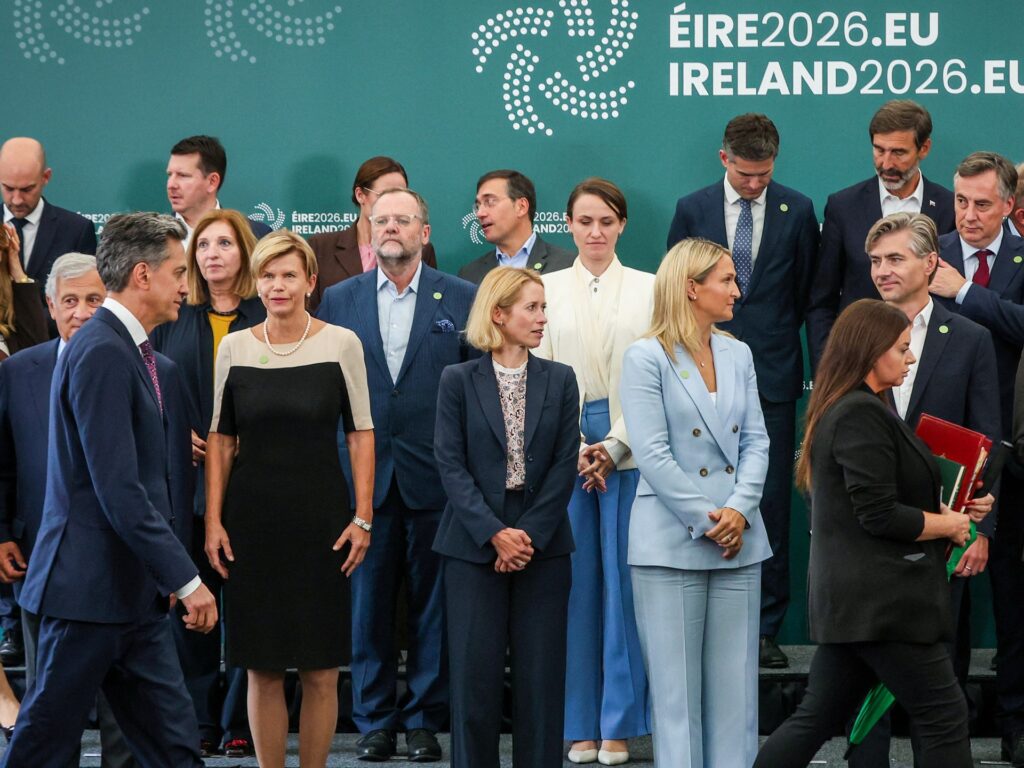
The European Union continues to face internal divisions over the imposition of trade sanctions on Israeli settlements considered illegal under international law. Irish Foreign Minister Helen McEntee has voiced concerns about the lack of unity within the bloc, emphasizing that the EU “should be moving collectively” to uphold international law and human rights standards.
The controversy centers on the EU’s response to Israeli settlements in the occupied Palestinian territories, which many international bodies and countries regard as illegal under the Geneva Conventions. These settlements have long been a source of tension and conflict in the Israeli-Palestinian peace process.
Several EU member states advocate for strong measures, including trade sanctions, to pressure Israel into halting settlement expansion. They argue that such sanctions are necessary to enforce international law and uphold the EU’s commitment to human rights.
However, other member states oppose sanctions, fearing that punitive measures could damage diplomatic relations with Israel and destabilize the region further. This division has led to delays and diluted responses from the EU, weakening its stance on the issue.
Ireland, in particular, has been a vocal critic of the settlements and has urged the EU to adopt a united and firm position. Helen McEntee highlighted the need for collective action, stating that fragmented policies undermine the bloc’s credibility and its ability to influence peace negotiations effectively.
The debate has broader implications for the EU’s foreign policy and its role as a global actor in promoting peace and justice. A cohesive EU approach could strengthen its influence in the Middle East and demonstrate a clear commitment to international legal norms.
Despite the ongoing disagreements, EU officials continue dialogue to reconcile differences and seek a common strategy. The outcome of these discussions will significantly impact the EU’s future relations with both Israel and Palestine, as well as its international standing.
The situation remains fluid, with expectations that upcoming EU summits will address the issue in greater detail. Observers note that the EU’s ability to find consensus on such a sensitive matter will be a test of its unity and diplomatic effectiveness in an increasingly complex geopolitical landscape.