Relations between Russia and Armenia have deteriorated to historic lows amid Armenia’s strategic repositioning toward the West and the European Union. This geopolitical shift has sparked tensions and a public spat between Russian President Vladimir Putin and Armenia’s Prime Minister, highlighting the broader struggle for influence in the Caucasus region.
Historically, Armenia has been one of Russia’s closest allies in the post-Soviet space, relying heavily on Moscow for security, economic support, and diplomatic backing. The two countries share a mutual defense pact, and Russia maintains a significant military presence on Armenian soil, underpinning a relationship built on strategic partnership and cultural ties.
However, recent developments suggest a pivot in Yerevan’s foreign policy agenda. Armenia has increasingly engaged with Western institutions, notably seeking closer ties with the European Union through enhanced cooperation and strategic agreements. This reorientation is driven by a combination of factors including economic aspirations, democratic reforms, and concerns about regional security dynamics.
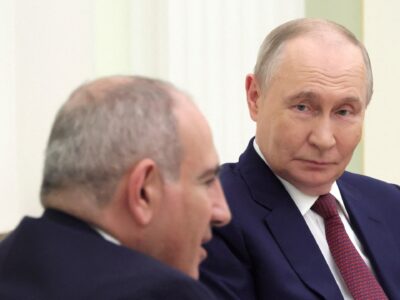
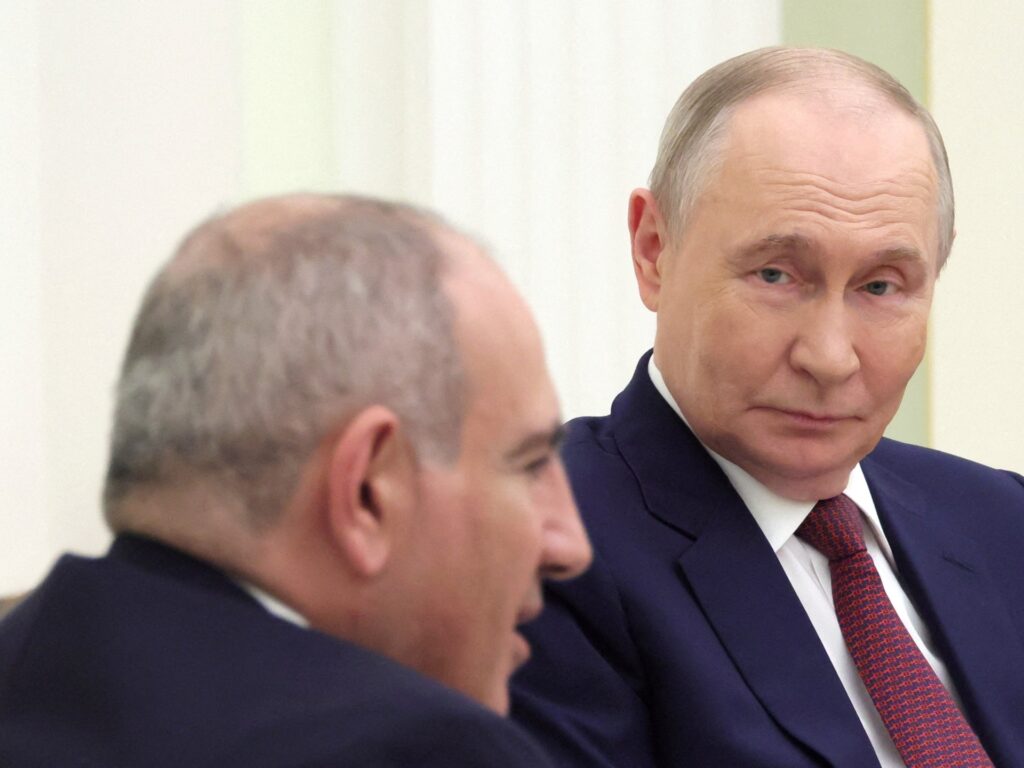
The conflict between Putin and Armenia’s Prime Minister surfaced during a diplomatic exchange marked by pointed criticisms. Putin expressed dissatisfaction with what he perceives as Armenia’s wavering loyalty within the Eurasian sphere of influence, emphasizing Russia’s expectations of unwavering partnership. Conversely, the Armenian leader defended his country’s sovereign right to diversify its alliances, underscoring the importance of balancing relations with both East and West for Armenia’s national interests.
Analysts suggest that this confrontation underscores the complexity of Armenia’s position. Straddling the line between Eurasian integration and European partnership, Armenia faces significant challenges in maintaining security cooperation with Russia, while fostering economic modernization and political reforms encouraged by the West.
The Nagorno-Karabakh conflict remains a critical backdrop to these tensions. Russia has played a mediating role in the ceasefire and peacekeeping efforts following the 2020 war between Armenia and Azerbaijan. Despite this, Armenia feels vulnerable and increasingly skeptical about Moscow’s commitment to its security, prompting a reevaluation of alliances.
Economic considerations also play a key role in Armenia’s pivot. The European Union offers promises of trade, investment, and developmental aid which are attractive for a country seeking to diversify its economy and reduce dependency on Russian markets and remittances.
Public opinion in Armenia is divided. While older generations may recall the benefits of close ties with Russia, younger Armenians generally favor closer connections with Europe, hoping for democratic reforms, better governance, and integration into global markets.
For Russia, Armenia’s westward tilt represents a diminishing influence in the Caucasus, an area of strategic interest where Moscow aims to maintain a buffer against NATO and Western encroachment. For Yerevan, however, the move towards the EU is a calculated step toward securing a more stable and prosperous future.
The recent public exchange between Putin and Armenia’s Prime Minister serves as a microcosm of this broader geopolitical contest. It highlights the diverging priorities—where Moscow insists on loyalty to the Eurasian economic and security structures, Yerevan asserts its sovereignty and seeks to chart a path that balances Eastern legacy with Western aspirations.
Going forward, the trajectory of Russia-Armenia relations will likely hinge on multiple factors: Armenia’s domestic political landscape, Russia’s strategic calculations in the region, and the evolving dynamics of EU engagement. The stakes are high, with potential ramifications for regional security, economic development, and the broader balance of power in Eurasia.
In conclusion, the sparring between Putin and Armenia’s Prime Minister is emblematic of a historic moment in post-Soviet geopolitics. Armenia stands at a crossroads, negotiating the complex interplay of political autonomy, economic opportunity, and security concerns. This evolving relationship underscores the challenges faced by smaller nations navigating between competing global powers in an increasingly multipolar world.