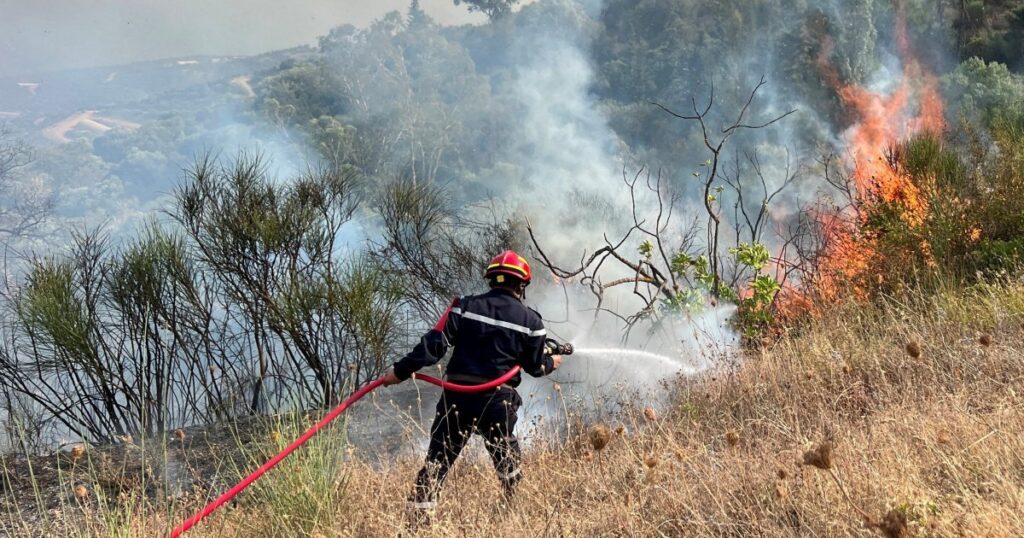
Algeria’s President Abdelmadjid Tebboune has made a significant call for the death penalty to be imposed on individuals responsible for starting forest fires. This strong stance follows a series of devastating wildfires in northeastern Algeria that have resulted in the tragic loss of at least 12 lives and left 54 people injured.
The recent wildfires have caused widespread destruction across the region’s forests, also leading to considerable damage to property and natural resources. The president’s call signals the government’s intent to take harsh measures against arsonists to prevent future incidences that threaten both human life and the environment.
Wildfires have traditionally posed a serious threat during the dry season in Algeria, exacerbated by climate change and human actions. The president’s statement reflects the urgency of addressing not only natural causes but also criminal behavior that leads to such catastrophic events.
In his announcement, President Tebboune emphasized that those who deliberately ignite forest fires will face the most severe penalties as a deterrent to protect citizens and preserve Algeria’s natural heritage. The government’s move aims to strengthen legal frameworks and enforcement to swiftly identify and prosecute offenders.
Law enforcement agencies have been mobilized to enhance surveillance and rapid response capabilities to combat forest fires. Additionally, awareness campaigns are being planned to educate the public on fire prevention and the severe consequences of arson.
This initiative underscores Algeria’s commitment to safeguarding its environment and the safety of its people amid growing concerns about climate change and environmental degradation. The death penalty proposal is controversial but highlights the gravity of the situation and the government’s resolve.
Experts and environmental groups are expected to weigh in on the proposed measures, balancing the need for strong action against the importance of due process and human rights considerations. Nonetheless, the president’s firm stance sends a clear message about the government’s priorities in disaster prevention and environmental protection.
The wildfires have also raised concerns about emergency preparedness and resource allocation for firefighting efforts. President Tebboune has called for increased investment in firefighting infrastructure and training for personnel to respond more effectively to such disasters.
The recent events in northeastern Algeria serve as a grim reminder of the challenges posed by forest fires and the critical importance of collective action to prevent and mitigate their impact. The president’s call for the death penalty is aimed at reinforcing deterrence against causing such environmental catastrophes and protecting communities from future harm.