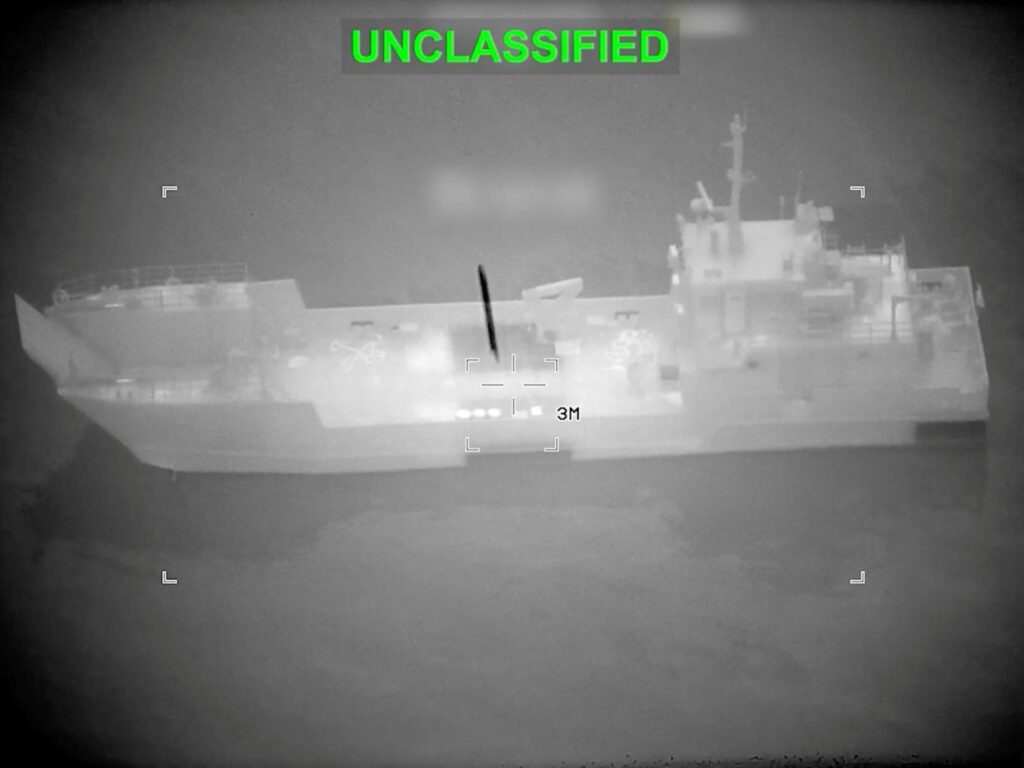
Recent claims by the United States suggest that Iran might use rockets to deploy mines in the strategically vital Strait of Hormuz. This assertion has stirred significant concern among international observers, considering the critical role the Strait plays in global oil transportation, with a substantial percentage of the world’s petroleum passing through this narrow passage.
Experts and analysts, however, largely view the scenario as implausible. The technical and operational challenges involved in using rockets for precise mine deployment in a maritime environment are substantial. Mining the Strait of Hormuz in such a manner would require highly sophisticated capabilities to ensure accuracy and effectiveness, which are not commonly associated with conventional rocket systems.
Despite these doubts, it is well established that Iran has a history of adapting conventional weapons creatively to fit its strategic needs. Over the years, Iran has demonstrated an ability to innovate and modify military hardware under constraints imposed by sanctions and other external pressures. This adaptability enhances Iran’s asymmetric warfare capabilities, allowing it to potentially disrupt adversaries despite lacking parity in conventional military strength.
Moreover, Iran’s strategic posture in the Persian Gulf is characterized by a significant emphasis on asymmetric tactics, including mine warfare and missile deployments. The deployment of mines in the Strait of Hormuz is not a new tactic; Iran has been known to use underwater mines as a deterrent and a means to threaten maritime traffic in the region.
Nevertheless, the specific claim about using rockets to mine the Strait introduces questions about feasibility. Rocket delivery systems traditionally provide rapid strike capability over a distance but lack the precision and control needed for effective mine placement, which usually demands careful handling and deployment to avoid self-endangerment and ensure the mines remain effective against target vessels.
Analysts caution that while Iran might be capable of experimentation or testing unconventional deployment methods, the operational use of rocket-launched mines is unlikely to become a standard tactic due to the risks and technical hurdles involved.
The geopolitical implications of the alleged capability are significant. The Strait of Hormuz is a critical chokepoint, and any disruption to shipping through it could have global economic repercussions. The US and its allies maintain a strong interest in securing this passage to ensure uninterrupted oil flow.
The discussion also highlights Iran’s broader military strategy, which focuses on creating cost-effective, innovative means of defense and offense. This strategy is grounded in maximizing the utility of limited resources and leveraging asymmetric methods to counterbalance more technologically advanced adversaries.
In conclusion, while the claim that Iran can use rockets to mine the Strait of Hormuz remains contentious and is viewed skeptically by many experts, it underscores a broader reality: Iran’s military ingenuity and adaptability make it a complex and evolving challenge in regional security calculations. Vigilance and continuous analysis are essential to understanding the full scope of Iran’s capabilities and intentions in this strategically critical region.