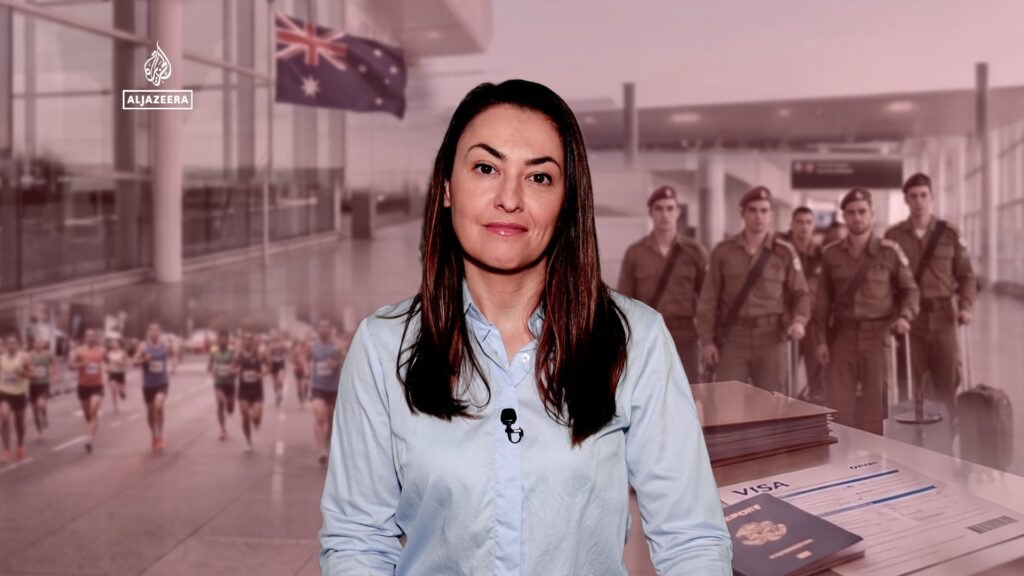
Australia has recently come under scrutiny and pressure over its visa policies, particularly regarding the contrasting treatment of Israeli soldiers and the renowned Egyptian satirist Bassem Youssef. The government has faced public questions and criticism over why it granted visas to dozens of Israeli soldiers, permitting their entry into the country, while denying a visa to Bassem Youssef.
The issue has sparked a wider debate on Australia’s visa policies, border control criteria, and the factors influencing these decisions. The Australian government’s approach to national security and immigration has traditionally involved strict measures, often emphasizing the need to protect domestic safety and uphold diplomatic protocols.
Israeli soldiers were allowed visas primarily for participation in official visits, joint military training exercises, or cultural and diplomatic exchanges, often tied to Australia’s defense and bilateral cooperation strategies. These visas are generally issued under strict supervision and with vetted security clearances aligned with Australia’s alliances and foreign policy objectives.
In contrast, Bassem Youssef, known internationally as a satirist and critic, particularly concerning political and social themes in the Middle East, was denied a visa. Official reasons for such denials usually involve concerns around immigration rules, potential security threats, or political considerations. Though Youssef has advocated for social change and human rights, authorities may have viewed the granting of a visa as potentially politically sensitive or contrary to certain diplomatic priorities.
Critics argue that this demonstrates inconsistency or political bias in Australia’s visa issuance process. Human rights advocates and supporters of free speech have pointed out that denying a platform to a vocal critic of authoritarianism while welcoming soldiers from a contentious international conflict zone raises important questions about Australia’s stance on freedom of expression versus security and diplomacy.
Australia’s officials maintain that every visa decision is made after comprehensive risk assessments and international cooperation. The government insists that the decisions on Israeli soldiers were consistent with bilateral agreements and the strategic interests of Australia. Meanwhile, visa denials to individuals such as Youssef were positioned as standard enforcement of immigration laws prioritizing national security.
This controversy reflects broader global tensions where governments balance immigration policies against diplomatic relations, security concerns, and human rights commitments. Australia is facing calls for greater transparency and criteria clarification, urging the country to articulate clearer guidelines on how visa applications are evaluated when political or security concerns intersect.
As this story continues to unfold, it highlights the complex intersection of immigration policy, international relations, and freedom of expression — illustrating the challenges governments face in managing these sometimes competing priorities in a globalized world.