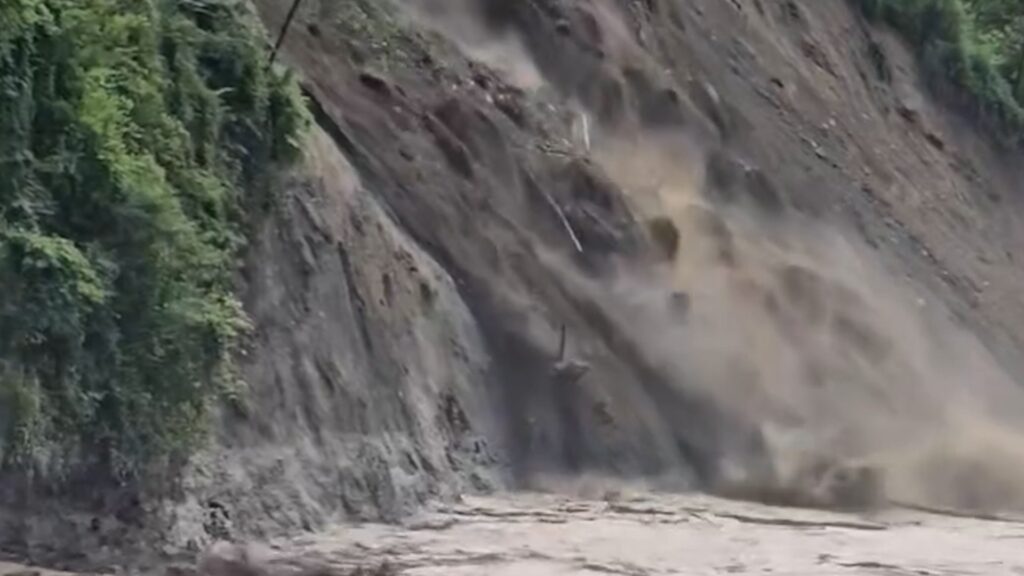
A vital highway in Nepal has collapsed just four days after a catastrophic glacial outburst flood, which had already weakened the infrastructure. The incident occurred amid a series of natural disasters triggered by heavy monsoon rains that caused widespread flooding across the region.
The landslide swept away a large part of the highway, disrupting essential connectivity for remote communities and hampering relief efforts. This collapse is a direct consequence of the saturated ground and unstable terrain following the severe flooding.
Local authorities have confirmed that the highway served as a crucial link for transportation and commerce, facilitating the movement of goods and people across several districts. The disruption has stranded many travelers and slowed the delivery of aid to affected populations.
Rescue teams and engineers are working tirelessly to assess the damage and restore the road, but the terrain remains precarious due to ongoing rainfall and the risk of further landslides. Emergency services are urging people to avoid the area for their safety.
This event highlights the vulnerability of Nepal’s infrastructure to climate-induced disasters, especially in mountainous regions where landslides frequently occur after torrential rains. Experts emphasize the need for improved disaster preparedness, investment in resilient infrastructure, and afforestation to stabilize slopes.
Nepal has experienced increasing frequency and intensity of natural calamities in recent years, aggravating development challenges and threatening livelihoods. The government is coordinating with local and international agencies to address immediate relief needs and to plan long-term strategies for disaster risk reduction.
In addition to infrastructural damage, the floods and subsequent landslides have caused casualties and displaced multiple families. Humanitarian organizations are mobilizing resources to provide shelter, food, and medical care to those affected.
The recent highway collapse serves as a somber reminder of the cascading impacts natural disasters can have on a fragile environment and infrastructure. Nepal’s experience underscores the critical importance of climate adaptation measures and community resilience in the face of increasingly unpredictable weather patterns.
As the monsoon season continues, meteorologists warn of more heavy rainfall events, which could trigger additional landslides and floods. Authorities are closely monitoring weather conditions and advising residents in vulnerable areas to remain vigilant and prepared.
Efforts to rebuild and strengthen road networks are underway, with a focus on implementing better engineering practices and early warning systems. International support and knowledge-sharing will be vital to ensuring Nepal’s infrastructure can withstand future climate challenges.
This incident calls for urgent attention to the intersection of climate change, disaster management, and sustainable development to protect lives, livelihoods, and vital infrastructure in Nepal and similar regions worldwide.