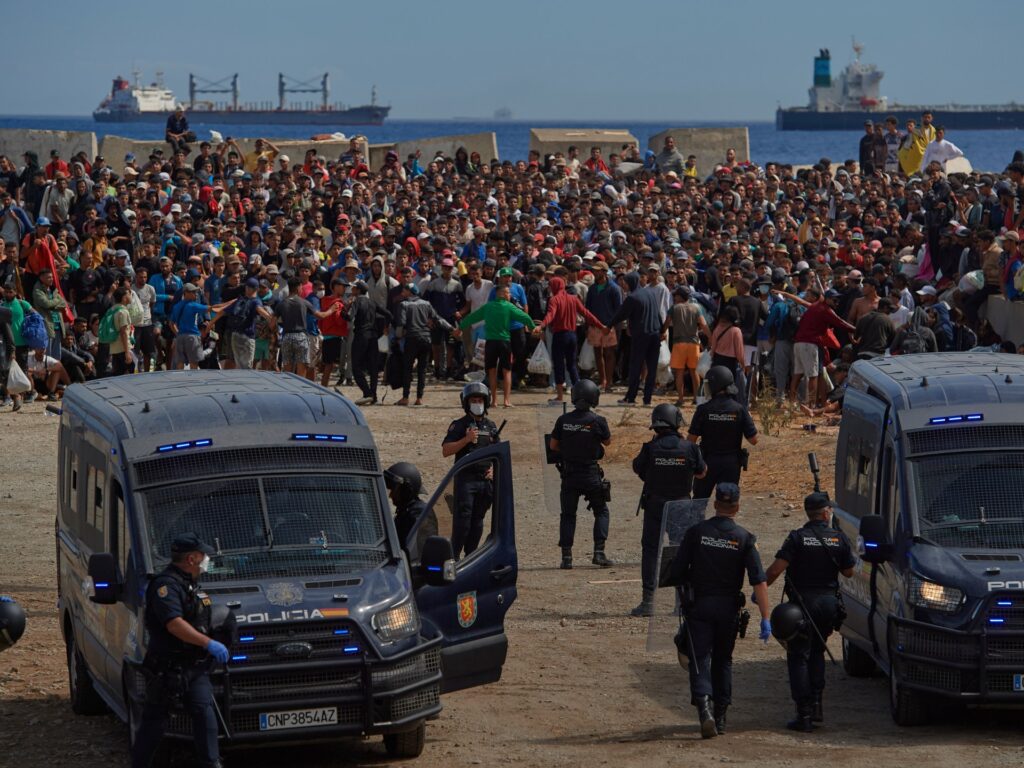
Spain has formally requested assistance from the European Union to manage the influx of approximately 5,000 migrants currently residing in the Spanish enclave of Ceuta. This surge in arrivals has sparked significant local unrest and prompted widespread concern among Ceuta residents, who are struggling with the sudden and substantial increase in population. Ceuta, located on the north coast of Africa, is one of the two Spanish territories bordering Morocco, acting as a critical entry point into Europe for migrants. The local government has reported challenges in providing adequate services, including housing, healthcare, and security for the migrants and the local population. Residents have expressed frustration and fear as the enclave grapples with the socio-economic pressures brought about by the migrant presence. In response, Spain has called on the EU to provide financial support, logistical aid, and coordinated border management strategies to alleviate the pressure on Ceuta’s infrastructure. European officials have acknowledged the seriousness of the situation. Discussions are underway to enhance cooperation between Spain, Morocco, and EU agencies to address the root causes of migration and to improve humanitarian assistance. The situation in Ceuta highlights the broader challenges facing Europe regarding migration and border control, especially in enclaves with direct geographical proximity to migrant departure points. Spain’s request reflects a call for solidarity and shared responsibility among EU member states in managing migration flows and ensuring the stability of frontier territories. As the debate continues, the priority remains to balance security concerns with the protection of human rights and to foster integration and support mechanisms for migrants and local communities alike. The EU’s potential involvement could mark a significant step towards addressing the ongoing migration pressures in Ceuta and similar regions across Europe.