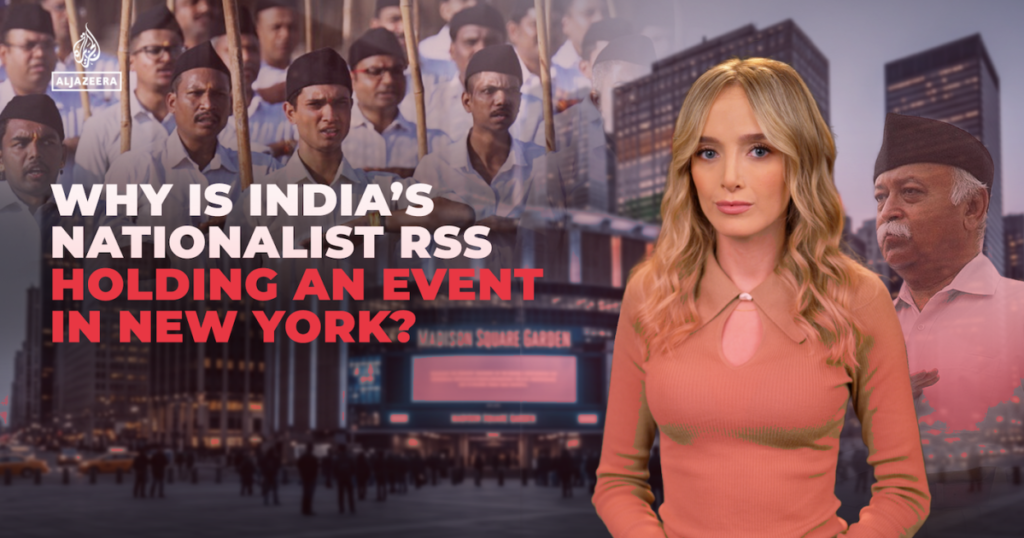
The Rashtriya Swayamsevak Sangh (RSS), India’s influential and often controversial Hindu nationalist organization, is organizing a significant event in New York, where its head is scheduled to speak. This event has drawn considerable attention due to the RSS’s strong ideological stance and its role in India’s political and cultural landscape. The RSS, founded in 1925, has been a critical force in shaping Hindu nationalist ideology in India. Its connection with the ruling Bharatiya Janata Party (BJP) makes its activities, including international outreach, particularly noteworthy.
Holding an event in New York signifies the RSS’s ambition to expand its influence beyond India, aiming to connect with the vast Indian diaspora present in the United States. This diaspora, which numbers in the millions, includes a significant population that identifies with or is interested in Hindu nationalist ideas. By conducting events in global cities like New York, the RSS seeks to strengthen ties with overseas supporters, share its worldview, and mobilize support for its ideological agenda on an international platform.
The New York event also reflects the RSS’s strategic efforts to present its perspective within global discussions on nationalism, identity, and diaspora politics. It is part of a broader pattern of the RSS engaging in soft power diplomacy to reshape narratives about India and Hinduism abroad. This outreach is often seen against the backdrop of rising nationalism in India and the contentious debates over pluralism, secularism, and the role of religion in public life.
Critics of the RSS argue that its ideology promotes exclusionary nationalism and threatens the secular fabric of Indian democracy. The international community closely watches such events, given their potential implications for communal harmony and diplomatic relations. However, supporters assert that the RSS plays a vital role in promoting cultural pride, unity, and national integrity.
The head of the RSS speaking in New York symbolizes the organization’s intent to assert its ideological presence on the world stage. It provides a platform to address not only Indian expatriates but also policymakers, academics, and international observers interested in understanding the currents shaping contemporary India.
In summary, the RSS’s event in New York is a strategic move to deepen its engagement with the global Indian community, promote its nationalist ideology internationally, and influence the discourse on India’s identity and future. Given the complex and sensitive nature of the RSS’s role in Indian society, such international events are closely scrutinized for their wider political and social impact.