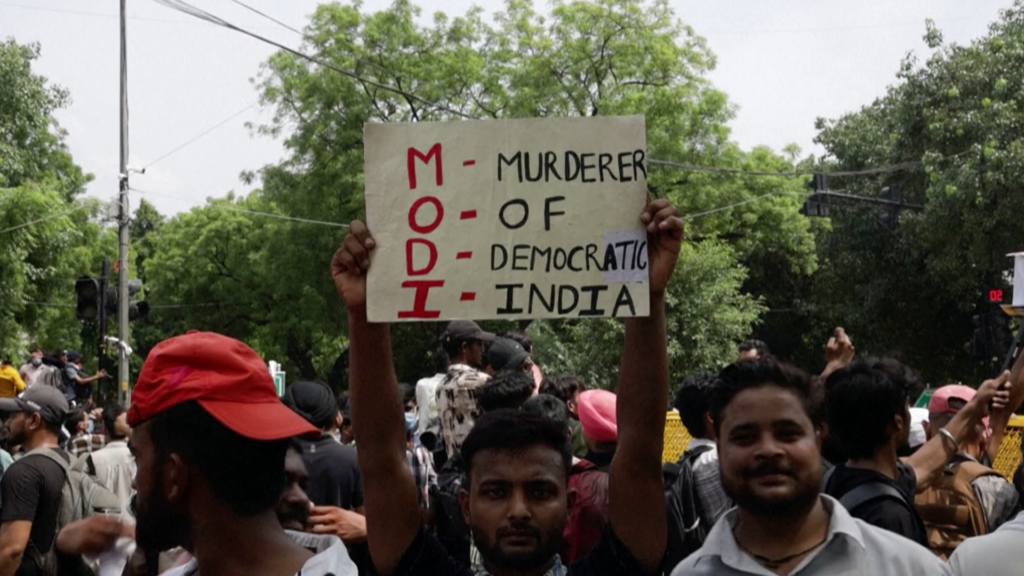
In recent weeks, India has witnessed a significant crackdown on protesters accused of ‘abusing’ Prime Minister Narendra Modi during a wave of nationwide youth protests. Authorities have responded with a combination of police cases, social media takedowns, and investigations into alleged online abuse against the Prime Minister.
The protests, primarily led by young activists and students, began as a response to various socio-political issues, including concerns over governmental policies and rising economic challenges faced by India’s youth. Demonstrators gathered in multiple cities, voicing their discontent through marches, rallies, and public speeches.
However, the movement drew swift attention from Indian law enforcement agencies as the government intensified efforts to curb expressions perceived as insulting towards Modi. Police have filed numerous cases against participants accused of using derogatory language or slogans targeting the Prime Minister. In several instances, individuals were arrested or summoned for questioning about alleged inflammatory comments.
Social media platforms have become another battleground, with authorities requesting the removal of content viewed as offensive or abusive towards Modi. These takedown orders have sparked debates about freedom of speech and the scope of governmental power in regulating online expression. Critics argue that these actions may suppress legitimate dissent and set a precedent for censorship.
The crackdown extends beyond physical protests and online content moderation. Reports of online harassment and intimidation of protesters have surfaced, including abusive messages and threats shared via social networks and messaging apps. Such tactics aim to discourage activism and silence critics of the government.
Supporters of the crackdown claim that protecting the dignity of the Prime Minister is essential to maintaining respect for democratic institutions. They argue that abuse or hate speech undermines political discourse and can incite unrest.
Conversely, human rights advocates caution against conflating criticism with abuse. They emphasize the importance of safeguarding citizens’ rights to free expression and peaceful protest, warning that excessive restrictions could stifle democratic engagement.
The Indian government’s approach highlights the ongoing tension between security concerns and civil liberties in a rapidly changing social and political landscape. As youth protesters continue to voice their grievances, the balance between maintaining order and respecting dissent remains a contentious issue.
International observers have closely monitored these developments, noting that the situation reflects broader global challenges regarding political leadership scrutiny and social media regulation.
This crackdown comes at a time when India is grappling with complex internal dynamics, including economic pressures, social reforms, and a diverse, politically active population eager to shape the country’s future.
In summary, the Indian government’s intensified response to alleged abuse against PM Narendra Modi amid youth-led protests underscores the delicate interplay between governance, freedom of expression, and the evolving role of social media in political activism. The outcomes of this situation will likely influence how democratic societies worldwide address dissent and protect political figures from defamation while preserving civil rights.