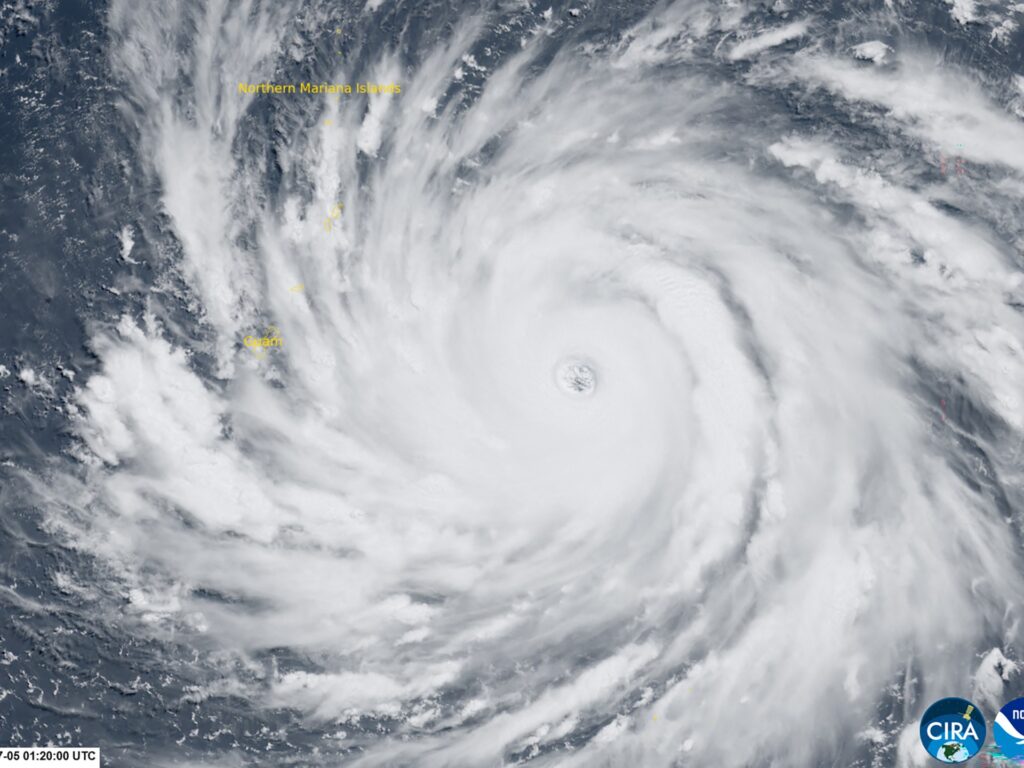
Super Typhoon Bavi, once classified as a super typhoon, has been downgraded but remains a significant threat as it approaches China’s eastern coast. Despite the downgrade, meteorologists warn that Bavi is still dangerous, bringing with it strong winds, heavy rainfall, and the potential for severe flooding and landslides in the affected regions.
The Chinese government has initiated massive evacuation efforts, with hundreds of thousands of residents being moved to safer locations away from the projected path of the storm. Authorities have emphasized the importance of preparedness, urging local communities to secure properties, stock up on essentials, and follow official advisories.
Typhoon Bavi formed over the Western Pacific Ocean and gradually intensified, reaching peak strength as a super typhoon. Its trajectory shifted slightly, sparing some areas from the worst impacts, but causing others to experience severe weather conditions.
Meteorologists explain that even though the storm’s wind speeds have decreased, its size and the volume of moisture it carries still make it a formidable force. Coastal regions are particularly vulnerable to storm surges and flooding, while inland areas may suffer from heavy rainfall-induced landslides.
Emergency services across multiple provinces have been put on high alert, with rescue teams and medical personnel ready to respond to any incidents. Transportation networks, including airports and seaports, have been disrupted as precautionary measures, with many flights canceled or delayed.
Schools and businesses in the projected path have temporarily closed, and public transport services have been scaled back to ensure safety.
The Chinese Meteorological Administration continues to provide regular updates and warnings as Typhoon Bavi progresses. International weather agencies are also monitoring the storm closely given its potential impacts on neighboring countries.
Experts stress that, even with the downgrade, residents should not underestimate the dangers posed by the typhoon. High winds can cause structural damage, down power lines, and lead to widespread power outages, while heavy rains can overwhelm drainage systems and cause flash floods.
In past years, typhoons of similar intensity have led to devastation, making proactive evacuation and emergency preparedness crucial. The government’s swift response aims to minimize casualties and property damage.
Meteorologists will continue to track Typhoon Bavi’s movement and strength over the coming days, providing updated forecasts to ensure the safety of populations in its path.
Residents are advised to stay informed through reliable sources and avoid unnecessary travel until the storm passes and authorities declare it safe.
The approaching typhoon serves as a reminder of the importance of disaster readiness and the resilience of communities facing natural calamities regularly.
As cleanup and recovery begin post-storm, the focus will shift to supporting affected families and restoring infrastructure to normalcy.