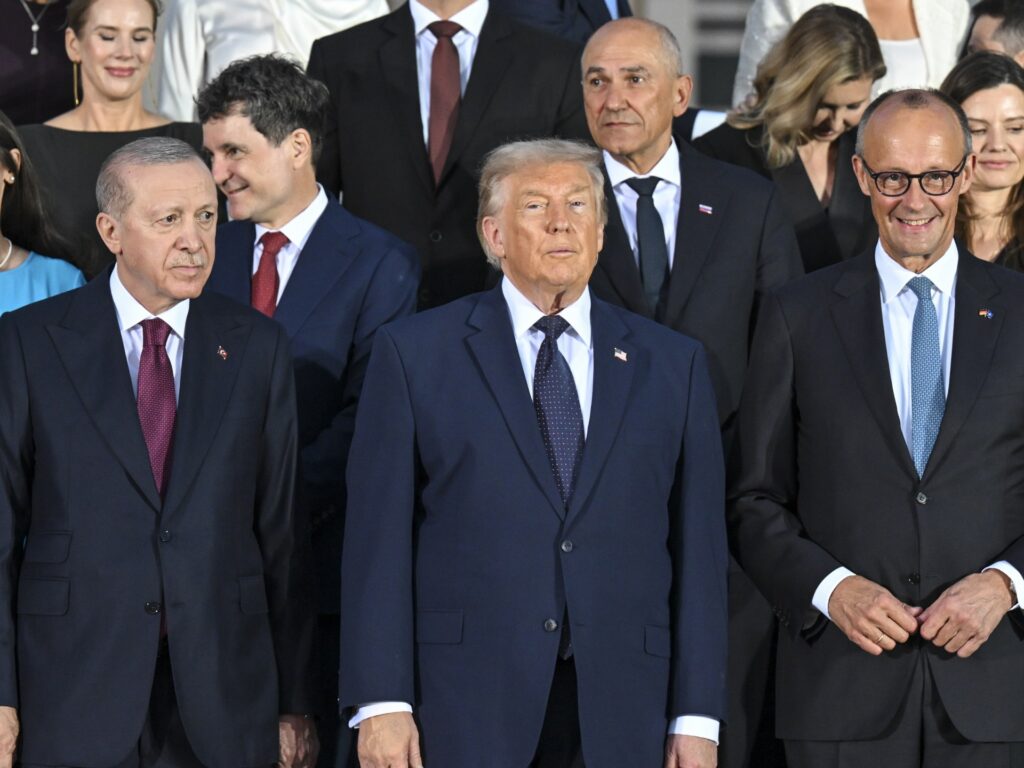
During the recent NATO summit, U.S. President Donald Trump launched a fierce critique of NATO allies, singling out Spain for particular condemnation. Trump’s remarks painted a stark picture of strained relationships within the alliance, highlighting his discontent with certain member countries.
Addressing the gathered leaders, Trump did not hold back his criticism, accusing several NATO members of failing to meet their financial commitments and undermining the unity of the alliance. Among those singled out, Spain drew the sharpest rebuke as Trump labeled it a ‘terrible partner in NATO.’ This pointed comment underscores growing tensions between the U.S. and some European allies regarding defense spending and burden-sharing.
The summit, which aims to address collective security and cooperation among member nations, was marked by these contentious exchanges that reflect the challenges NATO faces amid evolving global threats.
Trump’s statements have sparked reactions across Europe, with Spanish officials responding to defend their country’s contributions to NATO. The criticism has also fueled broader discussions about the alliance’s future and the need for member states to uphold shared responsibilities.
NATO, formed in 1949 to provide collective defense against common threats, has traditionally been a cornerstone of transatlantic security. However, the recent discord at the summit highlights the pressures the alliance faces in maintaining cohesion and adapting to new geopolitical realities.
President Trump’s direct approach at the summit brings attention to the need for reforms within NATO to ensure that all members contribute equitably. The U.S. has long advocated for increased defense spending by European members, arguing that the burden should be more evenly distributed.
Spain, as a member of NATO since 1982, has participated in various alliance missions and operations. Despite Trump’s harsh words, Spanish officials emphasize their commitment to collective defense and express hope for constructive dialogue moving forward.
The summit discussions also touched upon other critical issues, including cybersecurity threats, terrorism, and the strategic challenges posed by countries like Russia and China. These topics underscore the complexity of maintaining security in a rapidly changing world.
As NATO looks ahead, the summit’s outcomes are likely to influence the direction of alliance policies and cooperation. The tensions revealed by Trump’s comments may serve as a catalyst for renewed efforts to strengthen unity and resolve differences.
In summary, the NATO summit spotlighted significant disagreements among member states, with President Trump openly criticizing allies and labeling Spain a ‘terrible partner.’ This event underscores ongoing debates about the future of NATO and the collective responsibilities of its members.