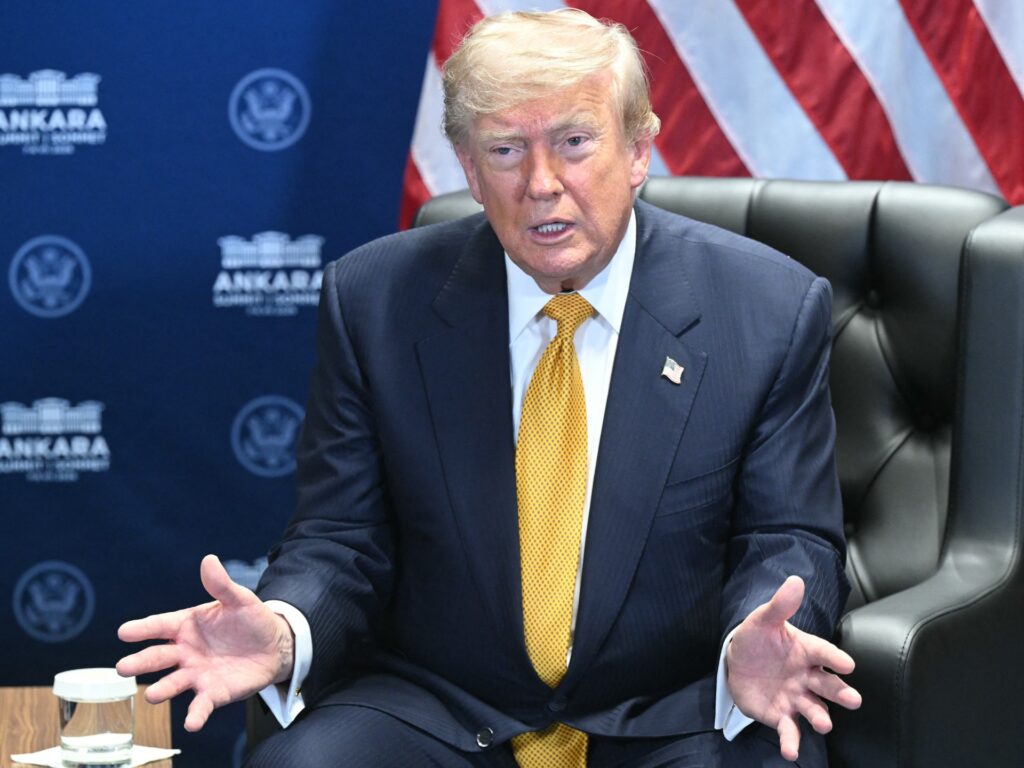
In a dramatic announcement at a NATO summit, former President Donald Trump declared that the ceasefire between the United States and Iran is officially ‘over.’ This statement comes in the wake of escalating tensions after Iran launched attacks on bases hosting US forces in the Gulf region, specifically targeting locations in Kuwait and Bahrain.
These recent developments mark a significant deterioration in relations between the two nations, which had been cautiously distancing themselves from overt conflict. The Iranian strikes on military installations used by US personnel represent a serious escalation, prompting immediate concern among international observers and political leaders.
At the NATO summit, Trump emphasized that the violent exchanges between the US and Iran signal the end of any temporary peace arrangements, suggesting that further military and political responses may be imminent. His remarks drew attention to the fragile state of Middle Eastern geopolitics and the potential for broader regional instability.
The situation began to intensify when Iran executed missile and drone strikes on two critical bases in Kuwait and Bahrain, where US troops are stationed to support coalition efforts and maintain regional security. These attacks were viewed by many as retaliatory measures for previous US actions against Iranian interests.
US military officials quickly assessed the damage and casualties, which, although not yet fully disclosed, are believed to have impacted both personnel and infrastructure. The US government has condemned the attacks strongly, calling them unprovoked and a violation of international norms.
Diplomatic channels remain strained as both countries prepare for potential further confrontations. The US continues to work with its allies, including NATO members, to coordinate a response and reassure regional partners. Discussions about implementing stricter sanctions or even military reprisals are ongoing.
Analysts warn that the breakdown of the ceasefire could have far-reaching consequences beyond the immediate conflict zone. The Gulf region, already volatile due to existing proxy wars and political rivalries, may see an escalation in violence affecting global oil markets, international shipping lanes, and diplomatic alliances.
The international community has called for restraint and dialogue to prevent a full-scale war. United Nations representatives and various governments have urged both Tehran and Washington to prioritize de-escalation and return to negotiation tables.
This announcement by Trump highlights the precarious balance of peace in the Middle East and underscores the challenges facing global security institutions like NATO in managing conflicts involving state and non-state actors.
As the situation continues to develop, the world watches closely, hoping for a restoration of stability but preparing for the possibility of intensified hostilities between the US and Iran.