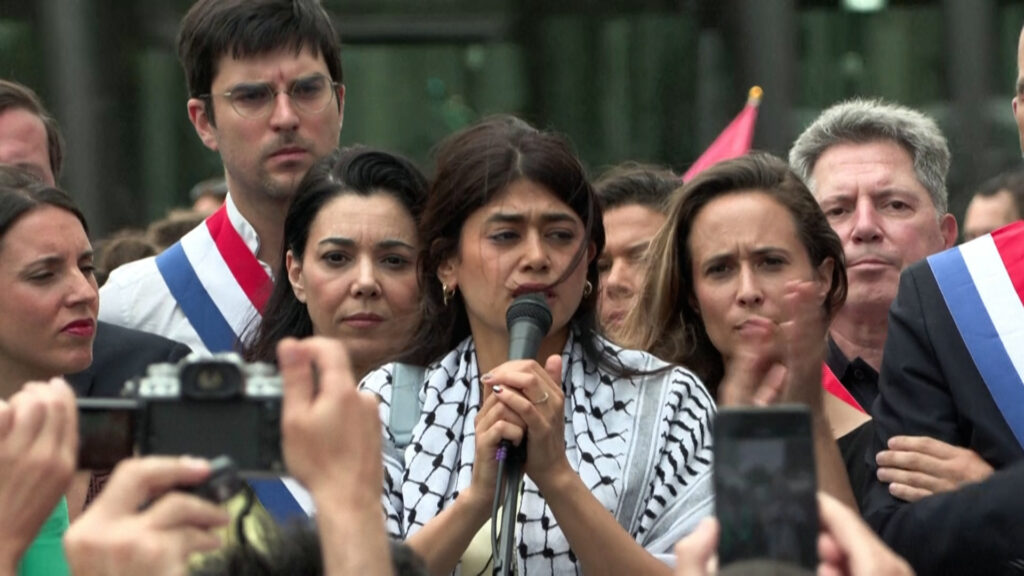
Rima Hassan, a pro-Palestine Member of the European Parliament (MEP), arrived at her trial in Paris amidst a tense atmosphere, declaring to the gathered crowd “No one is safe anymore.” The trial revolves around accusations that she glorified terrorism, a charge that has sparked widespread attention and stirred debates about freedom of expression and political activism in Europe.
Rima Hassan, known for her vocal support of the Palestinian cause, is facing legal scrutiny in France as authorities investigate statements and actions attributed to her that allegedly promote or justify terrorist activities. The case has drawn significant media coverage because it highlights the thin line between political commentary and legal boundaries concerning terrorism-related speech.
At the outset of the trial, Hassan addressed those gathered outside the courthouse, underscoring the fear and insecurity felt by individuals engaged in contentious political discourse. Her statement “No one is safe anymore” resonates beyond her personal situation, pointing to broader concerns about increased surveillance, legal repercussions, and the curtailment of dissenting voices in Europe’s political landscape.
The prosecution argues that Hassan’s rhetoric crossed the line into glorification of terrorism, a serious offense under French law that carries significant penalties. They contend that her expressions exceeded the limits of protected free speech by potentially inciting violence or endorsing acts deemed terrorist in nature.
Supporters of Hassan claim that the charges are politically motivated attempts to silence a critical voice advocating for Palestinian rights. They emphasize that freedom of expression must be upheld, especially for elected officials who represent diverse and often marginalized perspectives within the European political framework.
This trial raises complex questions about how democracies balance national security interests with the protection of civil liberties. The sensitive political context of the Israeli-Palestinian conflict further complicates the issue, with emotions and stakes running high on all sides.
Legal experts note that the case could set an important precedent for future cases involving political speech and accusations of terrorism glorification. The outcome may influence how lawmakers, activists, and the judiciary approach similar issues moving forward.
Observers across Europe and the international community are closely watching the proceedings, recognizing the potential implications for political activism, freedom of speech, and the rule of law.
As the trial progresses, it is expected to prompt intense debate over how governments can effectively combat terrorism without undermining democratic values and fundamental human rights.
Rima Hassan’s case symbolizes a pivotal moment in contemporary European politics where the challenges of security, justice, and expression intersect. The verdict will likely resonate well beyond the courtroom, shaping the discourse on political freedoms and the limits of lawful dissent in times of conflict and tension.