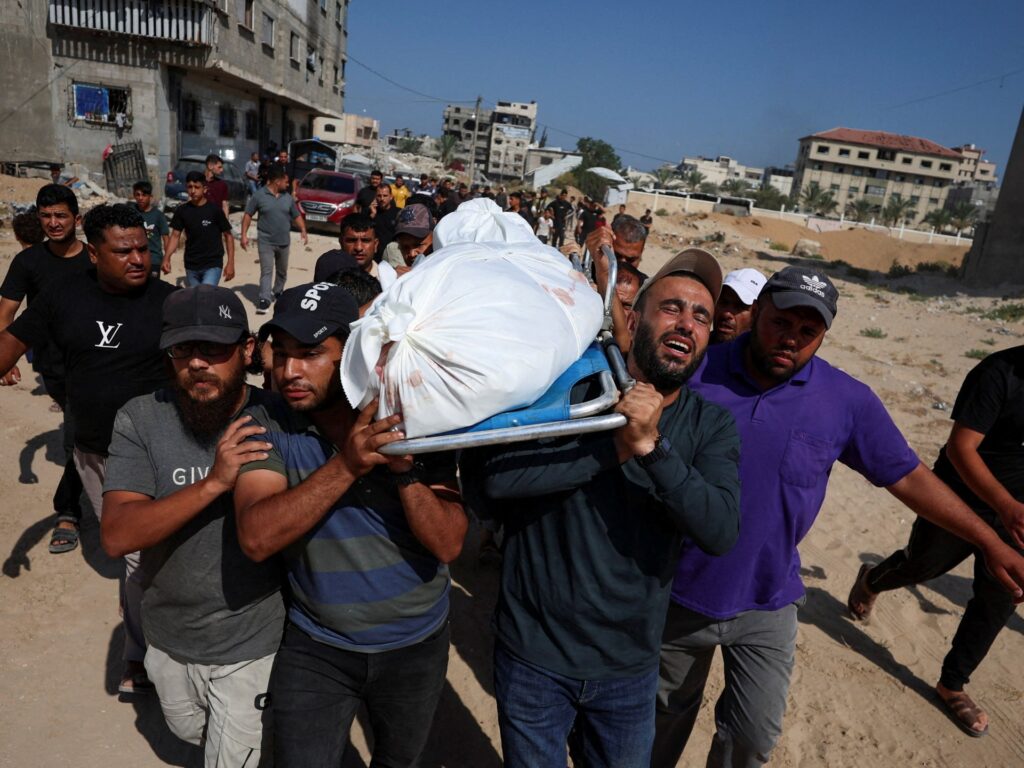
In a significant development amidst ongoing regional tensions, the body of Iran’s Supreme Leader Ayatollah Ali Khamenei has been transported to Qom, a city that holds great religious importance in Iran. This move carries immense symbolic weight given Qom’s status as a center for Shia scholarship and religious authority. As the nation braces for major public mourning and ceremonies, the implications of Khamenei’s passing resonate deeply within both Iran and the broader Middle East.
Simultaneously, another key event has unfolded in Gaza, where Hamas has announced the dissolution of its governing administrative body. This decision marks a pivotal shift in the governance of the Gaza Strip, which has been under Hamas control since 2007. The militant group’s move to cede power is intended to pave the way for the establishment of a technocratic committee. This new administrative entity is expected to focus on pragmatic governance, potentially improving administrative efficiency and international relations.
The replacement of Hamas’ political leadership with a technocratic committee comes amid increasing regional and international pressure. Gaza faces multiple challenges, including economic hardships, governance issues, and ongoing conflict with Israel. The technocratic committee will likely aim to address these concerns by deploying experts skilled in administration, economics, and humanitarian aid.
The shift could help foster cooperation with international agencies and donors who have often been hesitant to engage with Hamas due to its militant background and designation as a terrorist organization by several countries. Incorporating neutral technocrats could open doors to increased aid and reconstruction opportunities in the beleaguered Gaza Strip.
Meanwhile, Iran is navigating its own complex political landscape following the death of Khamenei, who had been the country’s highest authority for more than three decades. His passing triggers a crucial succession process, the outcome of which could influence Iran’s domestic affairs, its foreign relations, and its policies towards proxy groups in the region, including Hamas.
The timing of these two significant developments underscores the rapidly evolving nature of Middle Eastern geopolitics. Iran’s potential leadership transition and Hamas’ governance overhaul in Gaza may have ripple effects on regional stability, especially in relation to the ongoing Israel-Palestine conflict.
Observers anticipate that the new technocratic governance in Gaza may attempt a more diplomatic approach to conflict resolution and attempt to alleviate the humanitarian crisis. At the same time, Iran’s successor will face the challenge of maintaining the strategic alliances and ideological directions set by Khamenei.
In conclusion, the arrival of Khamenei’s body in Qom signals a momentous period of reflection and transition within Iran. Concurrently, Hamas’s decision to dissolve its governance body and establish a technocratic committee signals a potential shift towards more pragmatic governance in Gaza. Both developments have critical implications that will likely shape the geopolitical landscape of the Middle East in the coming months and years.