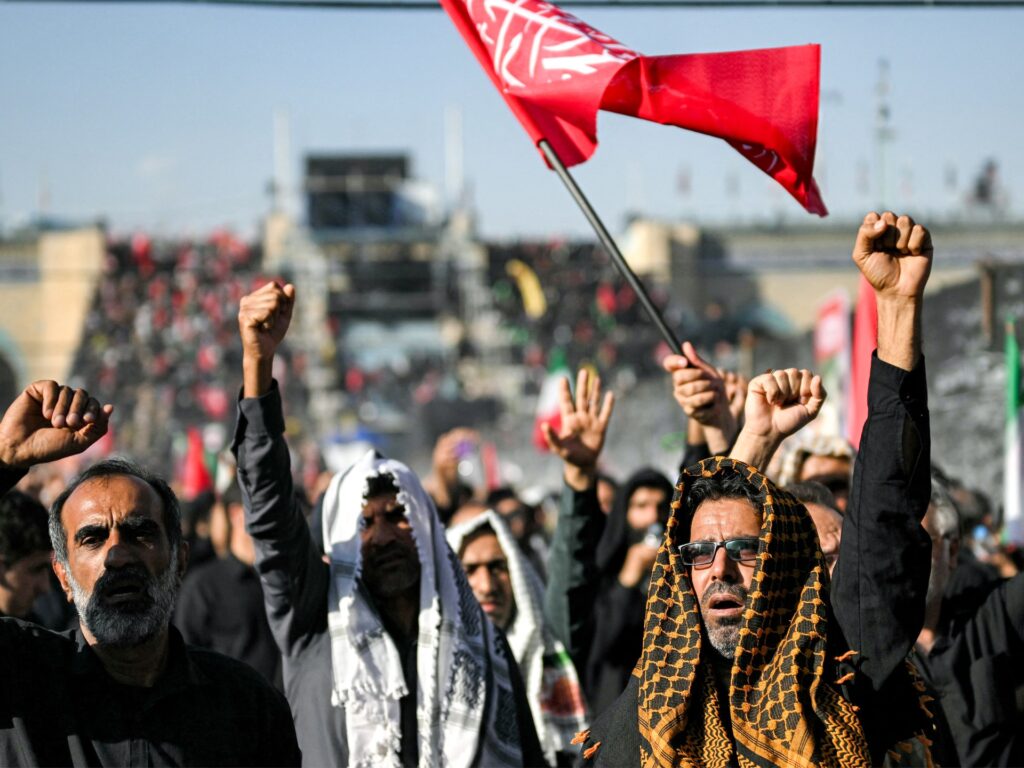
A significant event unfolded in Tehran as massive crowds gathered to mourn the death of Iran’s Supreme Leader, Ayatollah Ali Khamenei. The funeral saw the attendance of Khamenei’s sons, signaling the high-profile nature of the occasion. However, notably absent was Mojtaba Khamenei, one of his sons, whose absence sparked discussion and speculation regarding internal family dynamics or political considerations.
The funeral procession drew tens of thousands of mourners, with vibrant and emotional demonstrations of grief covering the streets of Tehran. People congregated to pay their respects, reflecting the deep impact of Khamenei’s leadership on the nation. Crowds were vocally charged, with chants resonating through the city calling for revenge against the United States and Israel, countries often positioned as adversaries in Iran’s political narrative.
Ayatollah Ali Khamenei served as Iran’s Supreme Leader for several decades, wielding considerable influence over the country’s political, military, and religious sectors. His passing leaves a significant vacuum in Iran’s leadership hierarchy and raises questions about the future direction of the nation.
The attendance of Khamenei’s sons at the funeral reflects the preservation of familial and political legacy, while Mojtaba’s absence might hint at underlying tensions or potential changes in succession or influence within the family or the broader political landscape. Mojtaba Khamenei has been considered a notable figure in Iranian politics, often linked with hardline positions and involvement in security matters.
The atmosphere during the funeral was charged with a mix of sorrow and nationalistic fervor, underscoring the complex emotions of the populace. The chants for revenge against the US and Israel are emblematic of longstanding grievances and tensions that have characterized Iran’s foreign policy stance.
Analysts suggest that the funeral, while a moment to honor the late leader, also represents a critical juncture for Iran. The power dynamics within the country could shift significantly, with various factions vying for influence as the nation navigates the post-Khamenei era.
Internationally, Iran’s leadership transition will be closely watched, given the regional and global implications. The stance and reaction of the new leadership could influence Iran’s foreign relations, especially with regards to the West and neighboring Middle Eastern countries.
In summary, the funeral of Ayatollah Ali Khamenei marked a poignant moment for Iran, bringing together vast numbers of citizens in mourning and political expression. The participation of his sons, contrasted with the absence of Mojtaba Khamenei, adds a layer of intrigue to the evolving political landscape. This event not only signifies the end of an era but also opens a new chapter in the state’s complex narrative, with far-reaching consequences expected in both domestic and international spheres.