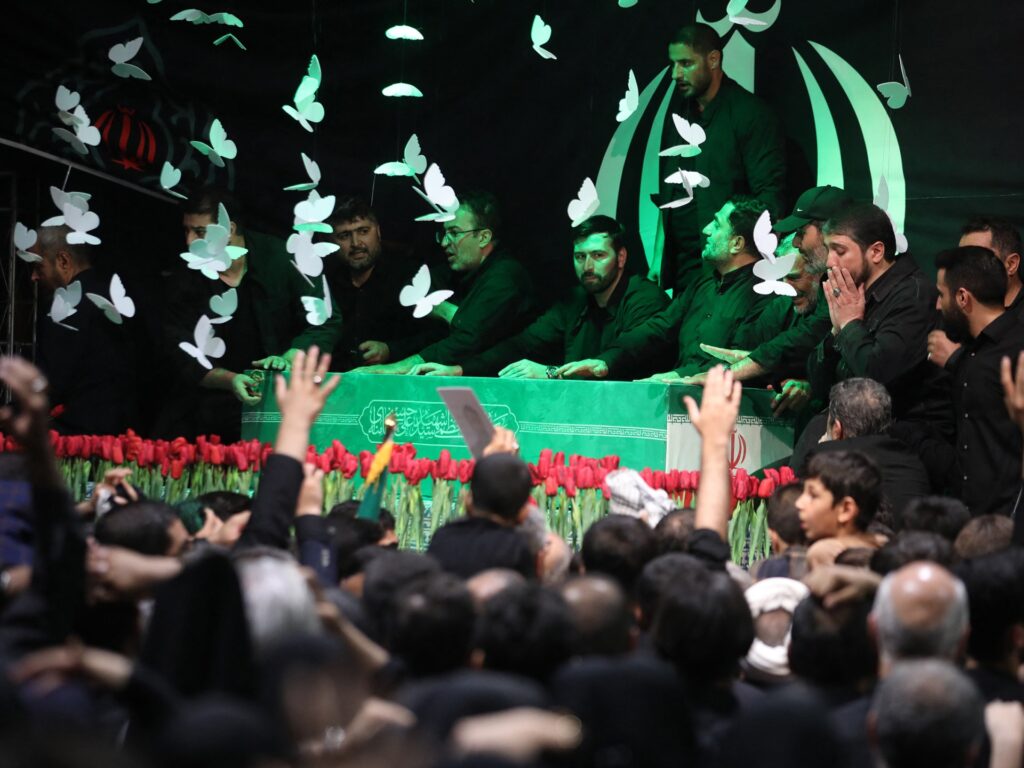
The funeral of Ayatollah Ali Khamenei, the Supreme Leader of Iran, serves as a profound example of how the Islamic Republic leverages religious imagery to convey potent political messages both within Iran and across the Middle East. This event is more than a mere farewell; it is a calculated demonstration of authority, unity, and ideological continuity.
Firstly, the funeral’s religious symbolism is deeply rooted in Shiite Islamic tradition, emphasizing Khamenei’s status as a spiritual and political leader. The use of traditional rites, prayers, and clerical presence reinforces his embodiment of theocratic leadership, positioning him as a guardian of religious values and revolutionary principles. This religious framing asserts the legitimacy of the ruling establishment at a time when internal and regional challenges threaten its stability.
Politically, the funeral acts as a unifying ritual for the Islamic Republic’s factions. It showcases a collective front in the face of external pressures such as sanctions, diplomatic isolation, and regional conflicts. By invoking religious authority, the regime bolsters nationalistic sentiments and stresses the continuity of leadership, implying that the ideological legacy of the revolution remains unbroken despite fluctuating political landscapes.
Moreover, the spectacle is designed to resonate beyond Iran’s borders, reaching Shiite communities and allied factions across the Middle East. It sends a message of resilience and divine favor, suggesting that Iran remains a pivotal force within the region’s sectarian and geopolitical struggles. The funeral’s imagery and rhetoric underscore Iran’s commitment to supporting its proxy groups and maintaining influence in countries such as Iraq, Lebanon, Syria, and Yemen.
The Islamic Republic also uses the occasion to highlight themes of martyrdom and sacrifice, which are central motifs in Shiite theology and revolutionary ideology. By linking Khamenei’s death to these themes, the regime frames current hardships as tests of faith and perseverance, encouraging domestic and regional supporters to remain steadfast against adversaries.
In summary, Khamenei’s funeral operates on multiple levels: it is a sacred ceremony, a political rally, and a strategic communication tool. Through the deliberate use of religious symbolism combined with political rhetoric, the Islamic Republic aims to consolidate power internally, rally its base, and reinforce its stance in the complex geopolitical arena of the Middle East. This blend of faith and politics is emblematic of Iran’s unique system of governance, where religion and statecraft are inseparable and mutually reinforcing.