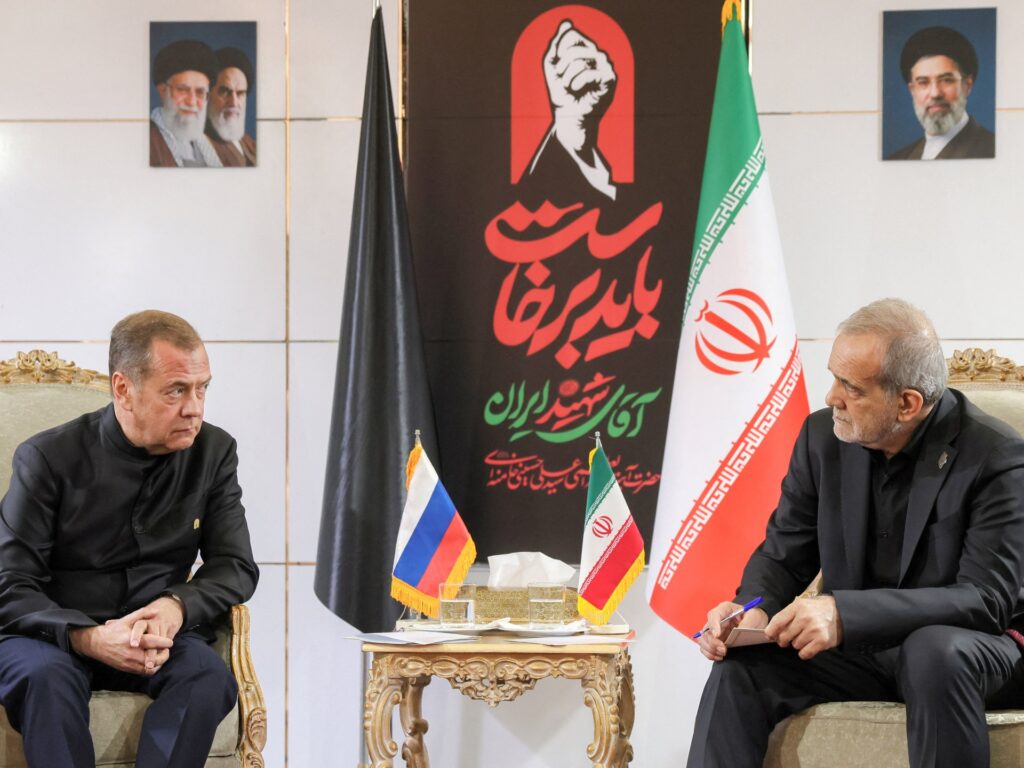
In a recent statement, Dmitry Medvedev, former President and current Deputy Chairman of the Russian Security Council, compared Iran’s strategic control over the Strait of Hormuz to possessing a nuclear weapon. This comparison underscores the significant geopolitical influence Iran holds due to its ability to disrupt maritime traffic through this critical oil transit chokepoint.
The Strait of Hormuz is a narrow passage connecting the Persian Gulf with the Gulf of Oman and the Arabian Sea. It is one of the world’s most vital oil shipping lanes, through which approximately 20% of the global petroleum trade passes daily. This unique geographic position grants Iran considerable leverage over global energy markets and international maritime security.
Medvedev’s remark reflects concerns about the potential for Iran to use its geographic advantage as a tool of coercion amid ongoing regional and international tensions. Given the frequent threats from Tehran to close the strait in response to sanctions or military threats, the statement highlights the potency of Iran’s capability to influence global geopolitics without deploying nuclear arms.
Historically, the Strait has been a flashpoint for conflict, with numerous incidents between Iranian forces and Western navies, notably the United States. The threat to disrupt traffic through this maritime corridor has raised alarms worldwide, as any significant blockage could spike oil prices and destabilize the global economy.
Medvedev’s analogy to a nuclear weapon is symbolic but carries a serious warning. It emphasizes that control over strategic chokepoints can be as impactful as possessing actual weapons of mass destruction, serving as a form of ‘geopolitical nuclear capability’ that can shift power dynamics.
The international community remains vigilant in monitoring developments around the Strait of Hormuz. Efforts to ensure freedom of navigation through diplomatic negotiations, military presence, and international coalitions have been ongoing to prevent escalation of conflicts that could threaten this vital trade route.
In response to these security challenges, regional and global stakeholders continue to explore diplomatic and military options to mitigate risks associated with Iran’s potential disruption of maritime traffic. The statement by Medvedev adds to the discourse on how such control can be leveraged politically, highlighting the fragile balance of power in the Middle East.
Overall, Medvedev’s comments shed light on Iran’s strategic importance and the broader implications for regional security and global energy stability. The Strait of Hormuz’s role as a critical energy artery makes it a central focus in geopolitical strategy and international security discussions.
This perspective invites renewed attention to the complexities of Middle Eastern geopolitics, where naval power, economic interests, and diplomatic negotiations intersect. Medvedev’s characterization serves as a warning of the real power that comes from controlling this essential maritime lifeline.