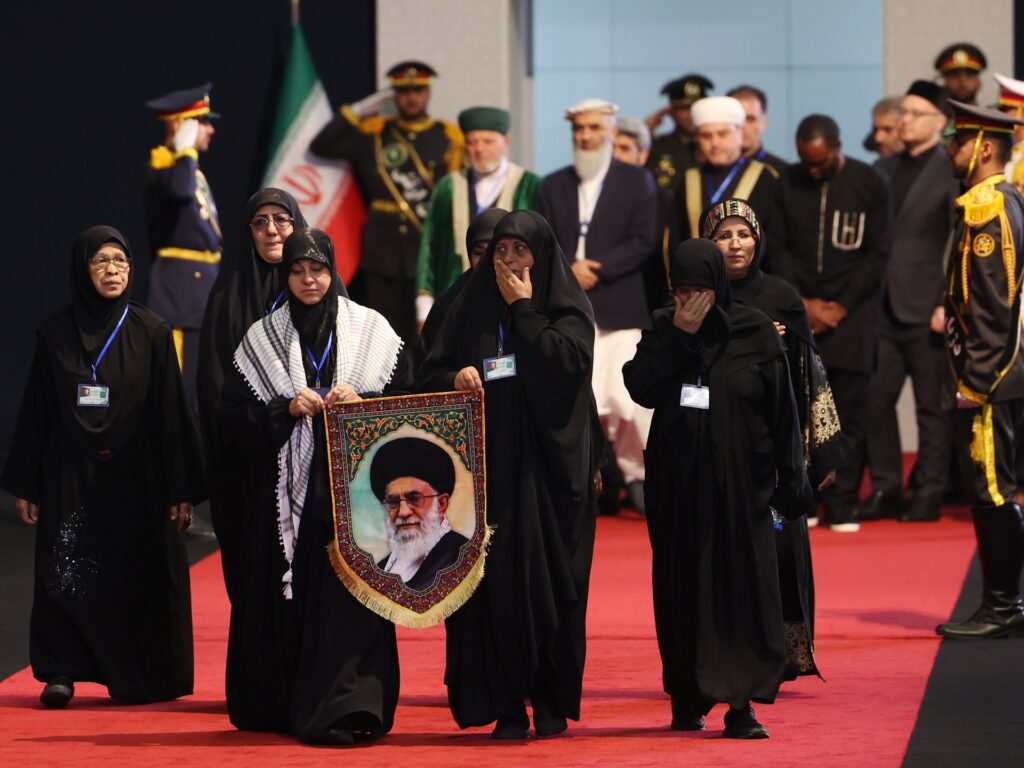
Iran has commenced a seven-day state funeral for its late Supreme Leader, Ali Khamenei, drawing a large number of mourners and around 100 foreign delegations to the nation amid a tense ceasefire situation.
Across Iran, the atmosphere is heavy with grief as thousands gather to pay their respects to the ayatollah whose leadership has significantly influenced the country’s political and religious landscape. The state funeral, steeped in traditional honors, is being closely watched by international observers considering the delicate political climate.
Ali Khamenei, who passed away recently, leaves behind a complex legacy marked by his pivotal role in shaping modern Iran. His tenure as Supreme Leader spanned several decades, during which he was instrumental in steering the country’s domestic and foreign policies.
The arrival of nearly 100 foreign delegations underscores Khamenei’s global impact and Iran’s continuing importance on the world stage. Leaders and representatives from various nations have come to express condolences and to participate in the ceremonies.
This event comes at a time of a precarious ceasefire, the details of which remain fragile and under close scrutiny by international actors. The ceasefire’s tenuous nature adds an extra layer of tension to the funeral proceedings, emphasizing the complex geopolitical environment surrounding Iran.
The days of mourning are marked by a series of public and private events including prayer services, official speeches, and moments of silent reflection. These rituals not only honor the deceased leader but also serve as a moment of unity for the nation during uncertain times.
Public displays of loyalty and grief are evident throughout Iranian cities, where citizens gather to express their sorrow and support for the leadership. The government has mobilized security and coordination efforts to manage the large crowds and ensure a solemn yet orderly funeral process.
Amidst the mourning, political analysts highlight the potential implications for Iran’s future leadership and policy directions. While the state funeral is a period of respect, it also marks the beginning of a new chapter for the country’s governance.
The global community remains attentive to developments in Iran, particularly how the nation navigates the transition of power and maintains the fragile peace amid regional and international pressures.
As the seven-day funeral rituals continue, both domestic audiences and international teams watch closely, recognizing the significance of this moment in Iran’s history and its potential ripple effects across the region.
In honoring Ali Khamenei, Iran not only commemorates a leader but also confronts the challenges and uncertainties that lie ahead in its political and social landscape.