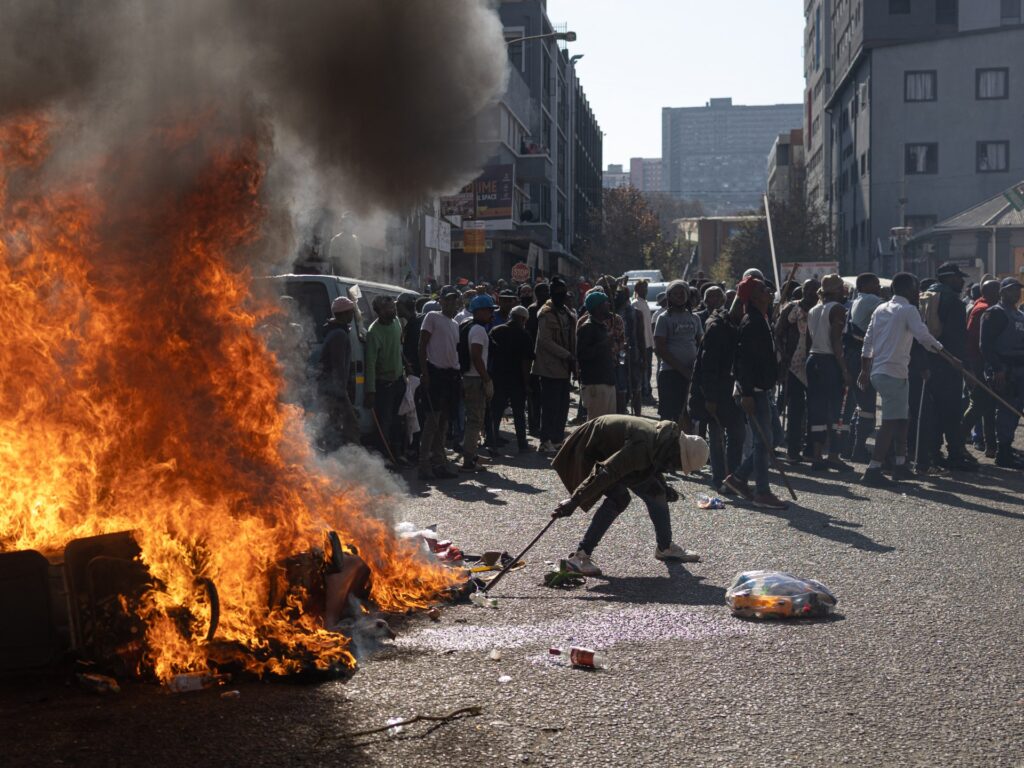
South Africa has witnessed a turbulent wave of antimigrant protests that have led to the arrest of more than 900 individuals across the country. These unrests spotlight the deep-seated xenophobic tensions simmering within the nation, which have escalated into large-scale marches and violent confrontations in multiple cities.
The protests, primarily fueled by frustrations over economic hardships, job scarcity, and housing shortages, have targeted migrant communities, who are often accused of taking jobs and resources from local citizens. This volatile mix of socioeconomic challenges and ethnic tensions has created a tinderbox scenario, culminating in the current protests.
Authorities report that the arrests encompass individuals suspected of inciting violence, looting, and participating in illegal demonstrations. Law enforcement agencies have deployed additional personnel to restore order and protect vulnerable communities from further harm.
The government has condemned the violence and called for calm, emphasizing the importance of unity and respect for all residents, regardless of nationality. Officials have also urged communities to engage in peaceful dialogue and report any criminal activities to the authorities.
Civil society organizations and human rights groups have voiced concerns over the rising xenophobia and have called for comprehensive measures to address the root causes of the unrest. These include improving living conditions, creating economic opportunities, and promoting social cohesion.
The ongoing protests and subsequent arrests underscore the urgent need for inclusive policies that foster tolerance and address the grievances of both local residents and migrant populations. As South Africa navigates this challenging period, the international community watches closely, hoping for a resolution that upholds human rights and social stability.
This recent wave of antimigrant protests is a stark reminder of the complexities facing South Africa in balancing economic development, social inclusion, and maintaining peace among its diverse population. The path forward requires concerted efforts from government, civil society, and communities alike to heal divisions and build a more harmonious future.