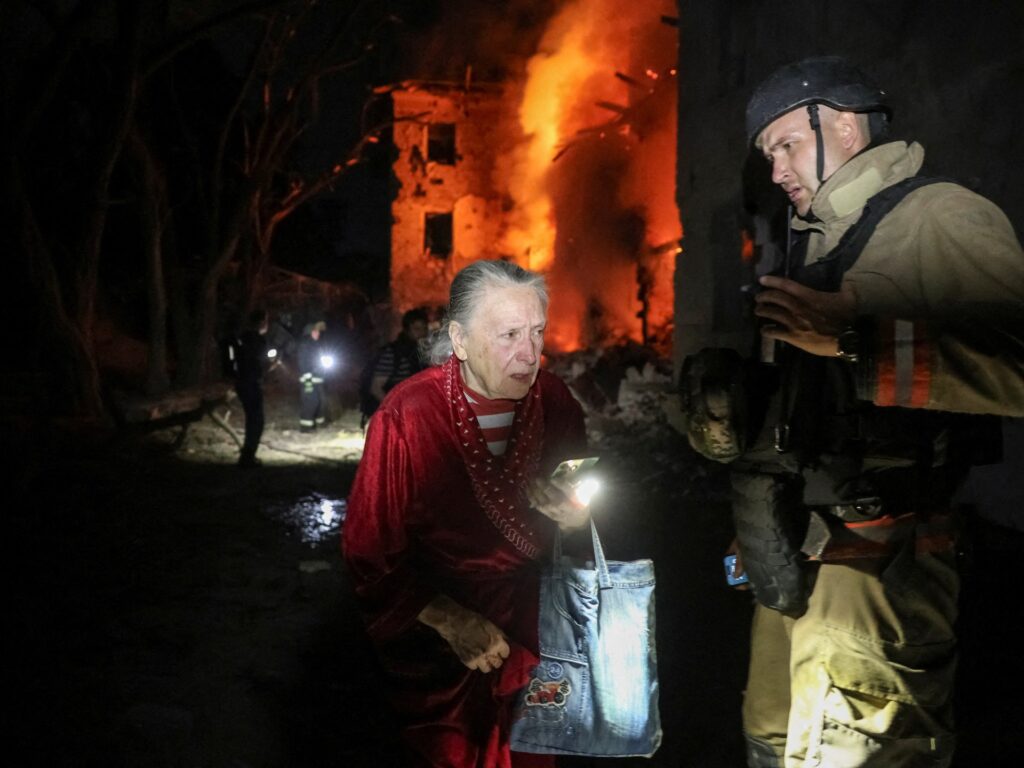
The ongoing conflict between Russia and Ukraine has seen intensified violence and strategic military maneuvers as recent events highlight a dangerous escalation. Russian attacks have claimed the lives of three individuals in Ukraine, exacerbating the humanitarian toll and adding urgency to the situation. In retaliation, Ukrainian forces have launched significant counterattacks, including a strike on another oil refinery, a critical infrastructure point that could have far-reaching implications for both the energy supply and the war economy.
President Volodymyr Zelenskyy of Ukraine has made a notable announcement regarding the country’s military strategy. He confirmed that Ukraine is expanding its long-range drone campaign, underlining a shift towards more offensive and technologically advanced tactics in the ongoing conflict. This shift not only marks an evolution in Ukraine’s defensive capabilities but also underlines the importance of drone technology in modern warfare.
The use of long-range drones allows Ukraine to strike deep inside Russian territory, potentially disrupting supply lines, command centers, and other strategic targets far from the immediate frontline. These strikes are designed to pressure Russia into recalibrating its military approach while bolstering Ukrainian morale and demonstrating resilience in the face of aggression.
The attack on the oil refinery is particularly significant, as energy infrastructure is a vital component of the war effort. Disabling or damaging such facilities can cripple an adversary’s ability to sustain military operations, transport fuel, and maintain domestic energy supplies. This strategic targeting shows that Ukraine’s military operations are increasingly sophisticated, aiming not just to defend but to actively disrupt Russian capabilities.
On the humanitarian front, the loss of three lives due to Russian aggression underscores the continuing human cost of the conflict. Civilians remain vulnerable amid the military confrontations, with many caught in crossfire or suffering from the destruction of critical infrastructure. International observers and humanitarian organizations continue to call for ceasefires, protective measures for civilians, and renewed diplomatic efforts to resolve the conflict.
The broader geopolitical implications are profound. Ukraine’s enhanced drone campaign not only alters the tactical landscape on the ground but also sends a signal to global powers about the country’s resilience and ingenuity in defense. This development may influence foreign military aid, alliances, and international diplomacy, as countries reassess their positions in light of Ukraine’s evolving combat strategies.
Moreover, the conflict continues to have significant ramifications for global energy markets, especially as oil refineries and other infrastructure face repeated attacks. Such disruptions can lead to supply shortages and price volatility, affecting economies far beyond the immediate conflict zone.
As the conflict persists, both Russia and Ukraine appear committed to intensifying their military efforts. Russia’s attacks, resulting in casualties, juxtaposed with Ukraine’s innovative long-range drone strikes, reveal a conflict that is growing in complexity and severity. The international community remains watchful, hoping for a breakthrough that could pave the way for peace but preparing for the likelihood of continued warfare.
In conclusion, the recent escalation in the Ukraine conflict—marked by deadly Russian attacks and Ukraine’s expanded drone campaign—highlights the evolving nature of warfare in the 21st century. It underscores the critical role of technology in modern conflicts and the devastating human and economic consequences that can ensue. As the war advances, the world hopes for a resolution that prioritizes human life and security, while recognizing the challenges posed by deep-seated military and geopolitical tensions.