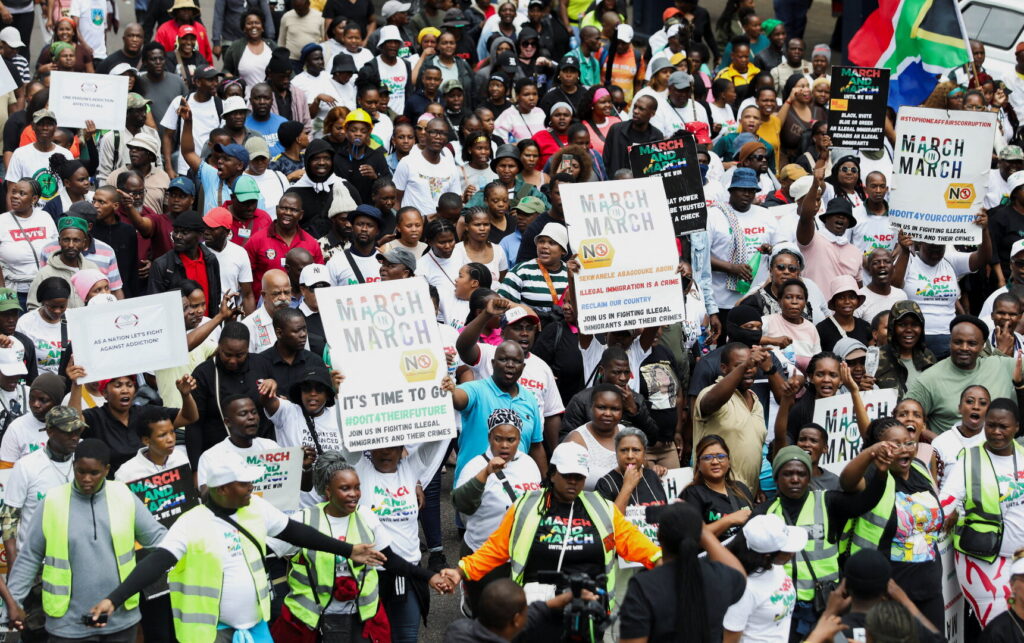
Protesters hold placards during an anti-illegal-immigration march as they head to deliver a memorandum calling for tighter border controls and the deportation of undocumented migrants in Durban, South Africa, November 7, 2025. REUTERS/Thuli Dlamini
In Johannesburg, a palpable sense of fear and uncertainty is gripping the market community as an unofficial deadline set by anti-immigration groups approaches. This June 30 deadline demands that undocumented migrants leave South Africa, sparking significant concern among those affected.
The Johannesburg market, a vibrant and diverse hub of commerce, hosts many migrants who contribute to the local economy. These migrants have established themselves through small businesses and informal trade, often in precarious circumstances due to their immigration status. The looming deadline threatens to uproot these individuals and dismantle the economic network they support.
Anti-immigration groups have been vocal about their demands, citing concerns about illegal immigration and its impacts on South African society. However, their methods and the June 30 deadline are unofficial and lack government endorsement. This creates a complex legal and social dilemma for authorities and communities alike.
The migrants, many of whom are undocumented, face the risk of eviction, harassment, and potential violence. They live in a state of anxiety as they weigh their limited options: to comply with the deadline and leave the country or to stay and face the consequences. This tension is palpable in the market streets, where everyday interactions are overshadowed by fear.
Local government officials have expressed concern over the situation, emphasizing the need for dialogue and legal measures rather than vigilante actions. They urge for peaceful coexistence and a focus on finding sustainable solutions to immigration challenges.
Human rights organizations have condemned the deadline and the intimidation tactics used by anti-migrant groups. They highlight the humanitarian implications and the right to dignity for all individuals, regardless of immigration status.
The economic impact of mass departures from the Johannesburg market could be severe. Many businesses rely on migrant traders for diverse goods and competitive pricing, and their absence could disrupt supply chains and reduce consumer choice.
Community leaders and activists are calling for increased awareness and support for migrants. They advocate for policy reforms that address immigration comprehensively and humanely.
As June 30 approaches, the Johannesburg market stands at a crossroads. The fear instilled by the anti-migrant deadline reveals deeper issues in South African society, including xenophobia, economic inequality, and governance challenges.
The coming days will be critical in determining the fate of thousands of migrants who have made Johannesburg their home. Balancing security concerns with human rights and economic realities remains a formidable challenge for all stakeholders involved.