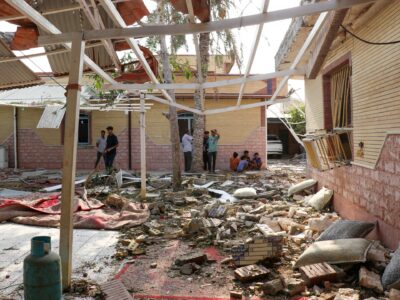
On the 121st day of the ongoing conflict involving Iran, tensions have sharply escalated with Iran launching attacks on Bahrain and Kuwait. These aggressive actions are part of a broader regional conflict that has drawn in multiple nations and heightened instability in the Middle East.
In a significant development, the United States has conducted military strikes for the second consecutive day near the strategic Strait of Hormuz, a vital chokepoint through which a substantial portion of the world’s oil supply passes. These strikes are viewed as a deterrent against further Iranian aggression and a demonstration of US resolve to ensure freedom of navigation in the region.
The attacks by Iran on Bahrain and Kuwait have prompted immediate defensive responses from both countries. Bahrain activated its air defense systems and sounded sirens to alert its population of incoming threats, indicating the severity of the situation and the imminent danger posed by Iranian forces. Meanwhile, Kuwait also took swift action by activating its air defenses, preparing to counter any missile or aerial attacks aimed at its territory.
The escalation comes amid already heightened regional tensions and ongoing clashes that have destabilized the Gulf region. Iran’s aggressive posture against neighboring Gulf states is a show of strength and a response to perceived threats, while US interventions aim to maintain the balance of power and protect allied nations from potential Iranian expansion.
The strategic location of the Strait of Hormuz makes it a critical flashpoint. Iran’s proximity to this narrow passage gives it leverage over global energy supplies, which it has used as a bargaining chip in past conflicts by threatening closure or disruption. The recent US strikes aim to prevent Iran from gaining any further control or causing disruptions that could trigger a global energy crisis.
International reactions have been mixed, with many countries calling for de-escalation and dialogue to avert a wider conflict. The United Nations and other global bodies have urged restraint and negotiations, highlighting the catastrophic consequences a full-blown war in this region could entail.
As this conflict enters its fourth month, the risk of further escalation remains high. The involvement of key regional players like Bahrain and Kuwait, alongside US military action, marks a dangerous phase where local disputes could spiral into a larger international confrontation. Analysts warn that continued hostilities could impact global oil markets and international security.
Efforts to mediate the situation are ongoing, with diplomatic channels working to find a resolution that restrains Iran’s actions and addresses the security concerns of Gulf states. However, the path to peace remains elusive as military engagements continue unabated.
This latest series of attacks and counterstrikes underscores the fragile nature of peace in the Gulf region and the persistent volatility that plagues it, with wide-reaching implications for global geopolitics and security.