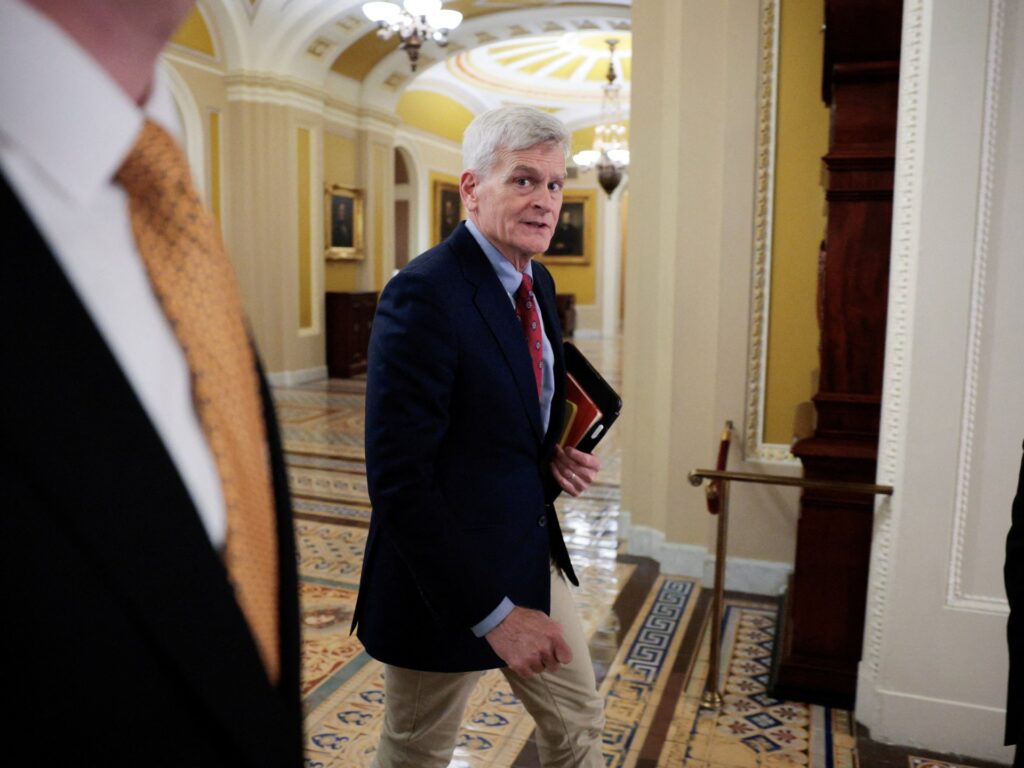
The recent Memorandum of Understanding (MoU) between the United States and Iran, announced under the Trump administration, has ignited a strong backlash from various Republican lawmakers. Among the most vocal critics is Louisiana Senator Bill Cassidy, who has labeled the agreement as the “worst foreign policy blunder in decades.”
This agreement, intended as a framework for addressing longstanding tensions and fostering diplomatic relations with Iran, has been met with skepticism and disapproval within the party. Senator Cassidy and others have expressed concerns that the MoU emboldens Iran rather than curtails its ambitions, potentially compromising United States’ strategic interests in the Middle East.
Cassidy’s criticism highlights a broader divide within the Republican Party regarding the approach to Iran. While the administration argues that engagement and frameworks like this one can lead to de-escalation and greater regional stability, critics worry that such measures are too lenient and fail to hold Iran accountable for its nuclear ambitions and regional activities.
The backlash is not limited to Cassidy; several other Republican figures have voiced opposition, warning that the agreement could undermine the hard-won leverage that the US and its allies have maintained over Iran following previous sanctions and diplomatic efforts.
Experts suggest that the controversy underscores the complexity of US-Iran relations and the challenges facing any diplomatic efforts. The Republican criticism centers on the belief that any agreement should be tougher, ensuring Iran’s compliance and addressing broader security concerns in the Middle East.
The MoU comes amid a regional backdrop of ongoing conflicts and tensions, with Iran’s influence in countries like Syria, Iraq, and Yemen being a focal point of concern for US policymakers. Republican critics argue that the framework inadequately addresses these geopolitical dynamics, potentially leaving the US vulnerable.
In response, the Trump administration has defended its approach as a pragmatic move towards stability, emphasizing the potential benefits of dialogue and reduced hostilities. Supporters of the framework argue that engagement is necessary to prevent further escalation and to create a pathway for constructive negotiation.
The controversy generated by the MoU is expected to continue, with debates likely to play a significant role in shaping future US policy toward Iran. As the situation unfolds, the rift within the Republican Party reveals the enduring challenge of balancing diplomatic engagement with firm security measures in managing relations with Tehran.
Overall, the backlash from Senator Cassidy and other Republicans highlights the intense scrutiny and division surrounding US foreign policy decisions, especially those involving complex and sensitive international relationships like the one with Iran.