Direct-action protest has a long and storied history in the United Kingdom, stretching back over a century and encompassing a diverse range of causes and campaigns. This tradition of civil disobedience and public demonstration has been integral in shaping social and political change within Britain.
One of the most iconic early examples of direct action in the UK was the suffragette movement in the early 20th century. Women demanding the right to vote employed militant tactics, including hunger strikes, window smashing, and public disturbances, to draw attention to their cause. The suffragettes’ tenacity and willingness to confront authority directly helped galvanize public opinion and eventually led to significant legislative reforms, including the Representation of the People Act 1918.
Decades later, a different but equally passionate wave of direct action emerged in response to British involvement in colonial conflicts, including in Palestine. Activist groups such as Palestine Action have utilized a range of tactics to highlight issues relating to the Israeli-Palestinian conflict, often focusing on the complicity of British companies and government policies.
Palestine Action, formed in recent years, has organized occupations, blockades, and disruptive protests aimed at factories and military equipment suppliers connected to the occupation of Palestinian territories. Such actions have garnered significant media attention and public discourse, especially among younger activists who view direct action as a vital tool to challenge systemic injustices.
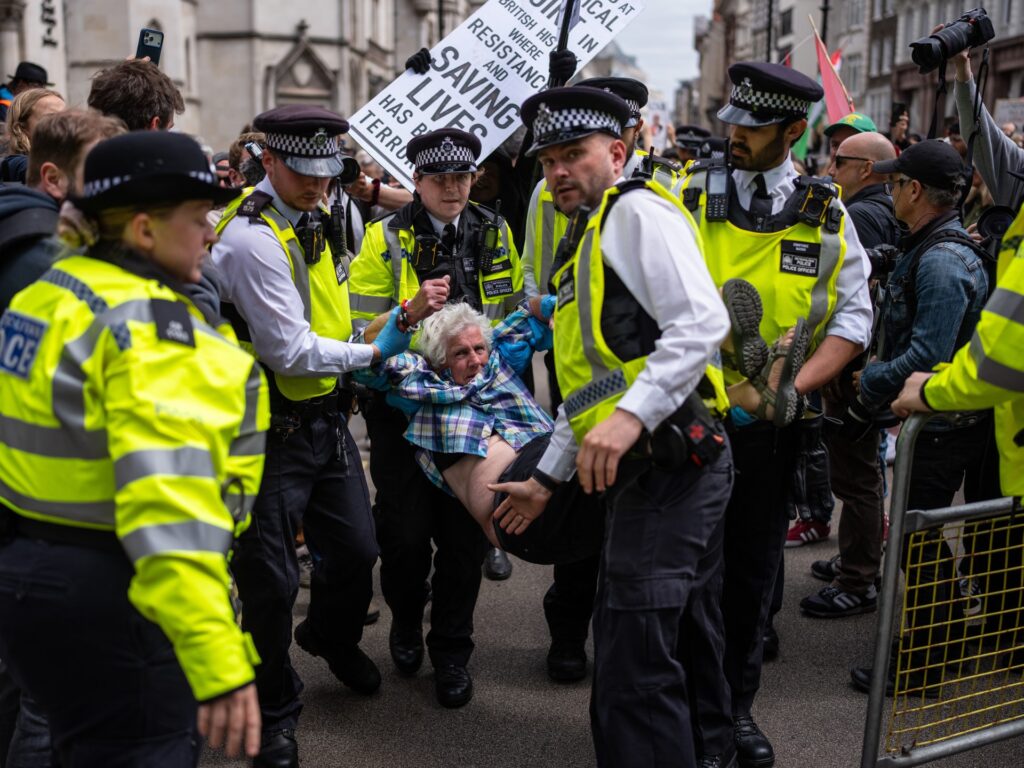
Analysts now note that the British government has begun responding to civil disobedience with what some describe as unprecedented severity. This includes increased police presence, arrests, and legal repercussions that many argue are disproportionate to the offenses committed. Questions are being raised about the balance between maintaining public order and respecting citizens’ rights to protest.
The shift in governmental response has sparked debates about the role of protest in a democratic society and how authorities can better engage with dissent. Some critics warn that harsh crackdowns might suppress important social movements, while others believe firm measures are necessary to prevent disruption and potential violence.
In tracing the arc from the suffragettes’ struggle to the contemporary Palestine Action protests, it becomes clear that direct action remains a powerful method for marginalized voices to be heard. Despite evolving political contexts and technologies, the core principles of civil disobedience — courage, persistence, and public engagement — continue to resonate in the UK.
As this legacy unfolds, ongoing dialogue between activists, lawmakers, and civil society will be crucial to navigating the complex terrain of protest rights and public safety. Understanding this history enriches our appreciation for the sacrifices made in pursuit of justice and highlights the continuing relevance of direct action in shaping the future of British democracy.