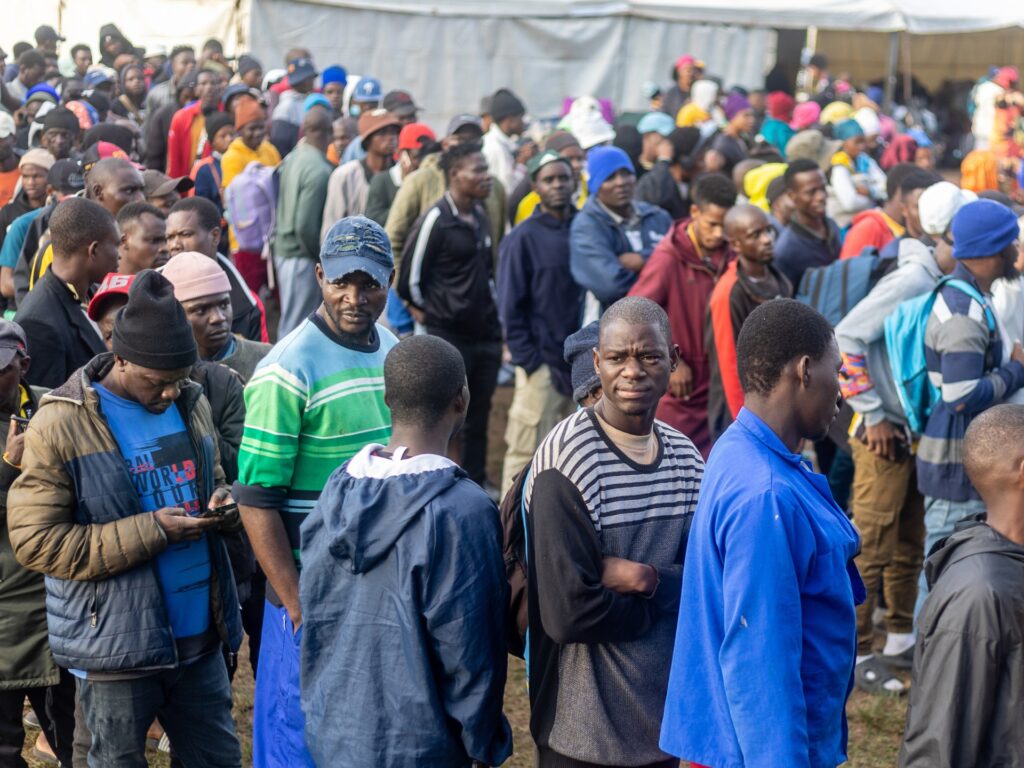
In recent weeks, thousands of Malawian migrants residing in South Africa have been forced to flee their homes due to escalating xenophobic threats targeting foreign nationals. Many of these individuals have sought refuge in a public park in Durban, a major city on South Africa’s east coast.
The tension comes on the heels of a stern expulsion ultimatum issued by South African authorities, demanding that undocumented foreign nationals leave the country by June 30. This deadline has heightened fears among migrant communities, particularly those of Malawian origin, who find themselves vulnerable and exposed to violence.
Reports indicate that in response to these threats, numerous Malawians have abandoned their homes and belongings to escape potential attacks. The Durban park has become an impromptu shelter where thousands congregate, hoping for safety and assistance from humanitarian organizations.
Xenophobia has been a persistent issue in South Africa, where foreign nationals often face discrimination and violence amid economic challenges and high unemployment rates. Migrants are frequently scapegoated and accused of taking jobs and resources away from local citizens.
Human rights groups have condemned the hostile environment and urged the South African government to take effective measures to protect all residents, regardless of nationality. They stress the importance of dialogue and community engagement to foster harmony and prevent violence.
The Malawian government has expressed concern over the safety and welfare of its citizens abroad and is reportedly in communication with South African officials to ensure protection for its nationals.
International observers warn that the looming June 30 deadline could lead to further displacement and instability if appropriate support mechanisms are not put in place. They call for coordinated efforts between governments and civil society to address the root causes of xenophobia and to provide assistance to those affected.
As the expulsion date approaches, the situation remains fragile, with thousands of Malawians and other migrant communities facing uncertainty about their future in South Africa. The need for immediate humanitarian aid, protection, and long-term solutions is paramount to prevent a deepening of the crisis.