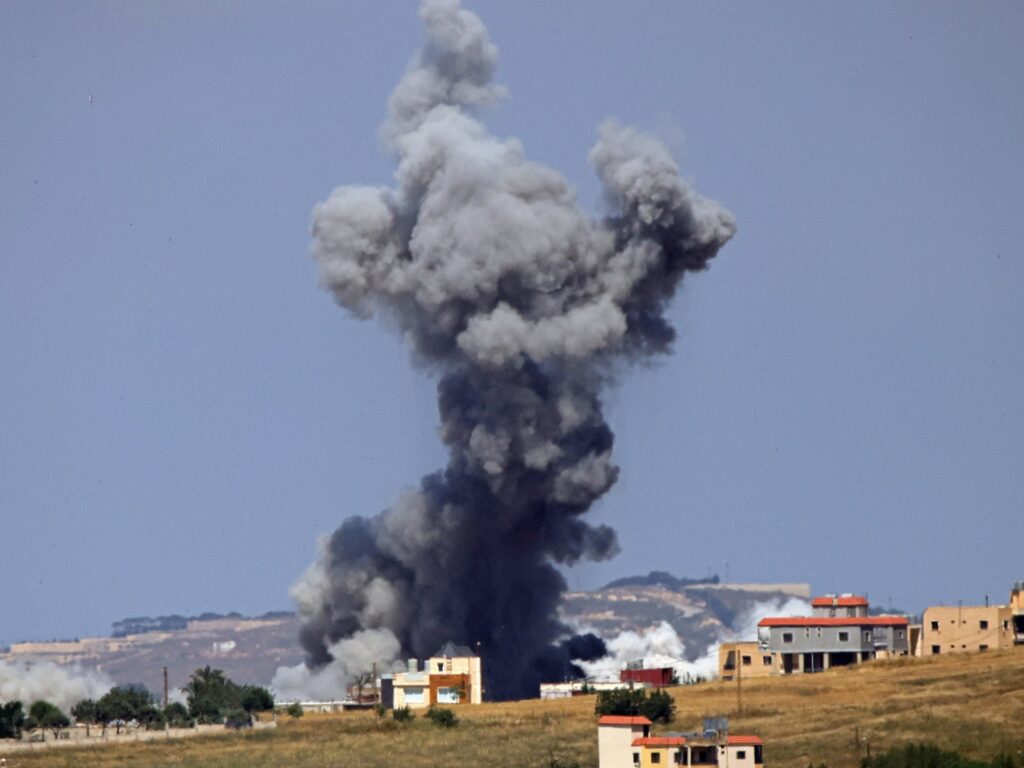
In a significant military development, Israeli forces have pushed past Lebanon’s Litani River, marking a notable expansion of their operational reach. Analysts observe that this move effectively extends Israel’s area of military control northward towards the Zahrani River, raising critical questions about the broader strategic and geopolitical consequences.
The Litani River, historically a key geographic and symbolic boundary in southern Lebanon, has long been a frontier demarcating zones of military influence and control, especially in the context of Israeli-Lebanese tensions. Israeli incursions beyond this river indicate a shift in military posture that may influence both tactical engagements on the ground and regional power dynamics.
Strategically, gaining a foothold or control beyond the Litani River enables Israeli forces to disrupt militant logistics and communications that often rely on southern Lebanon as a base of operations. It also enhances Israel’s capacity to surveil and counter threats, potentially preempting rocket launches or cross-border incursions by armed groups.
From a geopolitical perspective, the expansion towards the Zahrani River—a location further north—suggests a more assertive Israeli approach in its northern frontier. This could be interpreted as an attempt to create a buffer zone, mitigate threats from hostile entities, and negotiate from a position of strength.
However, this military advancement is not without risks. It could exacerbate tensions with Lebanese factions and allied groups such as Hezbollah, potentially triggering escalations. The international community may also scrutinize these movements, weighing them against principles of sovereignty and international law.
Experts highlight that the Litani River crossing is not merely a tactical maneuver but part of a broader strategic calculus aimed at securing Israel’s northern borders amid a complex security landscape. The region’s historical volatility means that any shift in control zones could have ripple effects, influencing peace efforts and diplomatic relations.
Moreover, Israel’s actions might prompt shifts in Lebanese political discourse, energizing nationalist sentiments or affecting internal alignments. The military push could also impact humanitarian conditions in affected areas, potentially displacing civilians or disrupting livelihoods.
In summary, Israeli forces crossing the Litani River is a development of considerable significance. It represents a strategic expansion of control areas with the potential to alter military, political, and humanitarian dynamics in southern Lebanon and the greater region. As the situation evolves, close monitoring by regional and international stakeholders will be essential to understand the full implications of this operational shift.