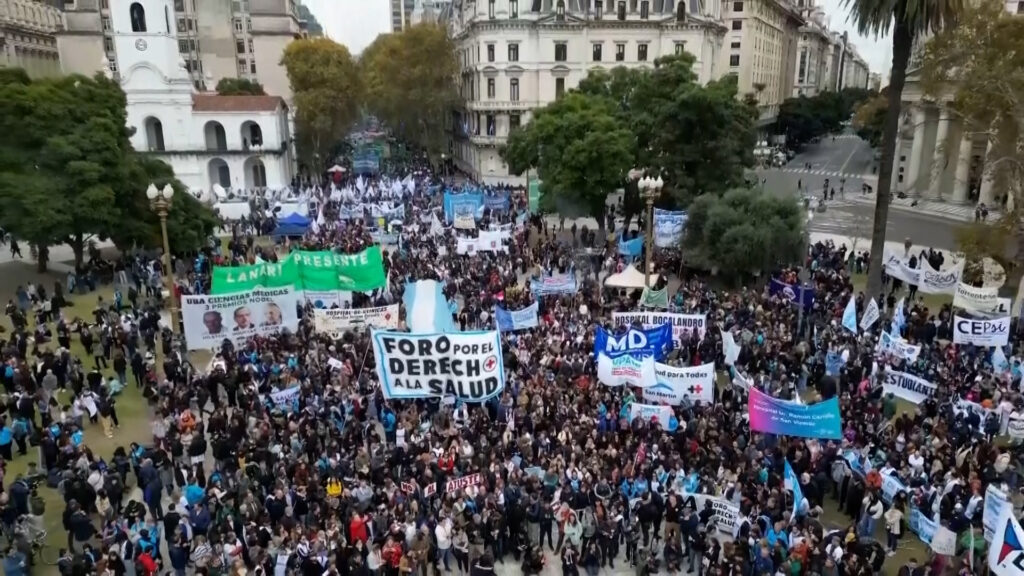
Hundreds of protesters gathered in Buenos Aires to demonstrate against President Javier Milei’s austerity policies, focusing particularly on cuts to Argentina’s healthcare system. The rally, marking widespread discontent, saw citizens from numerous backgrounds voice their concerns about the impact of reduced funding for healthcare services.
The march took place amid growing unease about the government’s approach to managing the nation’s finances. President Milei, known for his strict austerity measures, has implemented a series of spending reductions aimed at stabilizing the economy. However, these measures have sparked fears that vital sectors, including healthcare, will suffer, risking the health and wellbeing of millions.
Protesters carried banners and chanted slogans demanding the government restore funding to hospitals, clinics, and public health programs. Many worried that the cuts would lead to longer wait times, shortages of medical supplies, and diminished access to essential care.
Healthcare workers themselves participated in the demonstrations, highlighting the strain on medical staff and the potential consequences for patient care. They emphasized that austerity in this sector could undo years of progress in public health and exacerbate already challenging conditions.
The government’s position, articulated by President Milei and his administration, stresses that these measures are necessary to reduce the country’s fiscal deficit and attract investment. Officials argue that economic stability will ultimately benefit all Argentines, including those dependent on public healthcare.
Nonetheless, critics argue that the timing and scale of the cuts are shortsighted, particularly in a country still recovering from the social and economic effects of the COVID-19 pandemic.
Analysts note that while fiscal responsibility is important, ensuring adequate healthcare funding is equally critical for social stability and long-term economic growth. They warn that neglecting this balance may lead to broader societal unrest.
The protest in Buenos Aires is part of a series of nationwide actions organized by unions, community groups, and civic organizations speaking out against austerity policies perceived as disproportionately harming vulnerable populations.
Looking forward, the government faces mounting pressure to reconsider its budgetary decisions and engage in dialogue with stakeholders across the healthcare sector.
As Argentina navigates these challenges, the situation remains fluid, with the potential for further protests and policy revisions in the coming weeks.