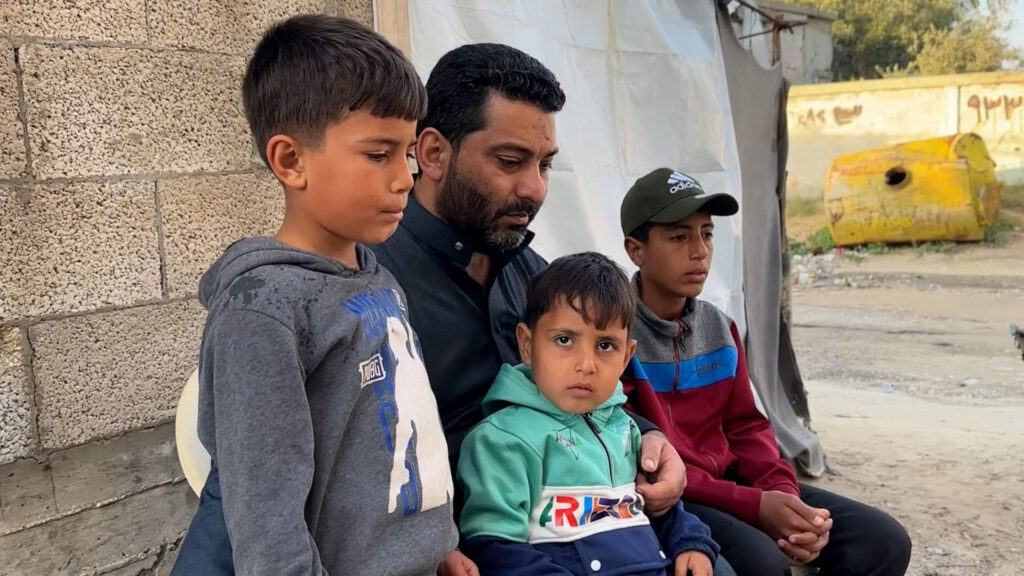
A Palestinian man’s much-anticipated return to Gaza was overshadowed by a distressing incident involving his brother’s detention at the Rafah crossing, a key border point between Egypt and Gaza. The Rafah crossing, often seen as a lifeline for Palestinians seeking to travel in and out of Gaza, has been a focal point of humanitarian and political tension.
The man recounted the emotional turmoil experienced at the crossing where his brother was unexpectedly detained by Israeli forces during their passage. This event sheds light on the continuing challenges faced by Palestinians amid the complex and often volatile geopolitical landscape.
Israel controls the security of the crossings into Gaza, including Rafah, and their procedures have been a subject of international scrutiny. The detainment of the brother has raised concerns among human rights advocates who argue that such arrests exacerbate the suffering of Palestinian families already living under difficult conditions.
Families like this one are caught in the crossfire of the larger Israeli-Palestinian conflict, with everyday activities like returning home or visiting family members becoming fraught with risk and uncertainty. The incident has sparked outrage on social media and calls for the brother’s immediate release.
The Rafah crossing itself is critical for Gaza’s population of over two million people, allowing for medical evacuations, humanitarian aid, and limited travel. However, intermittent closures and security checks have made passage unpredictable and often dangerous.
This arrest is emblematic of the broader humanitarian issues in Gaza, where residents regularly face restricted movement, economic hardship, and political instability. It also illustrates the personal impact of the ongoing conflict, turning what should be a simple journey back home into a painful ordeal.
Local and international human rights organizations have urged Israel to reconsider its policies at the crossings and to ensure that detainees are treated fairly and humanely. They stress the importance of maintaining the Rafah crossing as a safe and reliable passage point.
The Palestinian man’s story brings a human face to a conflict often reported in terms of statistics and political rhetoric. It underscores the urgent need for a peaceful resolution to the conflict that prioritizes the safety and dignity of all individuals involved.
As tensions continue to simmer, the international community watches closely, with many hoping for developments that could ease travel restrictions and reduce the humanitarian crisis in Gaza. Until then, stories like this one remain a poignant reminder of the personal toll of a prolonged and deeply complex conflict.