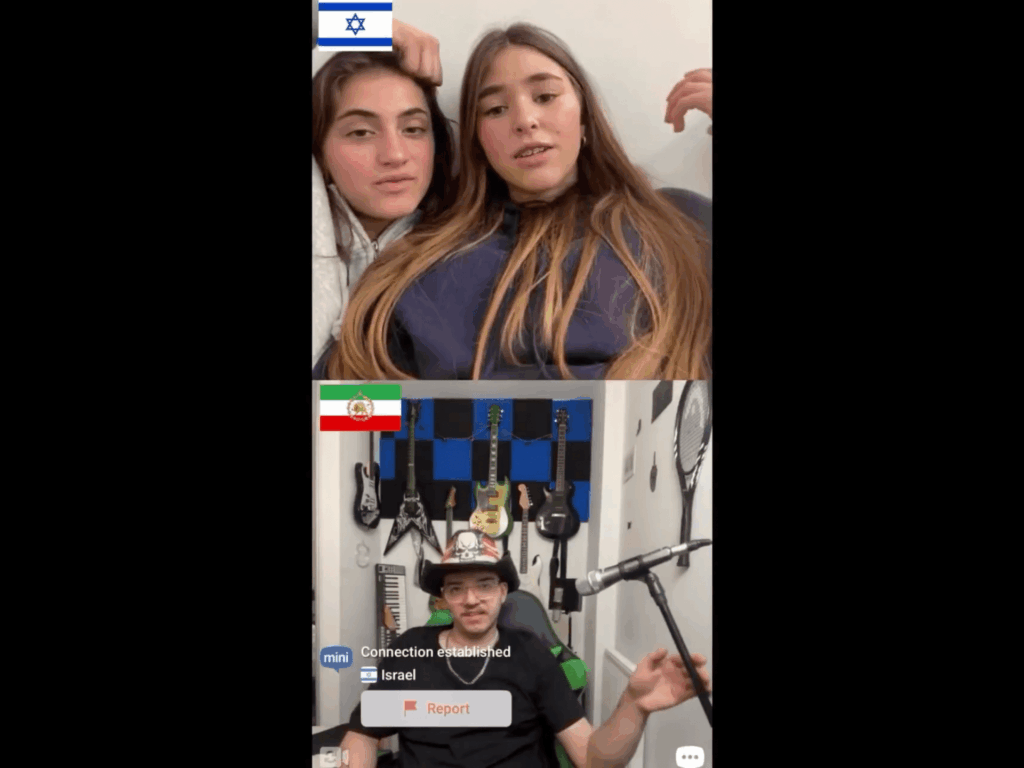
In a recent and striking online exchange, an Iranian musician expressed gratitude towards young Israeli women for what he described as “saving” Iran through U.S.-Israeli air strikes. This provocative statement has sparked a wave of responses, notably from Israeli internet users who quickly corrected the musician’s claims during a live online stream.
The incident unfolded when an Iranian online streamer, engaged in a conversation about the ongoing geopolitical tensions between Israel, Iran, and their allied forces, made comments that were intended to convey support for the military actions. However, the messaging was perceived as both controversial and misleading by many viewers.
Israeli participants in the stream sharply disputed the musician’s narrative. One Israeli commenter bluntly stated, “We’re killing them, bro,” directly confronting the Iranian streamer’s assertion and underscoring the enduring animosity and conflicting narratives that characterize the Israel-Iran relationship.
This interaction is emblematic of a larger digital battleground where ideological conflicts are played out in real-time across social media platforms. The exchange not only highlights the deep divisions and hostilities but also the power of the internet as a tool for both misinformation and immediate counter-discourse.
The Iranian musician’s message of thanks linked the role of Israeli women to U.S.-Israeli military actions, framing these acts of aggression as a form of assistance to Iran. Such comments have been met with criticism and disbelief by many in the international community, as they invert the widely accepted view of these strikes as hostile acts contributing to regional instability.
In response, many Israelis took to social media to push back on the distorted portrayal of events. Their corrective comments emphasize the complex realities on the ground, where military actions have led to significant casualties and heightened tensions rather than any perceived benefit to Iran.
Experts on Middle Eastern geopolitics note that the conversational tone and the stark language used by participants from both sides reflect broader national sentiments and a persistent cycle of hostility fueled by decades of conflict.
This digital confrontation serves as a microcosm for the broader struggle between the two nations, illustrating how youths on both sides are actively engaged in shaping narratives about their countries and the ongoing conflict.
As the conflict continues to evolve, such incidents underscore the importance of critically evaluating information disseminated online. They also highlight the challenges faced by ordinary people caught in between, as they encounter polarized perspectives in their daily digital interactions.
Ultimately, these online exchanges provide insight into the emotional and political undercurrents driving the Israel-Iran conflict today. They remind observers worldwide of the human element behind headlines and the enduring quest for understanding amid profound disagreement and turmoil.