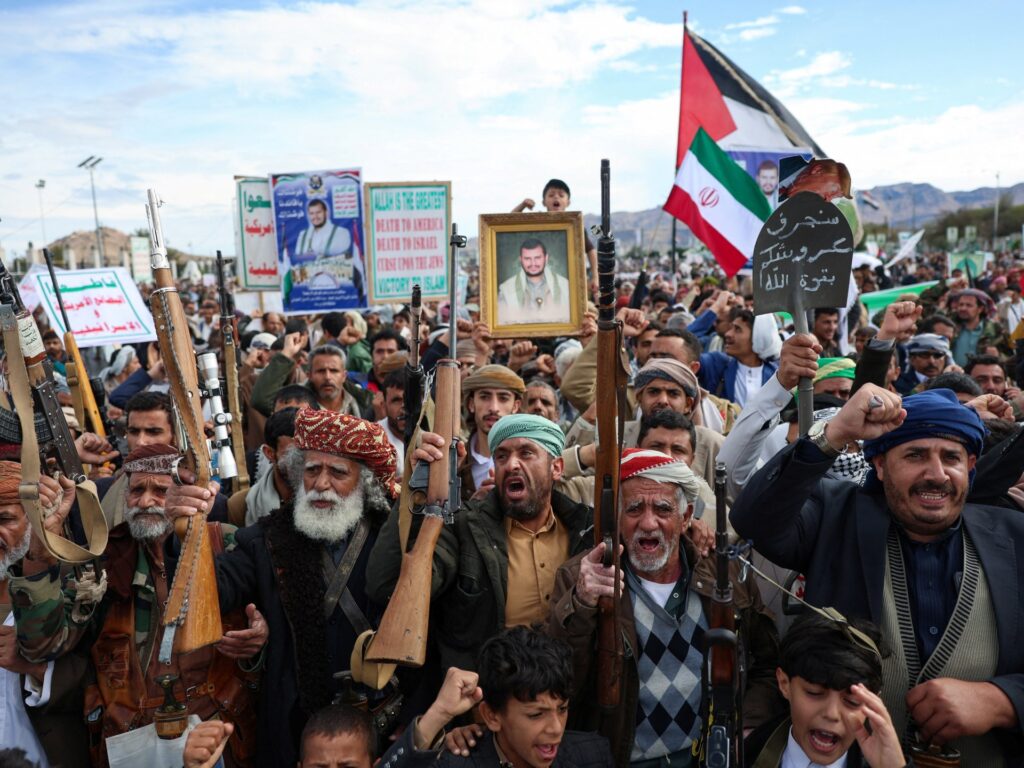
The Houthis, an Iran-aligned Yemeni group, have issued a stern warning as tensions escalate with ongoing US-Israel actions targeting Iran. Their recent statement, indicating “fingers on the trigger,” signals readiness to respond assertively to perceived threats or military actions.
This warning comes in the backdrop of a heightened conflict scenario in the Middle East, where the US and Israel continue their strategic efforts against Iran. The implications of this conflict are extensive, particularly with the Houthis’ capability to influence maritime routes.
The Arabian Peninsula is a crucial geopolitical region, controlling key shipping lanes that serve as arteries for global oil and goods transportation. The Houthis’ declaration raises concerns about the security of these maritime routes, potentially affecting global trade and energy supplies.
Strategists and international observers note that the Houthis’ alignment with Iran strengthens Tehran’s influence in Yemen, adding complexity to regional security dynamics. Their capability to target critical maritime passages gives them leverage that could disrupt not only regional stability but also international economic interests.
The ongoing conflict displays a multi-faceted confrontation where geopolitical alliances, local insurgencies, and global trade routes intersect. The Houthis, leveraging Iranian backing, represent a substantial factor in this equation, signaling that any escalation might have far-reaching consequences.
Amid these developments, the international community is watching closely, concerned about the risk of broader instability in the Middle East. The possibility of heightened conflict involving the Houthis’ maritime threat introduces a challenging dimension to peace and security efforts in the region.
This situation underscores the importance of diplomatic engagement and conflict resolution mechanisms. Preventing disruption to the Arabian Peninsula’s shipping lanes is crucial for maintaining global economic stability. The Houthis’ warning should be viewed as a critical marker of the fragile balance in the Middle East, emphasizing the need for cautious and measured international responses.
Overall, the Houthis’ latest threat amidst the US-Israel war on Iran reflects a volatile and evolving security landscape. The potential to impact key strategic maritime routes highlights the interconnected nature of regional conflicts and global economic implications, calling for urgent attention and comprehensive strategies to mitigate risks.