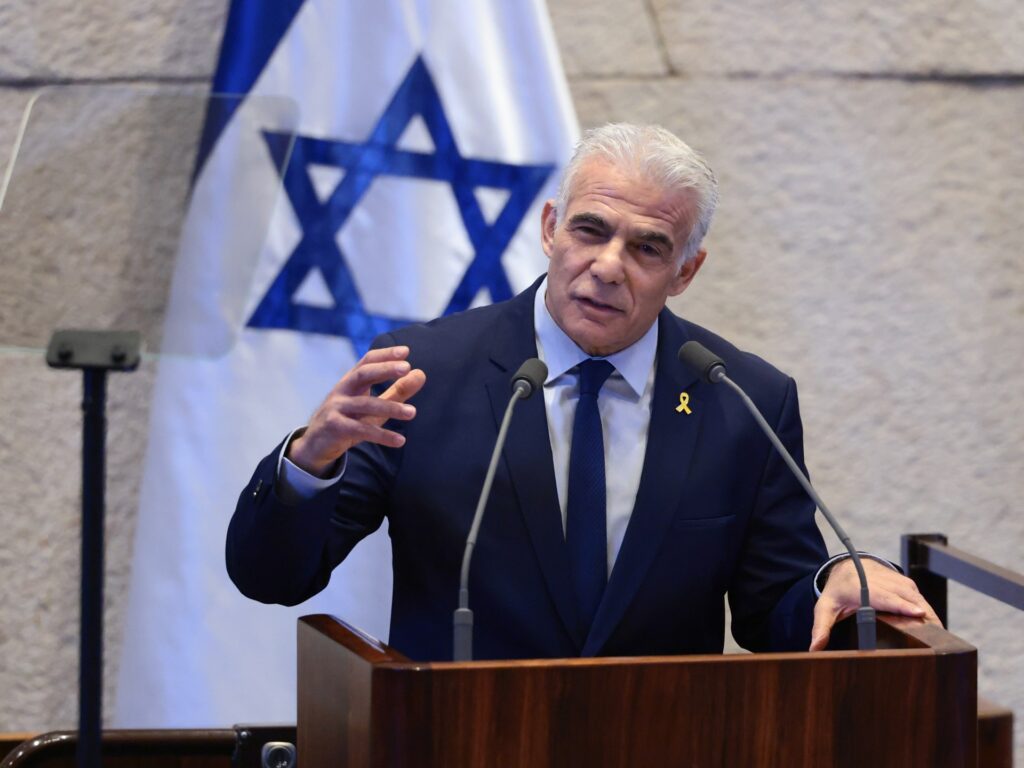
Israeli opposition leader Yair Lapid has publicly criticized the current government’s military strategies, labeling the ongoing situation as a ‘multi-front war without strategy.’ Lapid expressed grave concerns regarding Israel’s military resources, stating that the forces are ‘stretched to the limit and beyond.’ These remarks come amid Israel’s intensified military operations targeting Iran and Lebanon.
Lapid’s critique highlights the complexity and risk involved as Israel confronts threats on several fronts simultaneously. The Israeli military is currently engaged in operations in Lebanon, where tensions remain high with militant groups, while also conducting aggressive attacks aimed at Iranian targets. Such maneuvers signify a significant escalation in regional conflict, raising alarms about the sustainability and strategic coherence of Israel’s defense plans.
The opposition leader’s comments suggest a deep dissatisfaction with the government’s approach, which he fears lacks a clear and effective strategy to navigate the multiple challenges. With troops deployed across different regions and fronts, there are concerns about potential overextension and the ability to adequately respond to evolving threats.
International observers are watching closely as the situation develops, noting that increased military action could lead to broader regional instability. Diplomatic efforts to de-escalate tensions appear limited, and Lapid’s statements underscore the urgent need for a coordinated and strategic response.
In his critique, Lapid emphasized the risks posed not only to Israel’s security but also to its military personnel who face the brunt of these operations. He called for a reassessment of the current policies and urged leadership to define a clear, sustainable strategy to address the multifaceted threats confronting the nation.
Experts suggest that the multi-front nature of the conflict complicates decision-making and resource allocation, potentially undermining Israel’s long-term security objectives. The concerns voiced by Lapid resonate with wider public apprehensions about the direction of the country’s defense policies and its implications for peace and stability in the region.
As tensions continue to escalate, the Israeli government faces mounting pressure both domestically and internationally to justify its military operations and articulate a comprehensive strategy to ensure the nation’s security without exacerbating regional conflicts. Lapid’s opposition stance serves as a critical voice urging for strategic clarity and caution in these turbulent times.